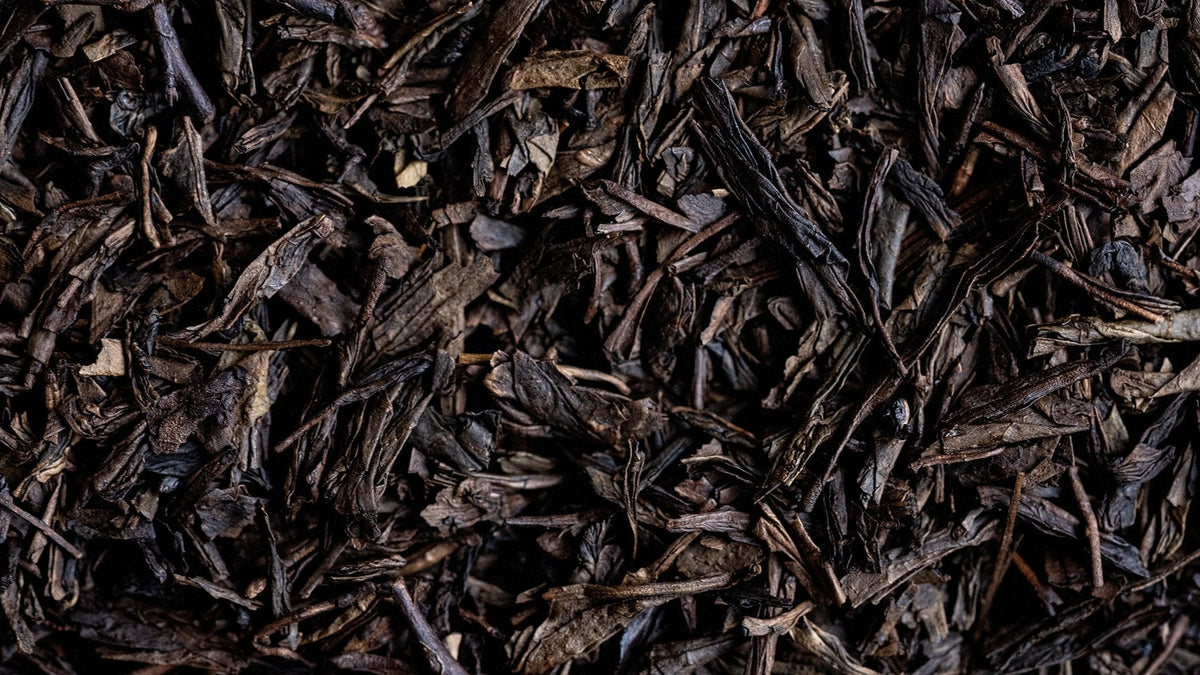
Hojicha & Roasted Tea ほうじ茶
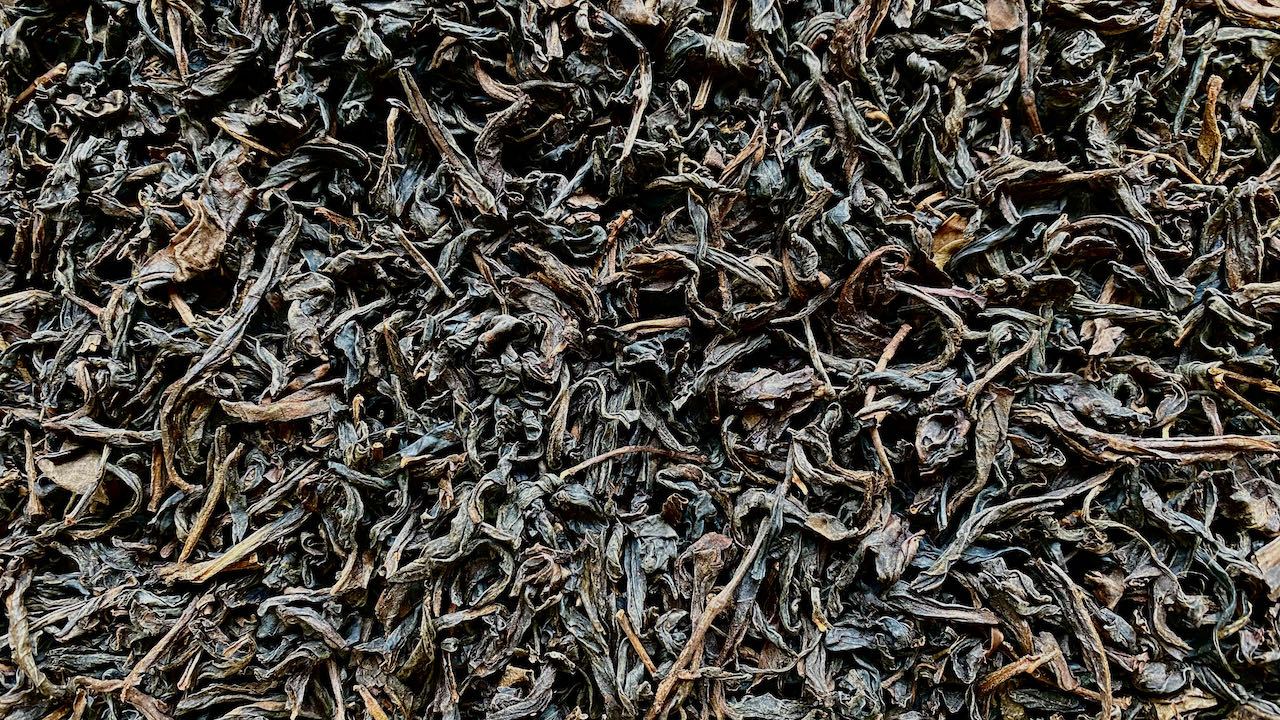
Green tea roasted until it turns reddish brown: toasty, naturally sweet and gentle. Leaf and stem hojicha, light and rich hojicha powders for lattes, and a roasted Wuyi oolong.
What hojicha is, where it came from, and why the roast tastes so good ↓
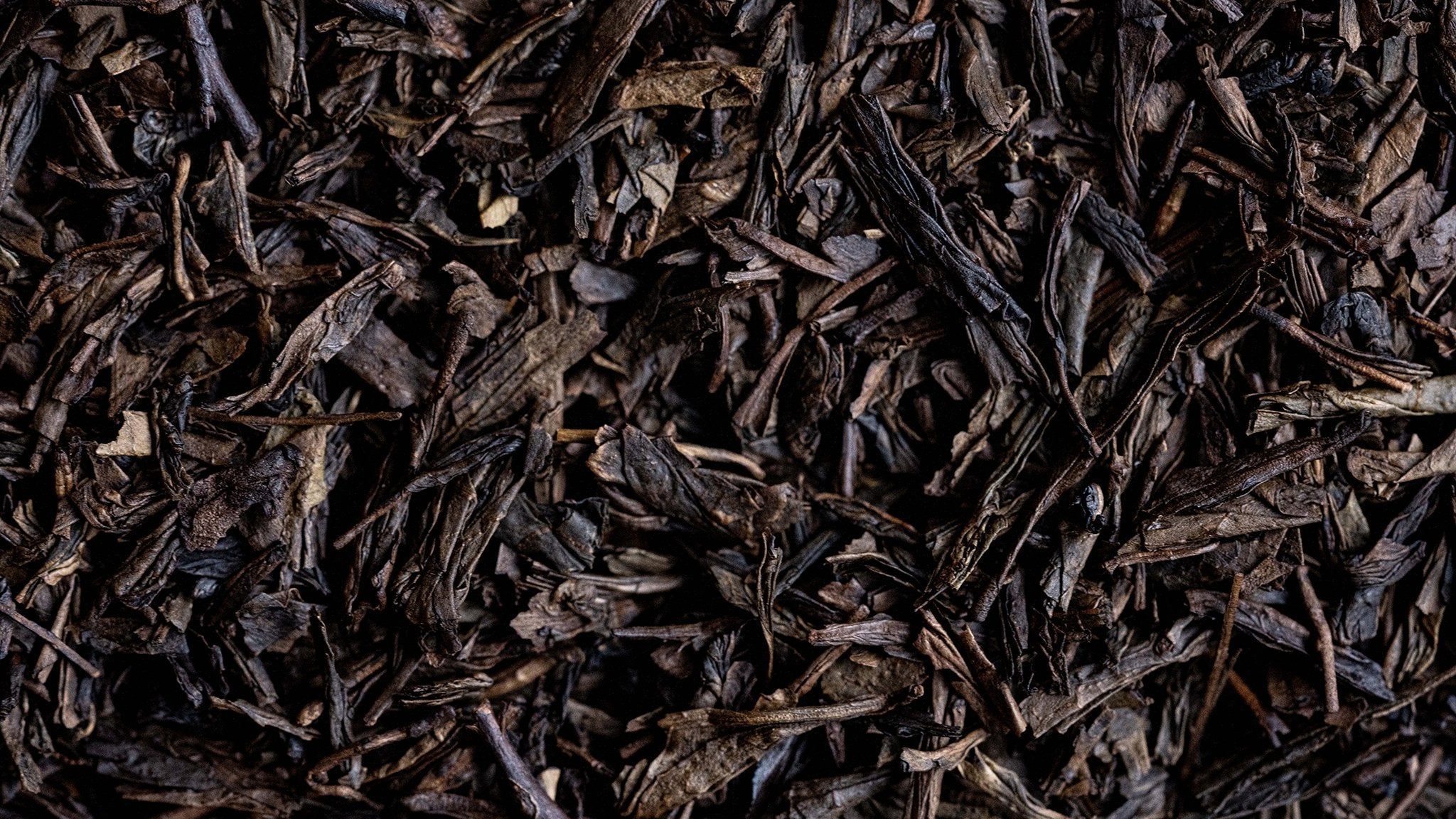
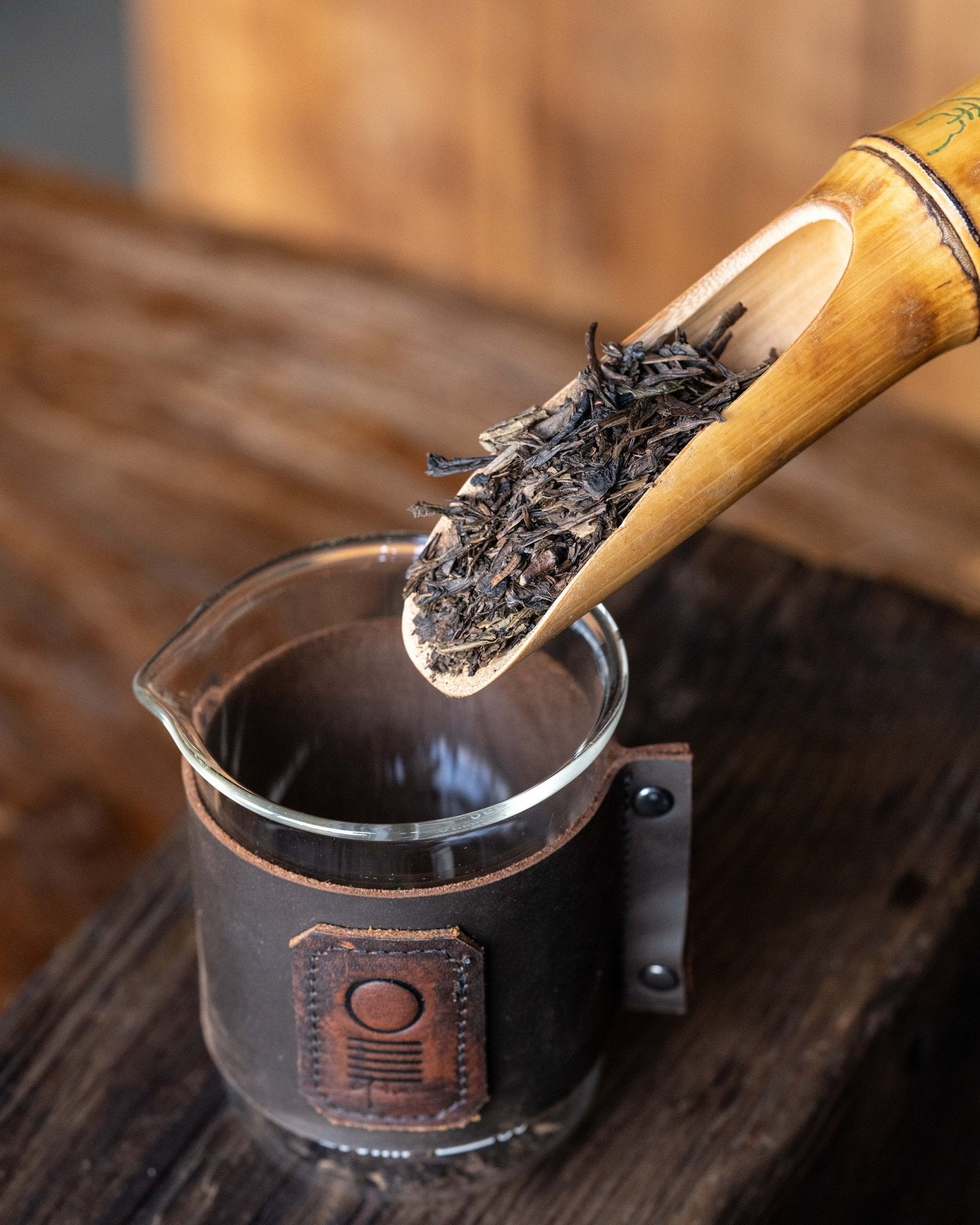


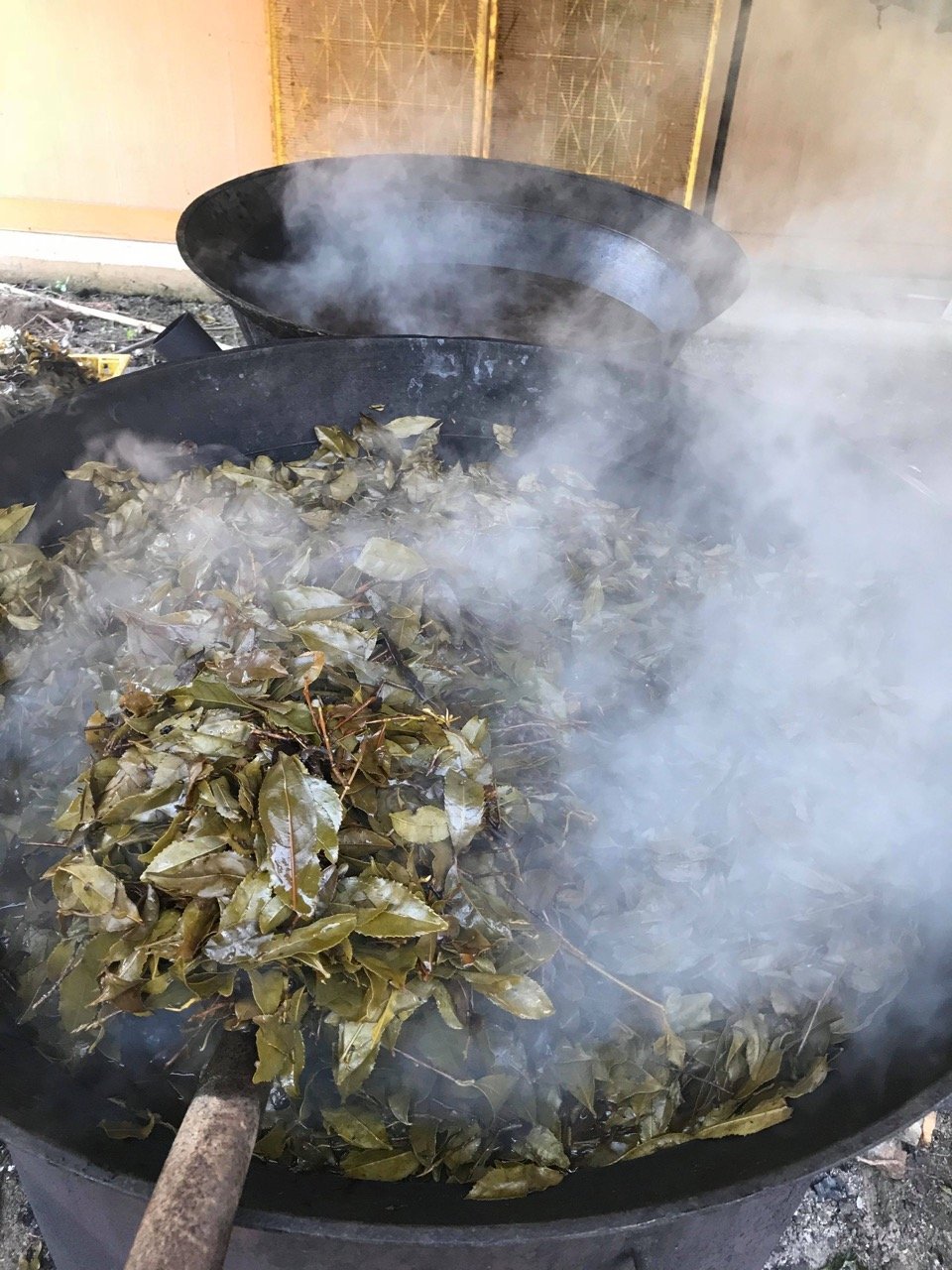
Hojicha, explained: Japan’s roasted green tea
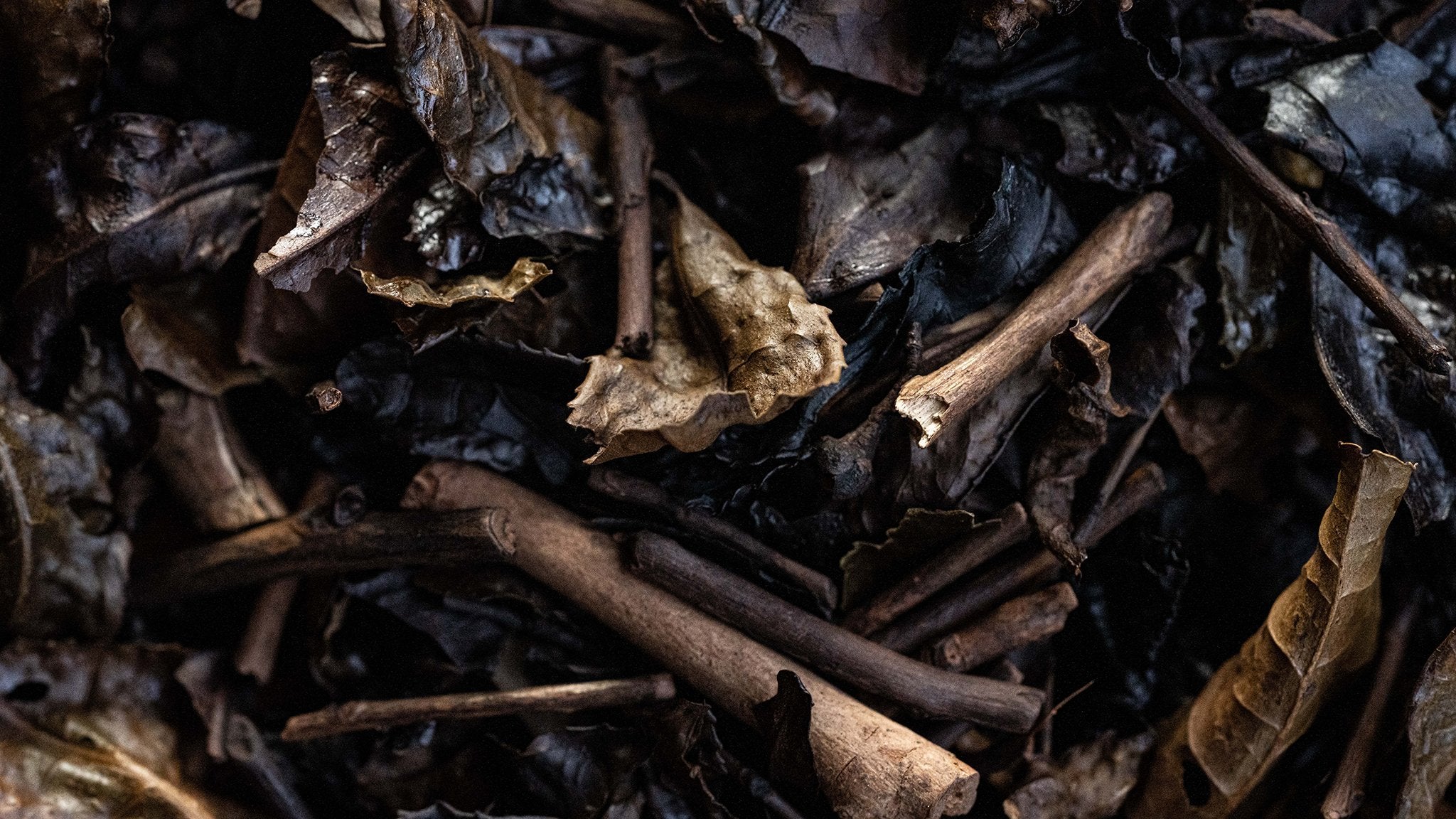
Hojicha ほうじ茶 is Japanese green tea roasted over high heat until the leaves turn reddish brown. The roast swaps the grassy notes of fresh green tea for toast, nuts and caramel, and leaves a naturally sweet cup with very little bitterness. Here is what hojicha is, where it came from, what roasting does in your cup, and how to use hojicha powder.
On this page: What is hojicha · History · Tasting & the Maillard reaction · How to brew · Hojicha powder · Sources
What is hojicha?
Japan’s Ministry of Agriculture, Forestry and Fisheries describes hojicha as tea made by roasting sencha, bancha and similar teas over a strong fire, which gives it a fragrant, toasty aroma and a clean, light finish[1]. Japan’s tea industry classifies it as a green tea[2].
It begins as ordinary Japanese green tea. The fresh leaves are processed so that the leaf’s own oxidising enzyme is switched off, which is what keeps green tea green[3]. Only then is the dry tea roasted. So hojicha’s brown colour comes from heat, not from the enzyme-driven oxidation that turns leaves into black tea[2].
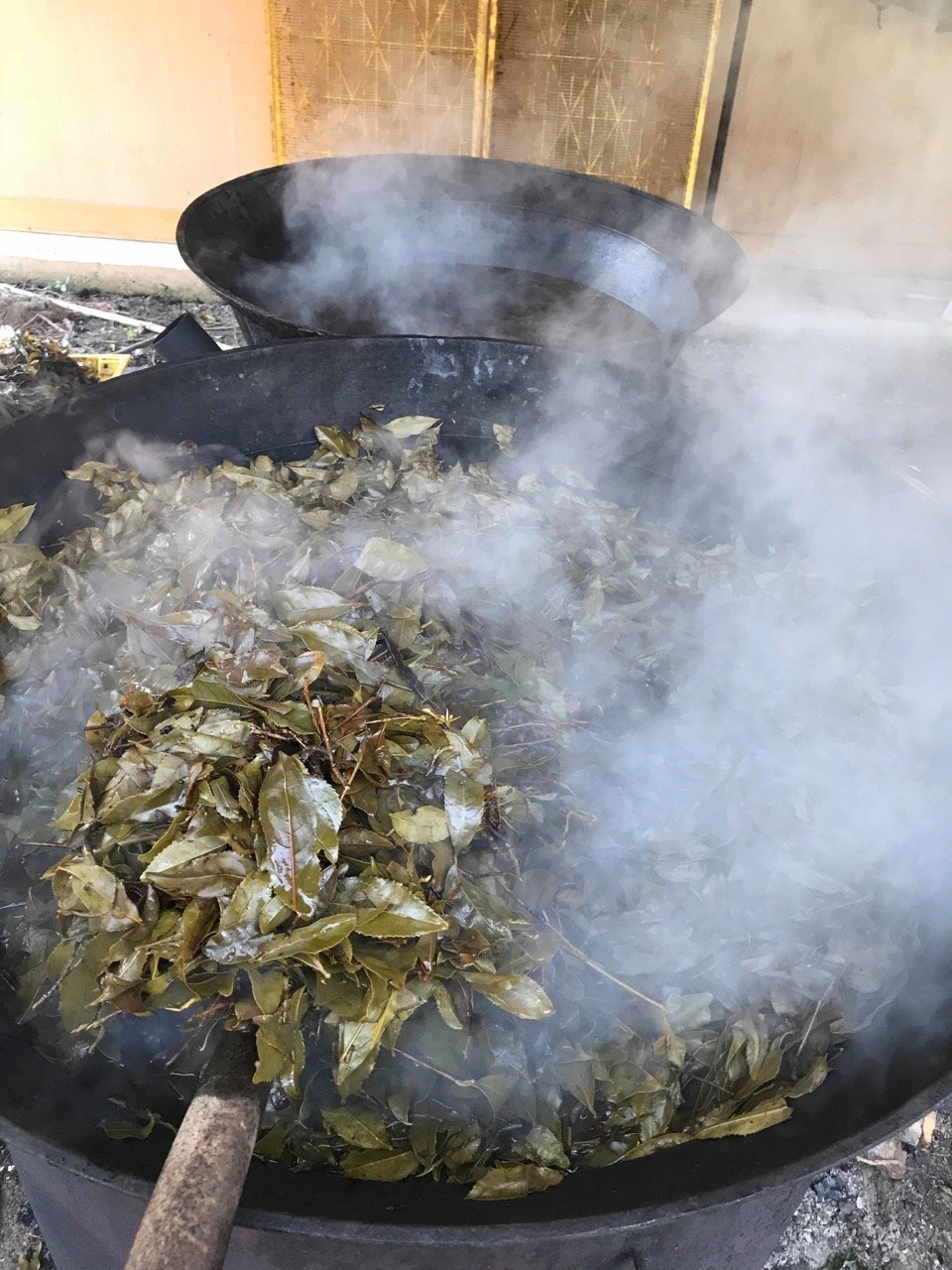
Hojicha is often made from bancha, the tea of later harvests, but also from sencha[3]. Stems make their own style, known as bōcha or karigane[4][2]. In research, hojicha is roasted at about 160–220 °C[3][5]. A 2024 survey of commercial hojicha by the Japan Tea Central Association found roasting temperatures from 100 to 335 °C, lasting from 30 seconds to 80 minutes[6].
Styles in this collection
Leaf hojicha
Roasted green tea leaves. Our Kirishima Hojicha tastes of roast rice and caramel, and it is almost impossible to over-steep.
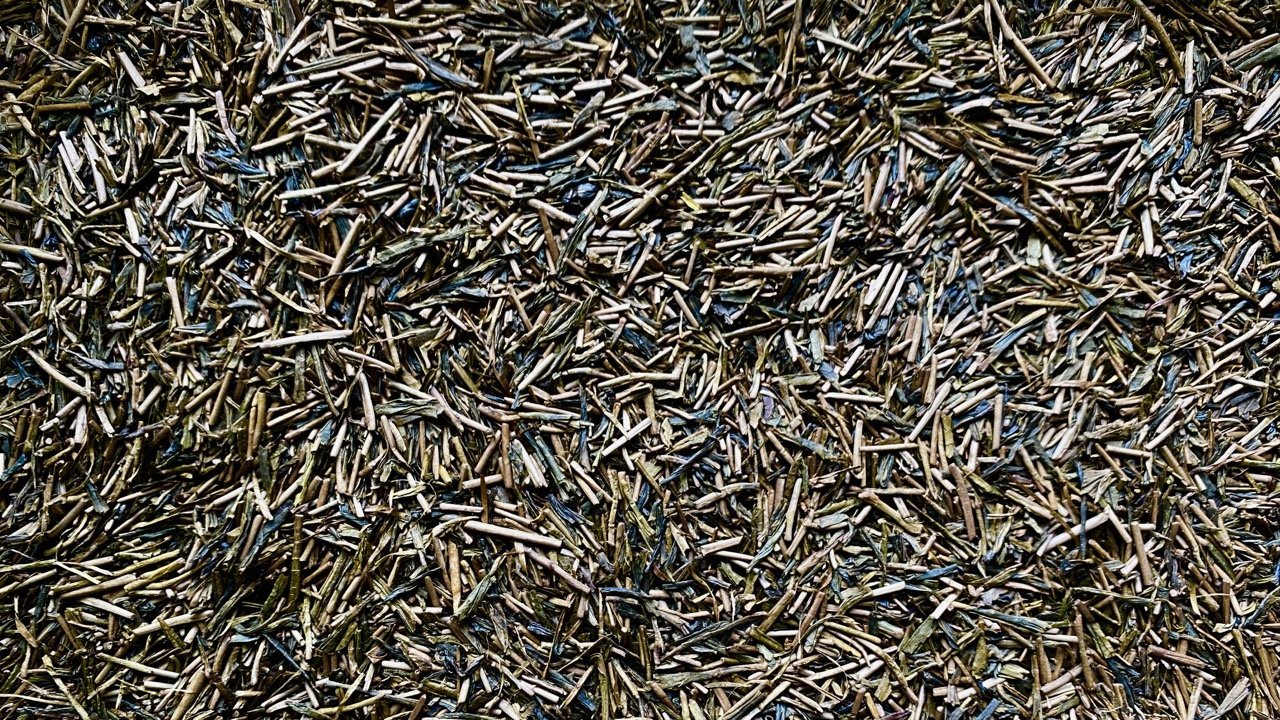
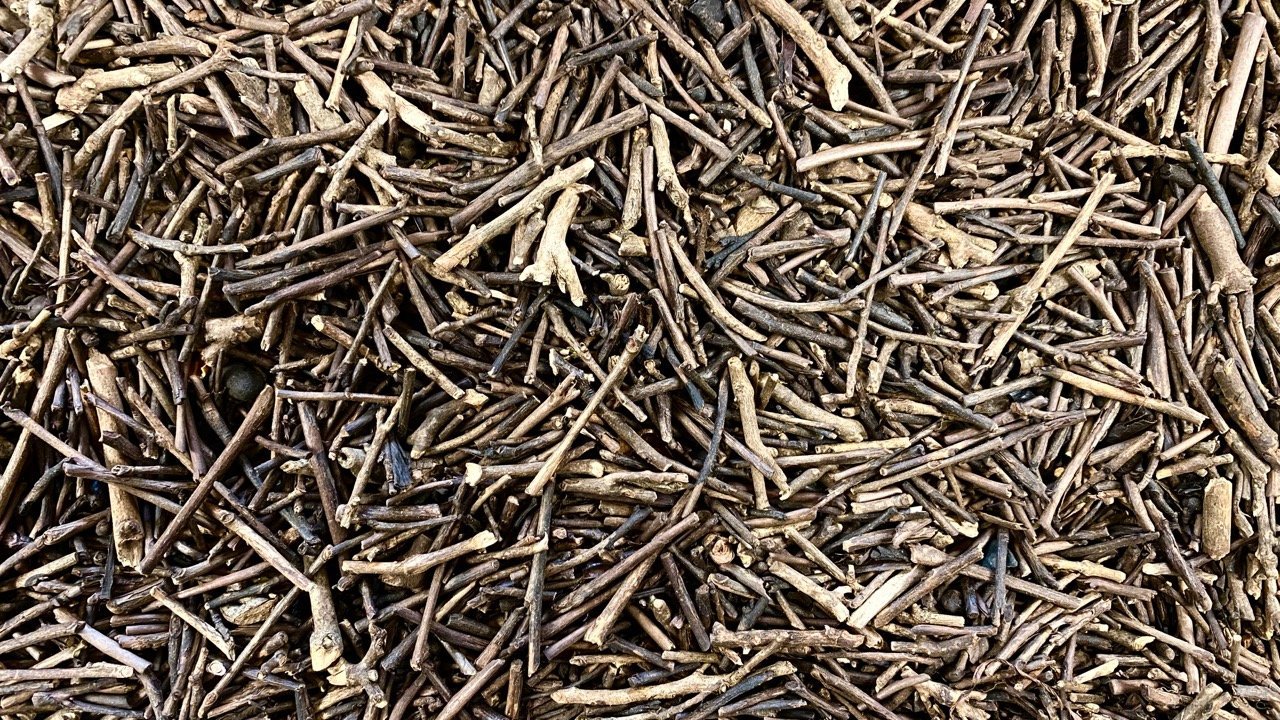
Stem hojicha 棒茶
Roasted tea stems. Stem roasts carry more roasty pyrazines and more floral linalool and geraniol than leaf hojicha[4]. Ours is golden, gentle and toasty.
Hojicha powder
Roasted tea milled to a fine powder for lattes and baking. One rich roast, one light roast that keeps more of the leaf’s character.
Roasted beyond Japan
Chinese Wuyi-style oolongs are roasted too, and the same Maillard chemistry builds their toasty, nutty notes[7]. Ours smells like grandma’s cookie jar.
Is hojicha low in caffeine? Lower than some teas, but not as low as its reputation. In Japan’s official food composition tables, hojicha brewed the standard way has about 20 mg of caffeine per 100 ml, the same as sencha. Gyokuro has 160 mg[8]. The Japan Tea Central Association’s 2024 survey found that roasting removed only about 10% of the caffeine on average. Individual samples ranged from a 58% drop to an 18% rise[6].
Hojicha’s gentle reputation comes mostly from what it is made of. Caffeine is concentrated in young leaves, so later-harvest bancha has less than gyokuro or matcha[9]. Roasting also softens bitterness. Hojicha has less caffeine than gyokuro or matcha, but it isn’t caffeine-free.
A short history
- 8th century, roasting comes first. The first tea to reach Japan from China was pressed brick tea. It was steamed, pounded, dried and then roasted before being shaved and boiled[10]. Roasting tea in Japan is far older than steamed sencha, which spread in the Edo period[10].
- 1902, Kaga bōcha. In Kanazawa, the tea merchant Hayashiya Shinbei found a use for tea stems, a by-product of preparing tea for storage. He roasted them and sold them as Kaga bōcha, which became popular for its aroma and low price. He later made the method public, and it spread across Ishikawa[4].
- 1920s, Kyoto. The best-known origin story says a Kyoto merchant roasted tea he couldn’t sell. In some versions, he did it on advice from Kyoto University. The story is widely repeated, but no historical record names the inventor or the first batch[11][2].
- Kansai roots. Tokyo University of the Arts’ tea archive traces hojicha to western Japan: roasting tea that had lost its aroma to humidity brought the fragrance back. About fifty years ago it was hardly drunk around Tokyo, and in parts of Tōhoku hojicha is still called “bancha.” It spread across Japan along with Kyoto cuisine, and today it is sold in bottles[12].
- 1983, an imperial cup. Kaga bōcha was presented to Emperor Shōwa[4].
- Today. Demand for hojicha is growing outside Japan, drawn by its toasty aroma and easy-drinking taste[6]. Lattes made with hojicha powder have carried it into cafés everywhere.
Experiencing hojicha: the Maillard reaction in your cup
What the Maillard reaction is
When a food that contains sugars and amino acids is heated, the sugars react with the amino acids. This sets off a cascade of reactions that brown the food and create aroma. It is called the Maillard reaction, and no enzymes are involved[13]. The French chemist Louis-Camille Maillard first described it in 1912[14][15]. The chemist John Hodge mapped its stages in 1953, and that scheme is still the standard reference[16][15].
The reaction runs in three broad stages[13]:
- Early. Sugars and amino acids combine into unstable compounds (Amadori products).
- Intermediate. These break down. In one key step, Strecker degradation, amino acids turn into aldehydes and aminoketones, the building blocks of nutty, roasted-smelling pyrazines.
- Final. Fragments condense into brown polymers called melanoidins, which give roasted food its colour.
Temperature matters enormously: the reaction speeds up roughly three- to fivefold for every 10 °C[13]. It is the same chemistry behind bread crust and roasted coffee.
What roasting does to the leaf
Green tea is full of Maillard fuel. It contains amino acids, above all theanine, the main source of the savoury taste called umami[9], along with sugars, and roasting turns them into aroma[5].
A 2020 study roasted tea stems at 180, 200 and 220 °C. At 220 °C, theanine fell from 125 to about 1 mg/L of infusion within 90 seconds; at 200 °C the same took about 3 minutes. EGCG, the main astringent catechin, fell from 140 to 5 mg/L in 2 minutes at 220 °C. Meanwhile the colour moved from yellow-green to yellow-red, and pyrazines rose with both time and temperature[5]. Commercial bancha hojicha shows the same pattern, with fewer catechins than sencha and no detectable theanine[3].
The aromas it creates
Roasted tea contains more than a hundred volatile compounds, mostly pyrazines, pyrroles and furans[5]. In the 2000s, researchers at Japan’s national tea research institute (NARO) identified 2-ethyl-3,5-dimethylpyrazine as the single most important odorant in roasted green tea[17]. A follow-up study ranked a furanone, 4-hydroxy-2,5-dimethyl-3(2H)-furanone, as equally potent, followed by compounds such as 2-acetyl-1-pyrroline[18].
In a brewed cup, the same pyrazine dominates the aroma rising from the cup. In the liquid, it is joined by 2-acetyl-2-thiazoline, β-damascenone and the furanone. Sweet, roasted and green notes contribute most to what we smell[19]. In flavour chemistry, pyrazines read as nutty and roasted, and thiazoles as nutty and popcorn-like[13].
Why the roast level matters
- Hotter means roastier. In a 2021 study, every pyrazine measured increased as the roast went from 160 to 200 °C. Floral linalool rose at 160 °C but fell at 180–200 °C, so the authors suggest it as a marker of overheating. β-damascenone and β-ionone dropped after roasting. One pyrazine, 2-ethyl-3,6-dimethylpyrazine, appeared only in hojicha among the green teas tested, so it works as a fingerprint of roasting[3].
- Light vs. deep. A lighter roast keeps more umami and more of the tea’s own character; a deeper roast adds roasted aroma and sweetness[4]. Compare our light-roast Gentle Glow with the richer Ember Dragon.
- Stems vs. leaves. Roasted stems carry more pyrazines and terpenes than roasted leaves[5][4]. That is why a stem hojicha like our Karigane smells so toasty and sweet.
Why it tastes sweet and soft
A 2018 study found that roasting green tea reduced catechins, total polyphenols and bitter amino acids, so the tea was less bitter and astringent. Soluble sugars increased, which made it sweeter and mellower. The caffeine did not change significantly[20]. The fast loss of gallated catechins, the most astringent kind, may help too[5]. In a small sensory study of roasted stem teas, the best-liked samples were those with more of certain pyrazines and less of some aldehydes and sugars, such as the off-flavour compound (E,Z)-2,4-heptadienal[21].
How to taste hojicha
- Look. The dry leaf ranges from green-brown (light roast) to chocolate brown; the cup from gold to amber red.
- Smell the warm leaf. Drop the leaves into a pre-warmed pot for a few seconds before adding water, and breathe in the roast.
- Sip for sweetness and texture. Expect little bitterness. Hojicha forgives long steeps and hot water.
- Drink it with food. In Japan, hojicha is usually served after a meal: its mild astringency suits Japanese food, and its comforting flavour helps people relax[21].
- Compare. Brew a leaf and a stem hojicha side by side, or a light and a deep roast, and taste what the roast changes.
How to brew hojicha
Use water at a full boil: it lifts hojicha’s roasted aroma[22].
| Style | Tea | Water | Steep |
|---|---|---|---|
| Kirishima Hojicha | 4 g | 240 ml at 100 °C | 90 s; several infusions |
| Karigane stem hojicha | 6 g | 250 ml at 100 °C | 45 s; several infusions |
| Japanese teapot (MAFF guide) | 2–3 g per 100 ml | Boiling | About 30 s; pour the second infusion straight away[22] |
| Cold brew (Kaga style) | 4 tbsp | 1 L cold water | About 3 hours in the fridge[4] |
| Kettle, for a crowd | 2 tbsp | 2 L brought to a boil, heat off | Cover and leave 20+ minutes[4] |
| Hojicha milk tea | 3 tbsp | 200 ml milk | Heat until it bubbles, then strain[4] |
Hojicha powder: what it is and how to use it
Hojicha powder is roasted green tea milled very fine. It keeps hojicha’s roasted aroma and has a smooth, mild flavour with little bitterness[23]. It isn’t roasted matcha: matcha is made by stone-grinding tencha, a different, specially made leaf[1]. And, as with matcha, you drink the whole leaf, insoluble parts and all[22], so a powder delivers all of the leaf’s caffeine too.
Rich roast
Ember Dragon. Summer-harvest, organically grown Yabukita from Harunocho in Shizuoka’s Tenryū district, made by grower Osada Natsumi. Barley and caramel.
Light roast
Gentle Glow. Yabukita from the Hirai family in Yame, Fukuoka, roasted lightly to keep the leaf’s freshness. Warm grain, hazelnut, honey and dried grass.
- Hot latte. Sift 2 g (about 1 tsp) into a bowl, whisk with 30 ml of boiling water until smooth, then pour in 90 ml of steamed oat or whole milk.
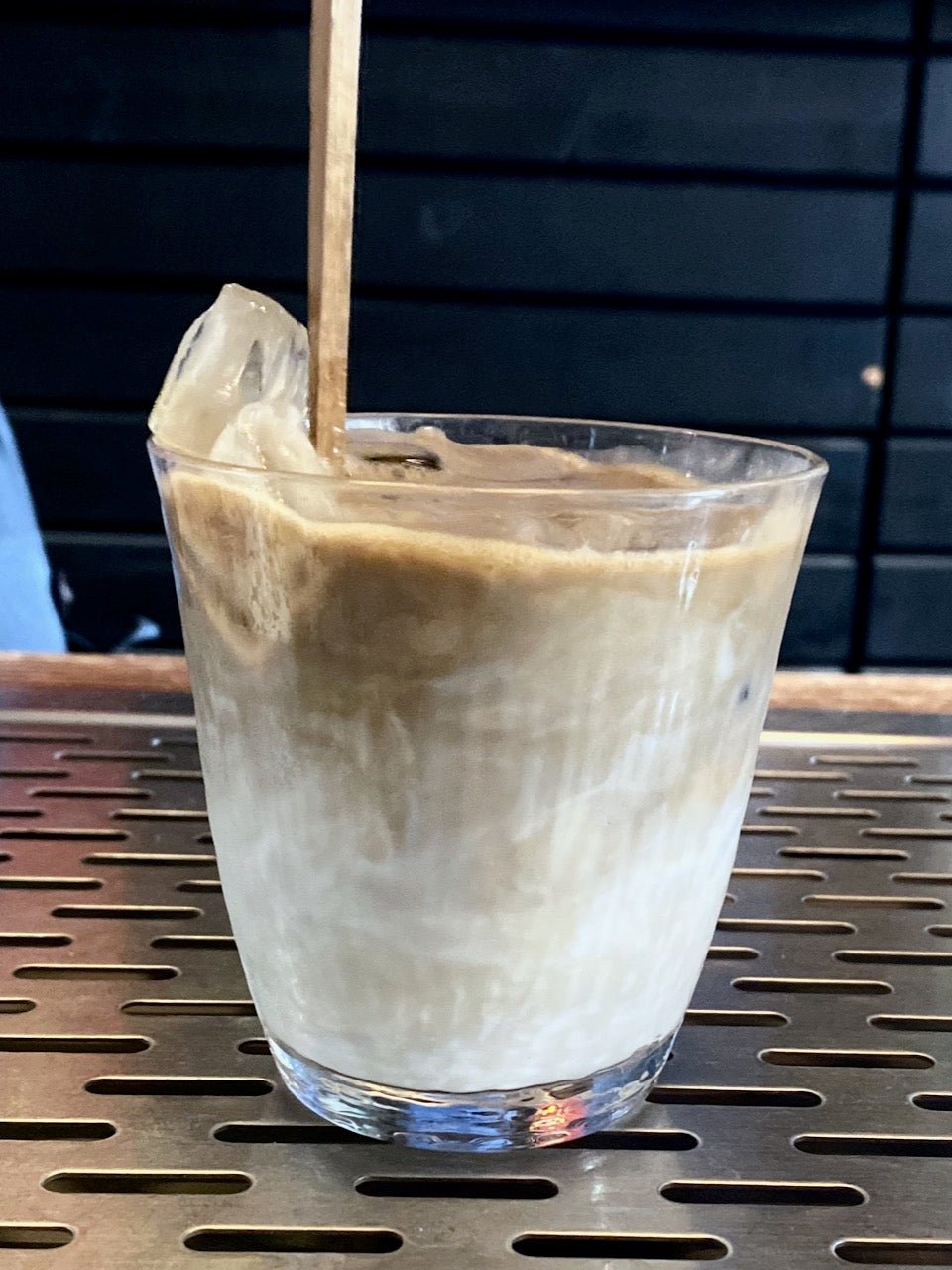
- Iced latte. Whisk the powder into cold water instead and pour it over iced milk.
- Straight up. Whisk 1–2 g into 100–240 ml of hot water. No milk or sugar needed.
- Baking and desserts. Its roasty, caramel side works well with dairy and sugar. Try it in cheesecake, ice cream or shortbread.
- Tools. A bamboo chasen or a small milk frother breaks up lumps. See how we whisk usucha; the motion is the same.
- Keeping it fresh. Store the powder sealed, cool, dark and away from strong smells, and use it within a few weeks of opening.
From O5 Tea School
- What is Hojicha?: our introduction, with the regional styles of roasted tea, from Kyōbancha to Kaga bōcha.
- What is Sencha?: the steamed green tea most hojicha starts from.
- Gyokuro: Japan’s Shade-Grown Jewel: the other end of the spectrum, all umami and no roast.
- How to Make Usucha: whisking technique that works for hojicha powder too.
- Navigating the Matcha Storm: the 2025 matcha shortage, from a tea shop’s point of view.
More from O5: Tea from Japan · Green tea · Matcha · Oolong
Sources
Numbers in the text link here. Peer-reviewed research is marked; government and institutional sources are from Japan’s Ministry of Agriculture (MAFF), the Japan Tea Central Association, NARO and Tokyo University of the Arts.
- [1]Ministry of Agriculture, Forestry and Fisheries of Japan (MAFF). “特集1 緑茶(1): 緑茶の種類” [Feature: Green tea – types of green tea]. aff magazine, April 2017. maff.go.jp
- [2]Villalon, P. “What is Hojicha?” O5 Tea School, 3 April 2025. o5tea.com
- [3]Gotti, R., Leoni, A., Fiori, J. (2021). Evaluation of roasting effect on selected green tea volatile flavor compound and pyrazine content by HS-SPME GC-MS. Applied Sciences 11(17): 8217. doi:10.3390/app11178217 (peer-reviewed, open access)
- [4]MAFF. にっぽん伝統食図鑑 [Encyclopedia of Japanese Traditional Foods]: 加賀棒茶 [Kaga bōcha]. maff.go.jp
- [5]Sasaki, T., Yuikawa, N., Tanihiro, N., Michihata, T., Enomoto, T. (2020). The effects of roasting conditions on the physical appearance traits and aroma and taste components of roasted stem tea. Food Science and Technology Research 26(5): 643–654. doi:10.3136/fstr.26.643 (peer-reviewed, open access)
- [6]Japan Tea Central Association(公益社団法人日本茶業中央会). 令和6年度 ほうじ茶残留農薬検査事業 実施報告書 [FY2024 report on hojicha pesticide-residue testing, including an analysis of caffeine loss during roasting; MAFF-subsidized project]. nihon-cha.or.jp (PDF)
- [7]Gao, X., Wang, S., Wang, Y., Song, H. (2025). Formation mechanisms and kinetic modeling of key aroma compounds during Qidan tea roasting. Foods 14(12): 2125. doi:10.3390/foods14122125 (peer-reviewed, open access)
- [8]MAFF. “カフェインの過剰摂取について” [On excessive caffeine intake], updated 29 May 2024. Tea values from the Standard Tables of Food Composition in Japan 2020 (8th ed.). maff.go.jp
- [9]Japan Foundation for the Promotion of Longevity Science(公益財団法人長寿科学振興財団), Kenkō Chōju Net. “緑茶の効能と美味しい入れ方” [Green tea: benefits and how to brew it], updated 5 September 2024. tyojyu.or.jp
- [10]MAFF. にっぽん伝統食図鑑 [Encyclopedia of Japanese Traditional Foods]: 飲料 [Beverages]. maff.go.jp
- [11]Kishida, M. “History of Hojicha, One of Japan’s Favorite Teas.” Yunomi, 20 February 2023. yunomi.life
- [12]Tokyo University of the Arts, GEICHA archive of art and tea culture. “ほうじ茶の秘密 / The History of Roasted Green Tea,” 2019. geicha.geidai.ac.jp
- [13]Liu, S., Sun, H., Ma, G., Zhang, T., Wang, L., Pei, H., Li, X., Gao, L. (2022). Insights into flavor and key influencing factors of Maillard reaction products: a recent update. Frontiers in Nutrition 9: 973677. doi:10.3389/fnut.2022.973677 (peer-reviewed review, open access)
- [14]Maillard, L.-C. (1912). Action des acides aminés sur les sucres: formation des mélanoïdines par voie méthodique. Comptes Rendus de l’Académie des Sciences 154: 66–68.
- [15]Martins, S. I. F. S., Jongen, W. M. F., van Boekel, M. A. J. S. (2000). A review of Maillard reaction in food and implications to kinetic modelling. Trends in Food Science & Technology 11(9–10): 364–373. doi:10.1016/S0924-2244(01)00022-X
- [16]Hodge, J. E. (1953). Dehydrated foods: chemistry of browning reactions in model systems. Journal of Agricultural and Food Chemistry 1(15): 928–943. doi:10.1021/jf60015a004 (Named a Science Citation Index “Citation Classic” in 1979.)
- [17]Mizukami, Y., Sawai, Y., Yamaguchi, Y. (2008). Analysis of key odorants in roasted green tea. Chagyo Kenkyu Hokoku (Tea Research Journal) 105: 43–46. doi:10.5979/cha.2008.105_43
- [18]Mizukami, Y. (2012). Identification of key odorants in roasted green tea by using solvent-assisted flavor evaporation apparatus under high vacuum and application of the aroma extract dilution analysis. Chagyo Kenkyu Hokoku (Tea Research Journal) 113: 55–62. doi:10.5979/cha.2012.113_55
- [19]Mizukami, Y. (2012). Key odorants in the headspace above infused roasted green tea (hojicha) and in the infusion. Chagyo Kenkyu Hokoku (Tea Research Journal) 114: 65–72. doi:10.5979/cha.2012.114_65
- [20]Mao, A., Su, H., Fang, S., Chen, X., Ning, J., Ho, C.-T., Wan, X. (2018). Effects of roasting treatment on non-volatile compounds and taste of green tea. International Journal of Food Science & Technology 53(11): 2586 ff. doi:10.1111/ijfs.13853 (peer-reviewed)
- [21]Sasaki, T., Tanase, Y., Yonezawa, T., Michihata, T., Kawamura-Konishi, Y. (2018). Metabolomics profiling of roasted stem tea using gas chromatography-mass spectrometry and a sensory test. Food Science and Technology Research 24(6): 1059–1067. doi:10.3136/fstr.24.1059 (peer-reviewed, open access)
- [22]MAFF. 茶の淹れ方マニュアル [Tea brewing manual], tea export promotion materials. maff.go.jp (PDF)
- [23]Ibaraki Prefecture, Ibaraki Exports. “Roasted Green Tea Powder” (Matsuda Seicha Co.). exports.pref.ibaraki.jp