Gyokuro | Exploring Japan's Shade Grown Jewel
What Is Gyokuro (玉露)? Exploring Japan’s Shade Grown Jewel
Gyokuro (玉露) is a very special type of Japanese green tea; it represents roughly 1% of Japan's annual tea production.
The name translates as "jade dew", probably because of its intense green colour; good gyokuro will provide one of the richest, most umami loaded tea journeys that you'll ever experience.
What Is Gyokuro? — The Basics
Gyokuro (玉露) is a shade-grown green tea. Unlike typical sencha, gyokuro tea bushes are shaded for 20–30 days before harvest, increasing L-theanine (umami sweetness), boosting chlorophyll (emerald color), and reducing catechins (bitterness). The result is sweet, umami-rich, silky liquor. The handcrafting process involves:
- Shading: tea trees are covered with a canopy a few weeks before the harvest. This will result in more vibrantly green leaves with a higher content of L-theanine.
- Steaming: gyokuro is a sub-category of 'sencha' (steamed tea).
- Rolling: the leaves are delicately shaped as needles. This contrasts with the 'ball' shape of steamed tea that is popular in the Ureshino / Nagasaki region (tamaryokucha).
- Drying

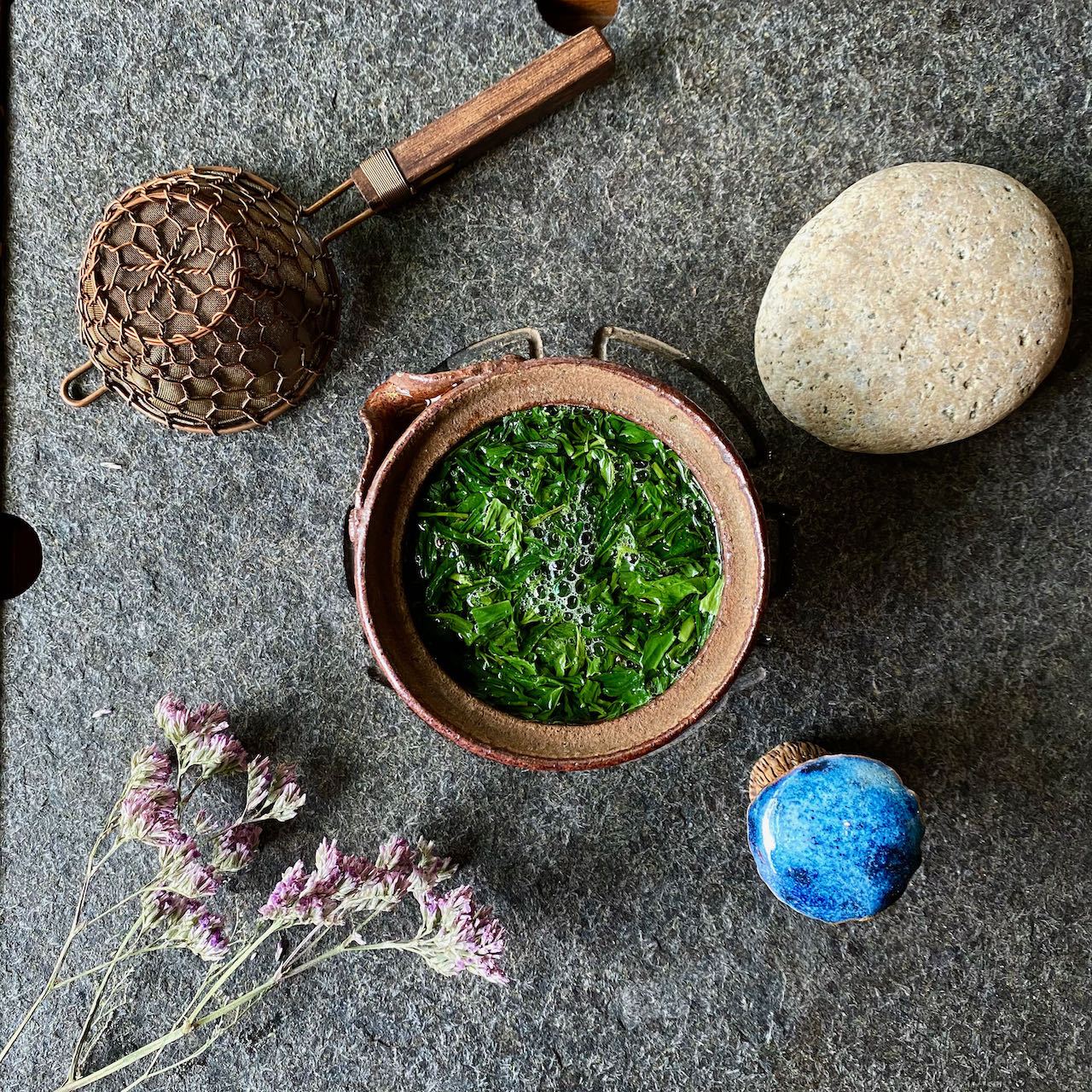
Gyokuro leaves are bright green and present intense umami.
History — From Uji to Today
Steamed tea, rolled into fine needles has its roots in ancient China. However, the process used to grow and handcraft gyokuro coriginated in the early 19th century around Uji (宇治), Kyoto, thanks to merchant the well known merchant, Yamamoto Kahei (山本嘉兵衛). Shading experiments revealed softer, sweeter leaves, creating the gyokuro we know today. Originally a luxury for nobility, it remains highly prized worldwide.

Evolution Over Time
- 19th Century: Uji pioneers shading and production methods.
- Meiji Era: Techniques spread to Kyushu and Shizuoka.
- 20th Century Onward: Regions like Yame (八女) developed official distinctions like Yame Dentō Hon Gyokuro (八女伝統本玉露).

Handcrafting Process
- Shading (覆い栽培): Covered for three weeks to boost amino acids.
- Harvesting (手摘み): Only the first spring flush (一番茶) is picked.
- Steaming (蒸し): Stops oxidation, preserves green color.
- Rolling & Drying (揉み・乾燥): Leaves shaped into elegant needles.
- Sorting the leaves, removing any stems.


Famous Gyokuro Terroir in Japan:
- Uji (宇治 / Kyoto)
- Yame (八女 / Fukuoka)
- Shizuoka (静岡)
- Kagoshima (鹿児島)
Gyokuro vs. Enshi Yu Lu (恩施玉露)
China's Hubei province produces a tea that very much resembles early 20th century gyokuro: Enshi Yu Lu (恩施玉露). Both teas are steamed and rolled into fine needles; however, Enshi Yu Lu is generally not shade-grown.
How to Brew Gyokuro (玉露)
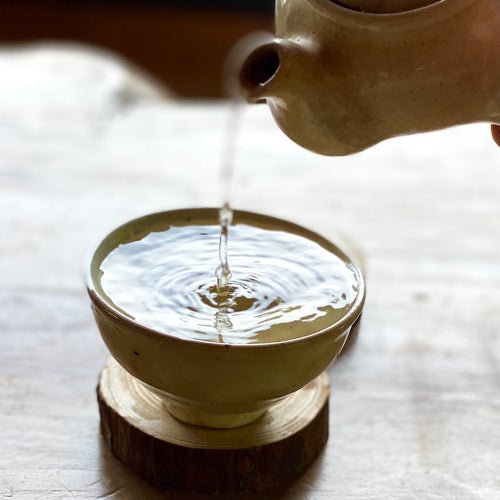
Gyokuro is brewed slowly, emphasizing intention and care.
- Tea amount: 5–7 g
- Water volume: 30–50 ml
- Water temperature: 40–60 °C (低温抽出)
- Steep time: 90–150 seconds
Use a small kyūsu (急須) or hōhin (宝瓶) to pour carefully. Multiple infusions reveal evolving flavors: first is thick and umami-rich, second brighter and greener, third aromatic and gentle.

Consider starting your day by firing up a kettle, warming up your tea pot and brewing an exceptional cup of tea. It will take 10 - 15 minutes of your morning, but it will most likely make you smile and get you ready for whatever you want to achieve. Happy drinking!
Comments