TAKAYAMA CHASEN by Tanimura Yasasaburo, Shokunin
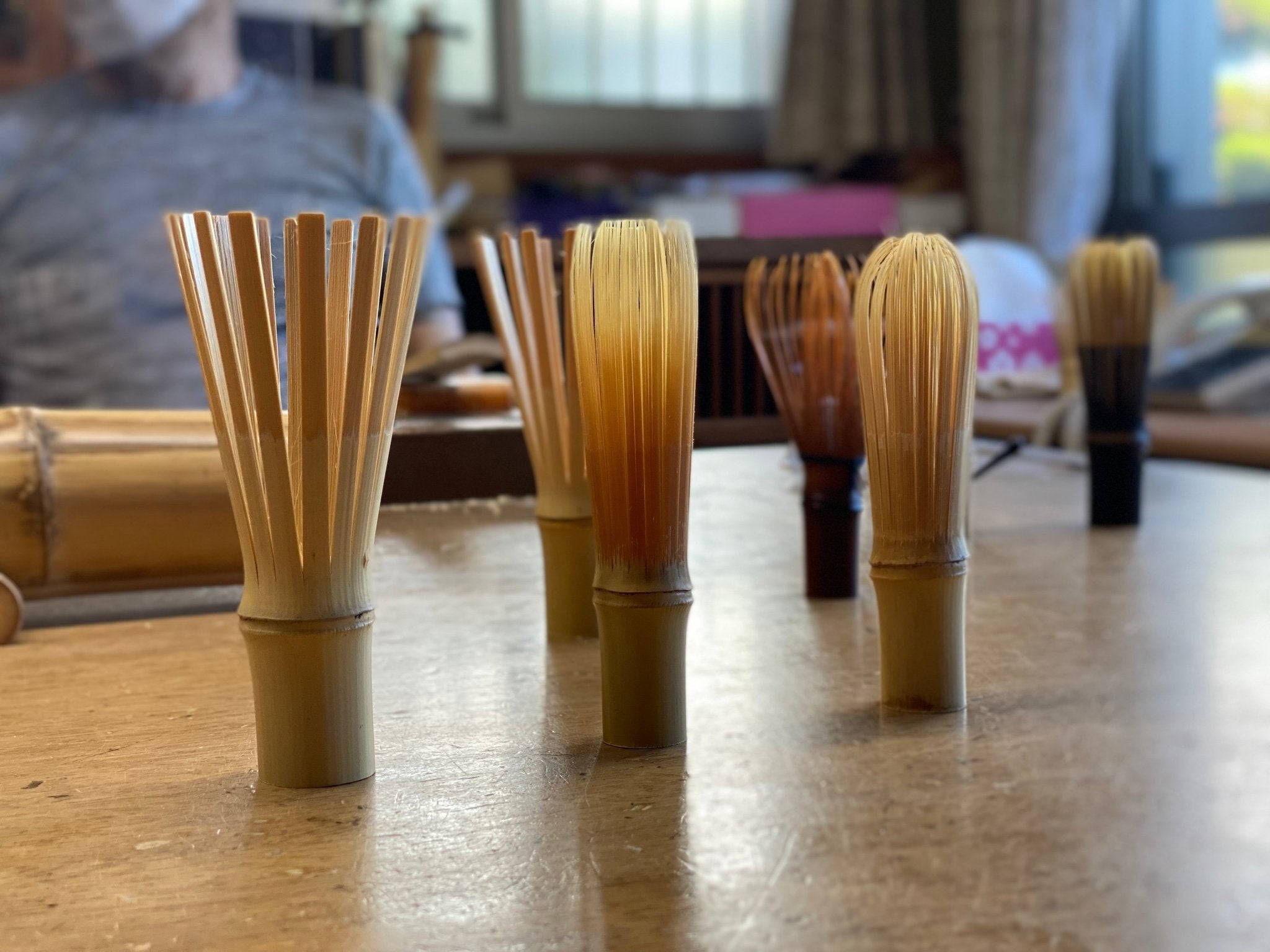
Five hundred years of bamboo, one family, and the plain determination to keep an ancient craft alive.
Summer in Nara (Japan) can be very hot and humid; this is never enough to deter thousands of tourists from swarming the streets and temples of this beautiful city. The summer of 2022 was quite different: COVID was the talk of the day, Japan was closed to tourists, and the streets were empty.
We stepped into the Tanimura family's workshop in Takayama, a small village at the northern edge of Nara Prefecture, and the first thing we noticed was how little noise there was. Tanimura Kei-san welcomed us into the home and introduced us to his father, Tanimura Yasaburo-san, the shokunin who personally crafts this family's outstanding bamboo utensils.
This is the family that has, for twenty-five generations, made the whisk that turns matcha into the pale green foam we now barely think twice about.

A village built around a single tool
Takayama's tie to the chasen goes back to the early days of Japanese tea culture. Local history traces it to the Muromachi period, when Murata Juko, often credited as the founder of Chanoyu, began treating matcha as something closer to a spiritual practice than a medicinal habit. The tools that had arrived from China were simple, plain scoops, nothing built for the specific job of whisking. Takayama, with its cold winters and its retainer families already skilled in bamboo work, is where a proper whisk was first made, reportedly by the son of the local castle lord. Sixteen retainer families carried the technique forward from there, generation after generation, and today the village still produces the overwhelming majority of the tea whisks made in Japan, out of a small handful of workshops.

Geography explains as much of this as history does. Takayama's winters are cold and dry, and the swing between night and day temperatures compresses bamboo fibres in exactly the way a whisk-maker wants. The bamboo grows for two to three years, gets cut in winter, boiled to strip out its natural oils, dried through the coldest months as its green fades to gold, then aged another two to three years before anyone touches it with a blade. Nobody has found a way to shortcut that timeline in five hundred years.
Tanimura Yasaburo, 25th Generation
Of the families who carried the technique forward, the Tanimura name has held on longer than almost anyone. Yasaburo-san is the twenty-fifth generation of his family to make chasen on this same plot of land, and one of a shrinking number of masters left who still do the whole process by hand. He learned the way everyone in Takayama learns: by watching, by repeating, by failing for years before anything he made was fit to sell.
Being a shokunin in Takayama today comes with its own kind of pressure. The pool of remaining masters is small and isn't refilling quickly. Matcha has taken off well beyond Japan over the last decade, and demand for chasen has followed it, but a whisk can't be made any faster just because more people want one. Each one still needs years of ageing bamboo and hours of hand-splitting, for an object most buyers will use, rinse, and eventually replace without a second thought. Keeping a physically demanding, centuries-old craft alive under that kind of pressure means caring not just about your own workshop but about the ones down the road too.
Yasaburo-san's son, Keiichiro-san, is the twenty-sixth generation, trained in the craft but also educated abroad, which gives him a foot in both the discipline his father has spent a lifetime perfecting and the wider world his father's whisks are now reaching.
Five centuries of continuous craft doesn't survive by accident. It survives because people like Yasaburo-san show up to the same bench at the same hour with the same care, year after year, and because every so often someone makes the trip to sit with them and pay attention.
Tanimura-san's whisks are more than just bamboo, split, dried, and shaped by hand. Please try one next time you whisk matcha!
Comments