The Chawan: A Bowl That Holds More Than Tea, "A Vessel of Shared Humanity".
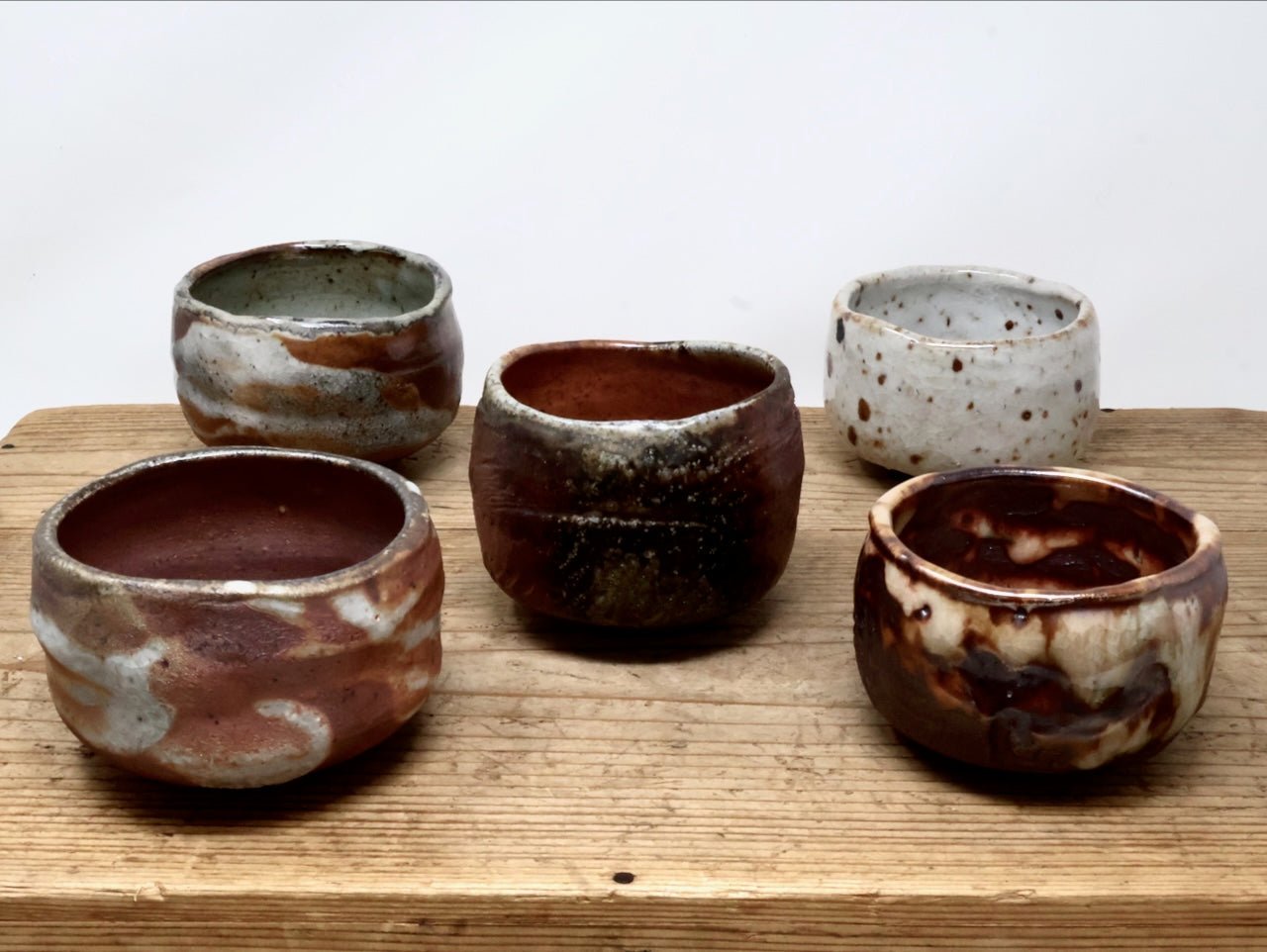

"Where earth meets matcha — a quiet moment, held in clay.”

A bowl of Bhutanese desi, held in clay.
Warmth, culture, and craftsmanship—together in every moment.
I never really thought much about a bowl before.
It’s just something you use, something you pick up without thinking. But the first time I held a chawan, it felt a little different. There’s no handle, nothing guiding you, just the shape, the warmth, and the way it sits in your hands. You become aware of it, and maybe even of yourself.
We often talk about tea bowls as if they were just containers. But spend even a moment with a well-made chawan, and that idea starts to fall apart. It’s not just something that holds tea.
It becomes part of the experience, maybe the most intimate part.
In Japanese tea culture, the chawan (茶碗) is used for matcha and plays a central role in chanoyu, the Way of Tea (Sen, 1979). Every detail feels intentional, the curve, the texture, even how it meets your hands when you lift it.
But the more I thought about it, the more it didn’t feel like something that belongs to just one place, or one ritual.
It’s still just a bowl. And maybe that’s exactly why it matters.

“Seasonal matcha, grounded in nature and shaped by hand.”
It Started With a Problem
At some point in history, tea changed.
In early China, tea wasn’t whisked the way we know it today. It was boiled or steeped, and the bowls reflected that. But during the Song dynasty, tea became something more, something almost performative (Benn, 2015).
People began whisking powdered tea into fine foam. And suddenly, the focus wasn’t just the taste, but how the tea looked. That created a simple but interesting problem:
How do you see white foam on a white bowl?
The answer came through craft. Dark, iron-rich glazed bowls, what we now call tenmoku, began to appear. The deep black surfaces made the foam visible, almost glowing (Valenstein, 1998).
Those streaks, those patterns, those textures we admire today, they weren’t made just for beauty. They came from pushing the material to its limits.
Function and beauty met in the same place.
A Bowl That Traveled
What I find most interesting is that some of the most valued tea bowls in Japan were never made for tea at all. They were everyday Korean bowls, simple, used for food, nothing special at the time.
But when Japanese tea masters encountered them, they saw something different. The uneven shapes, the soft imperfections, the way they felt in the hand, it all carried a kind of honesty (Pitelka, 2005). They brought these bowls into tea culture, gave them names, and preserved them.
And just like that, something ordinary became something deeply meaningful.
It makes you think, maybe objects don’t become special because of how they’re made, but because of how we begin to see them.
A Form Without Borders
At its core, the chawan is just a bowl.
And the bowl exists everywhere.
That’s probably why it feels so familiar, even if you’ve never used one before.
Where I come from, and in places I’ve been, I can easily imagine it being used in so many ways:
- In Bhutan, it could hold Suja (butter tea) or desi, something warm in cold weather
- In India, it could carry Kheer, Halwa, or even Biryani, shared with family
- In Nepal, it could be filled with Gundruk ko Jhol, something simple and grounding
- In Korean homes, a similar bowl might hold Ramen noodles or small servings of Kimchi
- In Buddhist spaces, a bowl becomes something sacred, used for Offerings at the Altar

"From tea to offering — a Chawan carries meaning beyond the moment.”
Different places. Different uses.
But the same feeling.
The form adapts.
The meaning changes.
But something about it stays the same.

A chawan holding more than tea — layered with Bhutanese suja, where richness meets ritual.
Earth, fire, and butter — a quiet harmony in every sip.”
Designed for Use, Not Limitation
What makes the chawan last through time is not just how it looks, but how it works.
It’s wide enough to allow movement.
Deep enough to hold warmth.
Balanced enough to feel steady in your hands.
These things matter whether you’re making matcha, eating something warm, or simply holding it.
It doesn’t feel like it was made for just one purpose.
It feels like it was made for people.
More Than an Object
Over time, I’ve started to see the chawan differently.
Not just as a tea bowl, but as something that fits into moments.
It can be a bowl of matcha in the morning.
Or coffee when everything is quiet.
Or ramen on a cold day.
Or dessert shared with someone.
Or something that just sits on a shelf, holding space.
It can be a gift.
Or a memory.
Because a bowl is never just a container.
It holds time.
It holds presence.
It holds memory.
A Living Object
At O5 Tea, the chawan isn’t just seen as a traditional item.
It feels like a living object, something that moves between cultures, between rituals, between people.
You don’t need to follow a ceremony to use it.
You don’t need to know everything about tea.
You just need a moment.
And something simple to hold.
References
- Benn, J. A. (2015). Tea in China: A religious and cultural history. University of Hawai‘i Press.
- Pitelka, M. (2005). Japanese tea culture: Art, history, and practice. Routledge.
- Sen, S. (1979). The Japanese way of tea: From its origins in China to Sen Rikyu. University of Hawai‘i Press.
- Valenstein, S. G. (1998). A handbook of Chinese ceramics (Rev. ed.). Metropolitan Museum of Art.

Comments