Lapsang Souchong. History, how its made and why we love it.
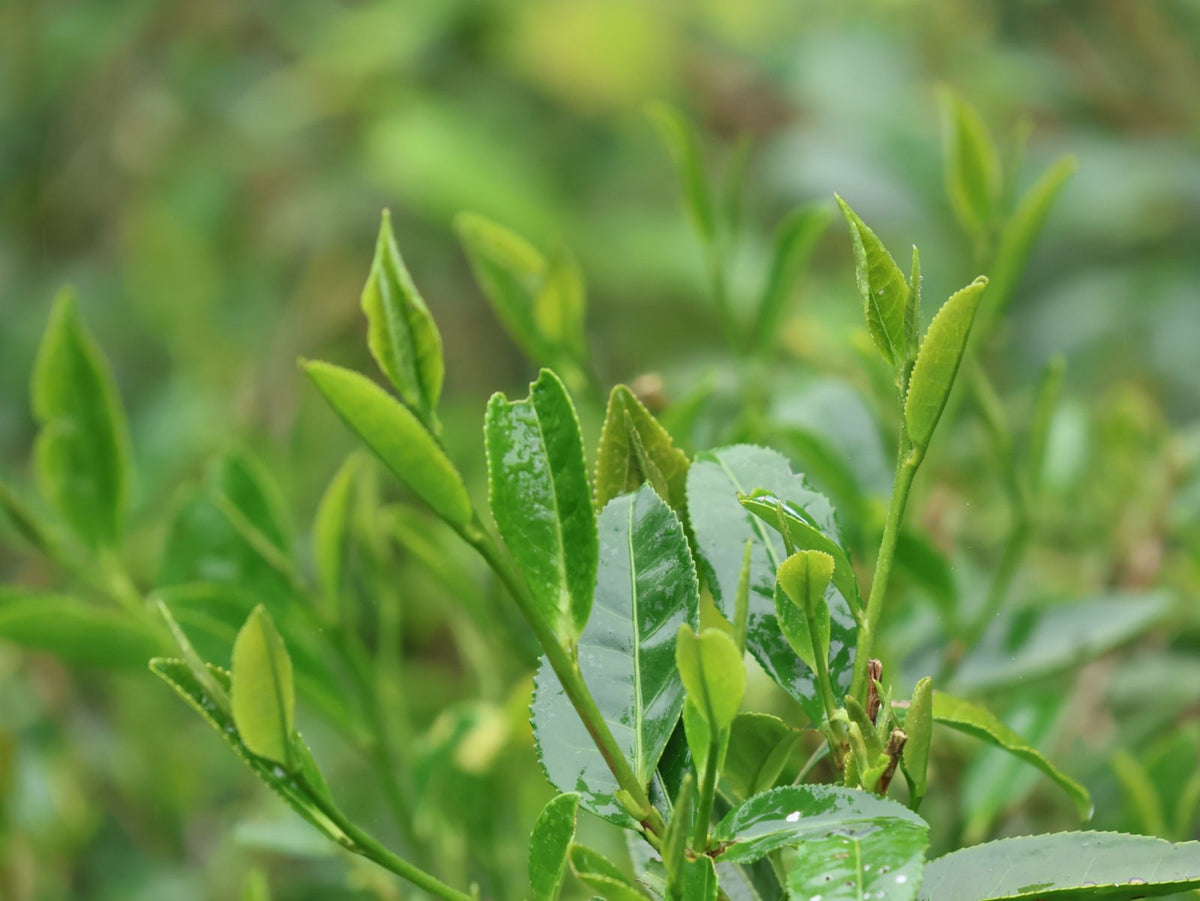
Some teas whisper. Lapsang Souchong walks in smelling like a campfire in a pine forest, sits down, and tells you a 400-year-old story. Love it or (at first) hate it, this is the tea that kicked off the whole idea of “black tea.” Here's what it is, where it really comes from, how it's made, and why a tiny village called Tongmuguan 桐木关, and one family-run company there, matter so much to the story.
Lapsang Souchong at a glance
- Chinese name: 正山小种 (Zhèngshān xiǎozhǒng), roughly “the small variety from the true mountain.” Also written 立山小种. Japanese: ラプサン・スーチョン / 正山小種; Korean: 정산소종.
- Type: Black tea (Chinese hóngchá 红茶, “red tea”), traditionally dried over pinewood smoke. Unsmoked versions exist as well.
- Home: Tongmu Village 桐木村, Xingcun Town 星村镇, Wuyishan City, Fujian, inside the Wuyi Mountains 武夷山 UNESCO World Heritage Site and Biosphere Reserve.1,3,11
- Signature flavour: Pine smoke and dried longan 桂圆, with a mellow, sweet body.10,11
- Claim to fame: Widely regarded as the world's first black tea.3,14
- Protected name: One of the first 100 Chinese geographical indications protected in the EU (in force since 1 March 2021).8,9
1. What is Lapsang Souchong?
Lapsang Souchong is a black tea from the Wuyi Mountains of northern Fujian. In China it is called 正山小种, Zhengshan Xiaozhong. 正山 (zhèngshān) means the “true” or “proper” mountain, and growers used the word to set the genuine article apart from imitations made elsewhere. 小种 (xiǎozhǒng) means “small variety,” and the English word “Souchong” is generally accepted as a Cantonese-style rendering of it.19,34 Nobody fully agrees on where “Lapsang” comes from. One theory traces it to the Fuzhou dialect, in which the words for being smoked over pine sound something like “Le-xun.” That would make the whole name mean, more or less, “pine-smoked small variety.”19
Chinese standards put Lapsang in a family of its own called souchong black teas (小种红茶), separate from gongfu (congou) black teas and broken black teas. Souchong teas are withered, rolled, oxidised, smoke-roasted (熏焙) and dried, and they come in two kinds: Zhengshan Xiaozhong (正山小种, the original from the core area) and smoked souchong (烟小种, made outside it).10,12 Zheng Shan Tang also uses the older term Waishan Xiaozhong (外山小种, “outer mountain” souchong) for tea from the surrounding areas.34
A group standard from the Cross-Strait Tea Industry Exchange Association 海峡两岸茶业交流协会 defines Zhengshan Xiaozhong as black tea made by traditional local methods from fresh leaf grown in Tongmu Village, Xingcun Town, and the Wuyi Mountain nature reserve area, with a dried-longan character and pine-smoke aroma.11 The same standard recognises aged Lapsang (陈年正山小种) as tea stored for at least five years.11
Smoked vs. unsmoked: the two faces of Lapsang
Here's something that surprises a lot of people. In much of the West, “Lapsang” means a tea that tastes like pine tar. In Tongmu, a good percentage of the production is unsmoked, with floral, honeyed, longan-like sweetness. Lapsang has always been more popular abroad than at home.22
2. Tongmuguan: a tea village inside a nature reserve
Tongmuguan 桐木关 (“Tongmu Pass”) sits at around 1,000 m on the Fujian–Jiangxi border, on an old mountain road between the two provinces. It was one of the eight great passes of the Wuyi range.23 The village below it, Tongmu, has been the main home of Zhengshan Xiaozhong for more than 400 years.23
Tea isn't the only thing that makes the area special:
- Tongmu Village was brought into the Wuyishan National Nature Reserve back in 1979.18
- The Wuyishan area became a UNESCO Biosphere Reserve in 1987. Forest covers 96.3% of the reserve, which protects the largest and most intact mid-subtropical primary forest at its latitude.3
- In December 1999, Mount Wuyi was inscribed as a mixed natural and cultural World Heritage Site.29 It is recognised for its biodiversity and as the cradle of Neo-Confucianism.1
- Today it is part of Wuyishan National Park 武夷山国家公园, which covers about 1,280 km² across Fujian and Jiangxi.31
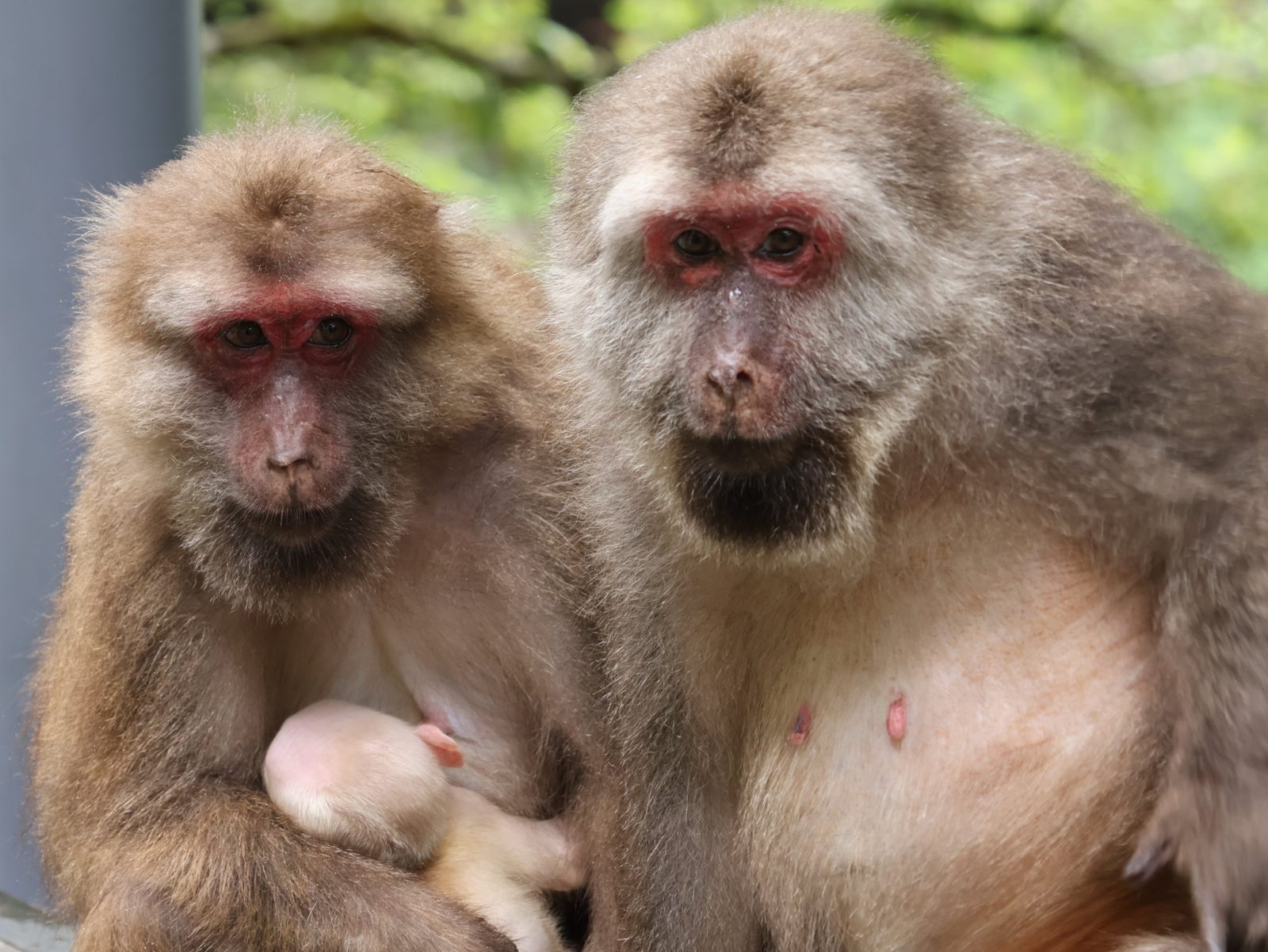
Visitors also get to know the locals. Tibetan macaques 藏酋猴 (Macaca thibetana) are often seen near Tongmu Village. According to Xinhua, the wild population has been growing steadily under the national park's strict protection.24,25
3. A short (smoky) history
The legend: soldiers, soggy leaves and a pine fire
Every tea origin story needs a twist, and Lapsang's involves an army. The details change with the teller, but the outline is the same. Late in the Ming dynasty 明朝, troops passed through or camped in Tongmu during the spring harvest. The villagers couldn't process their freshly picked leaves in time, and some say the soldiers slept on them. When the army left, the leaves had darkened and oxidised. To save the harvest, the farmers rolled them and dried them fast over local pine. The result was a dark, glossy tea that smelled of pine resin.21,22,34 Zheng Shan Tang's family history dates the event to around 1568 and credits a Jiang ancestor.34 Other tellings place it during the collapse of the Ming in the mid-1600s.22
The probably-truer story: weather
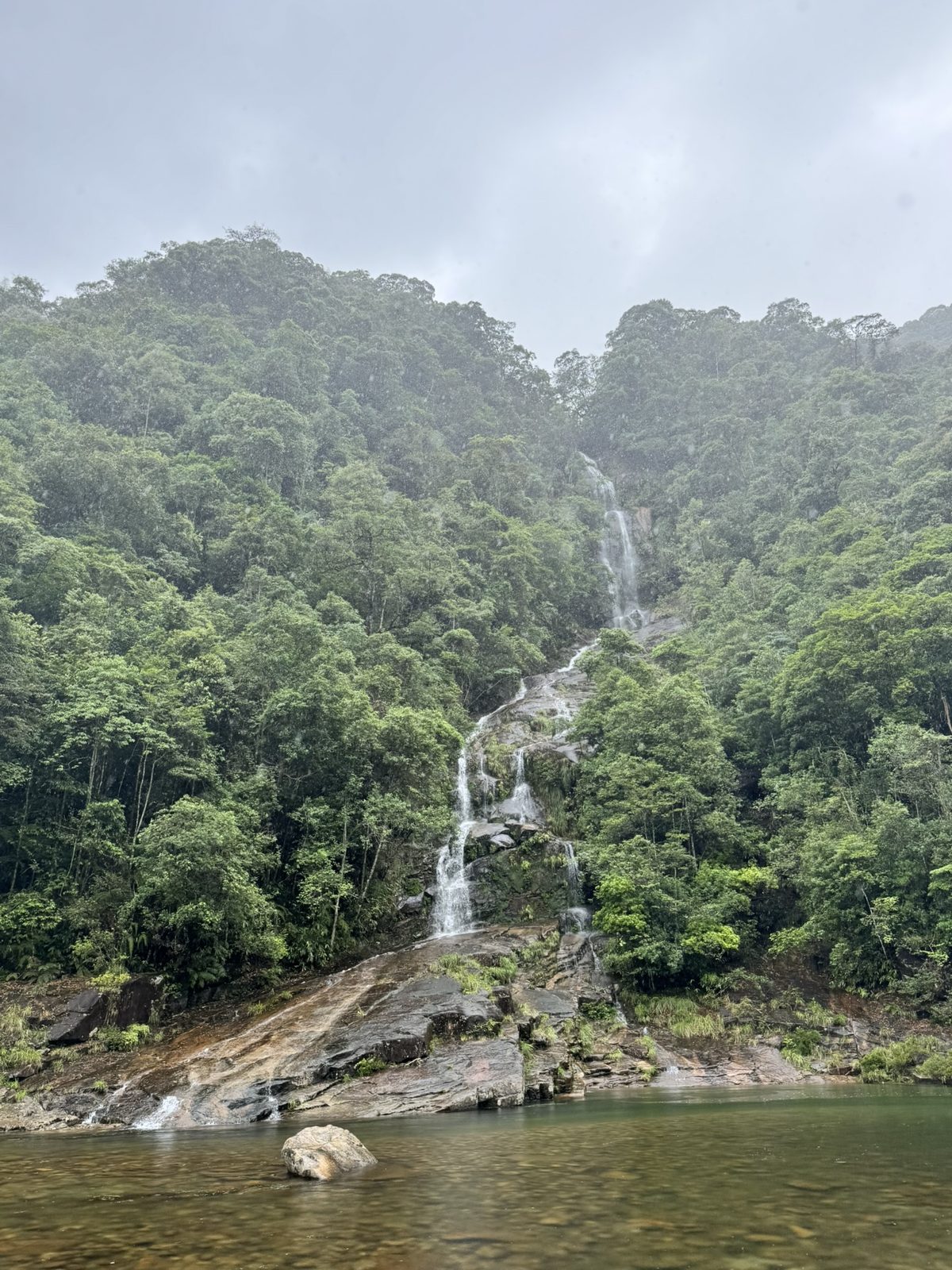
Sanlian Lifeweek 三联生活周刊 offers a less dramatic explanation that we find more convincing: the climate. Tongmu is foggy, with little sunshine, and the April-to-June tea season is often rainy. One year, the magazine reports, the tea season saw only two sunny days in a whole month. Withering and drying the leaves indoors over a wood fire wasn't a quirk. It was simply the sensible way to make tea up there.21 Look at our waterfall photo again and you'll see what they mean.
“Bohea,” the Dutch and the tea trade
Europe first knew Wuyi tea as Bohea, from the Minnan (Hokkien) pronunciation of “Wuyi.” Bohea later became a catch-all name for oxidised black teas, and by the mid-1700s it was close to a generic word for Chinese tea in English.19 Within that trade, Souchong was a premium grade. Historian Liu Yong's Leiden study of the Dutch East India Company tea trade describes fine Souchong from the Wuyi Mountains as having a fragrance of smoked pine, which put it in a different class from ordinary Bohea.16
Zheng Shan Tang's own history says Lapsang reached Europe through Dutch merchants in the early 1600s. It also credits the tea with inspiring Keemun 祁门红茶, first trial-produced in 1876.34 Historians still argue about some of the earliest dates. Nobody argues about the bigger picture: Wuyi black tea became a global commodity. The Scottish plant hunter Robert Fortune even named the Wuyi (“Bohea”) hills in the title of his 1852 travel book, A Journey to the Tea Countries of China; including Sung-Lo and the Bohea Hills.19
The 20th century: export numbers, then a slump
For much of the 20th century, Chinese export teas were sold under numbered marks instead of names. Grade 1 export Lapsang Souchong was sold as “8310,” and that's the name on the commemorative tin we carry (see below).35 By the 1990s, though, things were tough in Tongmu. Sanlian Lifeweek describes a market where almost nobody in China knew Zhengshan Xiaozhong and few people wanted to make black tea at all. Some farmers were selling their fresh leaf cheaply to be made into rock tea instead.21
The 2005 twist: Jin Jun Mei
The revival came in a surprising form. In July 2005, at the suggestion of Beijing tea friends Zhang Mengjiang 张孟江, Yan Yifeng 阎翼峰 and Sun Lianquan 孙连泉, Jiang Yuanxun 江元勋 and Zheng Shan Tang's tea masters, Liang Junde 梁骏德, Jiang Jinfa 江进发 and Hu Jiexing 胡结兴, made the first small batch of a bud-only black tea. They called it Jin Jun Mei 金骏眉. Full-scale production began in 2008.21 Its success sparked a black-tea boom across China. It also drew many Tongmu growers toward unsmoked, high-end teas, which is part of why smoked Lapsang is rarer today.20,22
4. How Lapsang Souchong is made
The basic steps are the same as for any black tea: wither, roll, oxidise, dry. What makes Lapsang different is where it's done and what it's done with. The whole process takes more than ten hours.34
The raw material: “wild” mountain tea
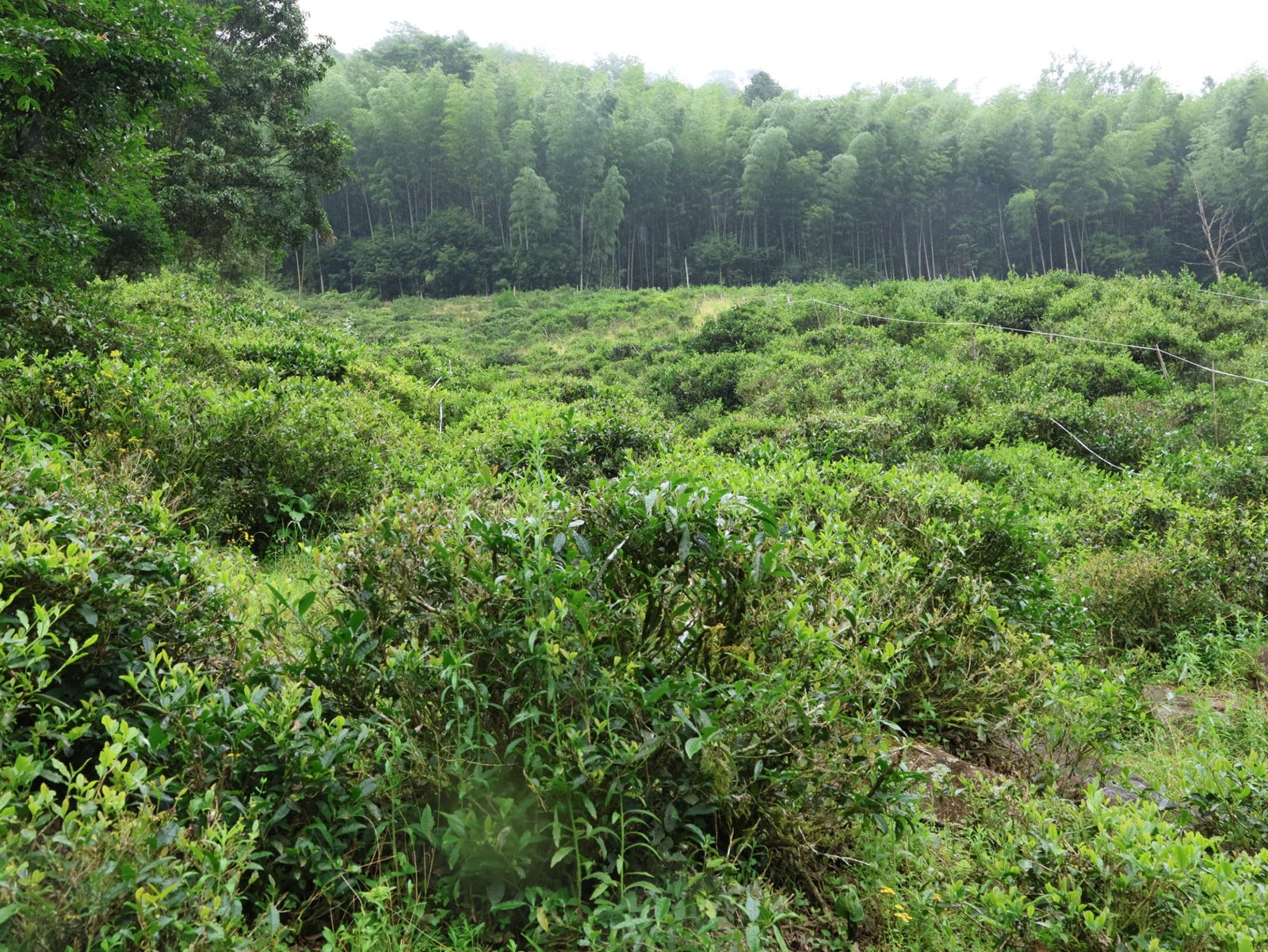
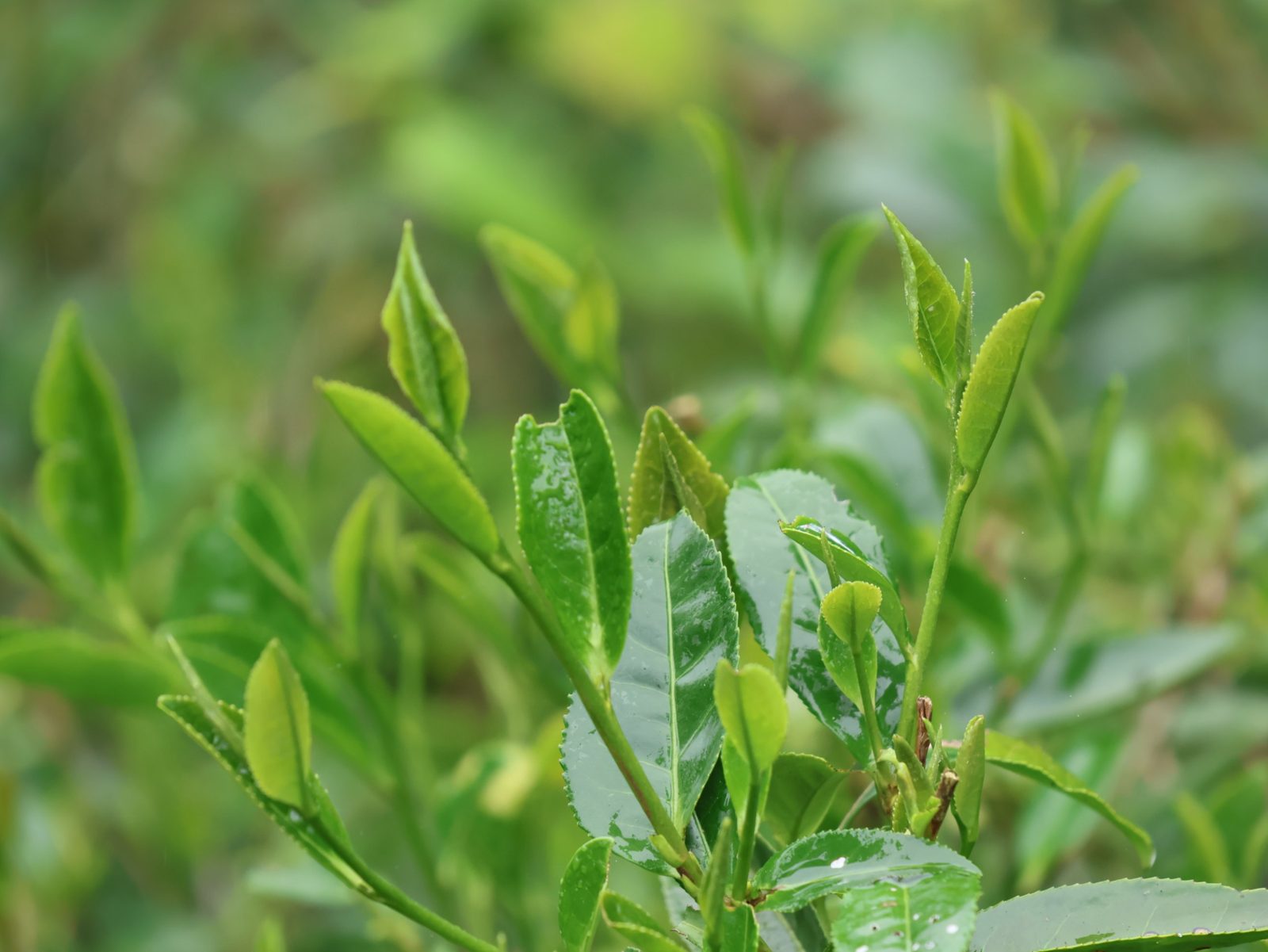
Tongmu's tea doesn't grow in tidy terraced rows. The bushes are scattered across the hillsides, mixed in with forest, and locals call it “wild tea” (野茶, yěchá).18 Traditionally, Zhengshan Xiaozhong is made from the seed-grown local population of Wuyi tea bushes known as Wuyi caicha 武夷菜茶.20 A worker interviewed by Sanlian Lifeweek put it simply: the gardens are “born and raised by heaven” (天生天养), with no fertiliser and weeding just twice a year.21
The qinglou: a smokehouse that is also a tea factory
Traditional Lapsang is made in a qinglou 青楼, a three-to-four-storey wooden building. It keeps the spring rain out and lets pine smoke rise slowly through every floor.18 Sanlian Lifeweek describes a four-storey fir building with the fire at the bottom, drying on the lower floors and withering on the upper floors. Early qinglou were heated by open fires indoors and caught fire more than once. In 1963, tea technician Ye Xingwei 叶兴谓 redesigned the floor as an “upside-down chimney” that channels the heat and smoke in from outside.21
Step by step
- Picking 采摘Pickers take one bud with two to four leaves. Lapsang traditionally uses a slightly more mature pluck than bud-heavy teas like Jin Jun Mei. Zheng Shan Tang says picking avoids rain, dew and harsh sun.21,34
- Withering 萎凋The leaves are spread on bamboo or wooden racks in the upper floors of the qinglou and warmed by pine heat from below. They are turned regularly until they soften and lose moisture.21,34
- Rolling 揉捻Rolling twists the leaves into shape and breaks their cells, which gets oxidation started.34
- Oxidation 发酵The rolled leaves are piled and covered with a damp cloth for several hours, Zheng Shan Tang says around seven, until they turn from green to coppery red.34 Tea people still call this step fājiào, “fermentation,” but chemically it's enzymatic oxidation.
- “Passing the red wok” 过红锅This is a step unique to Lapsang. The oxidised leaves are tossed by hand in a very hot wok for just 20–30 seconds. That stops oxidation and lifts the aroma, giving a mellower, sweeter cup and a clearer liquor. It's laborious and skill-dependent, and many makers have dropped it.21
- Re-rolling 复揉A second rolling tightens the leaves.35
- Smoke-roasting 熏焙The leaves are laid out on racks and dried slowly over smouldering pine. The smoke rises through the qinglou and gives the tea its pine and longan character.21,34
- Final firing 复火A last drying brings the moisture down for storage.35
Why the pinewood matters (and why it's getting rare)
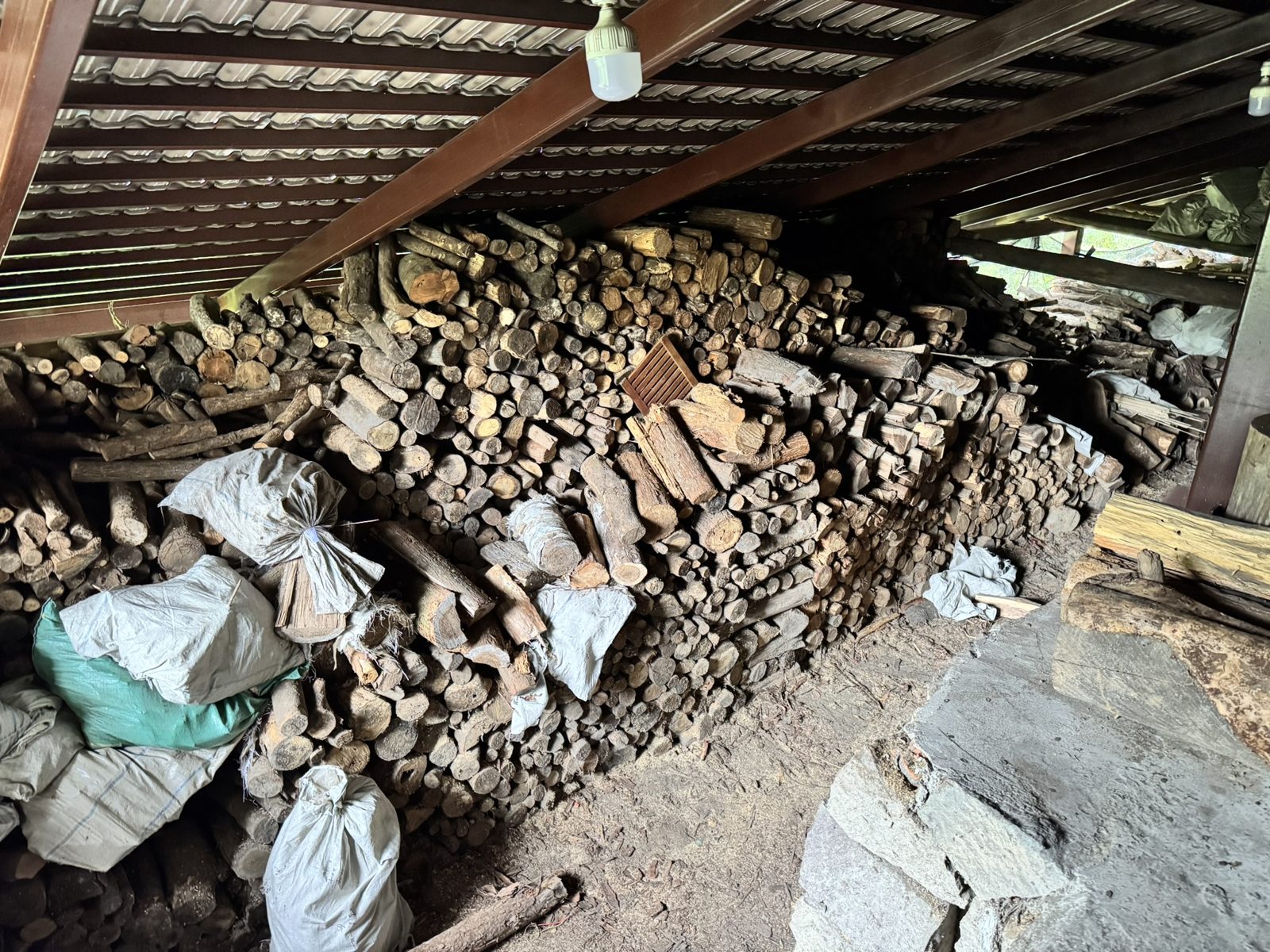
The traditional fuel is local Masson pine 马尾松 (Pinus massoniana, often translated as Chinese red pine).18,21,22 It is also the biggest threat to traditional Lapsang. Logging local pine is banned in the protected area, so for years the wood was brought in from elsewhere in Nanping. Then pine wilt nematodes 松材线虫 spread through the region's forests. Nanping restricted the transport of pinewood in 2018, and local authorities banned bringing Chinese red pine into Tongmu in 2020. Some factories are still working through stockpiles laid in before the bans.18,22 Scientists are testing alternative smoking materials. A 2025 study in Food Chemistry: X found that specially designed fuel rods used at the drying stage gave the most pleasant smoky aroma, though growers say the substitutes still don't taste quite like real pine.13,22
5. Where the smoke flavour comes from (the science bit)
The smell of Lapsang isn't just “smoke.” A landmark 2005 study in the Journal of Agricultural and Food Chemistry, co-authored by Jiang Yuanxun himself, identified 49 aroma compounds in Lapsang and smoked souchong teas.12 It found that:
- Longifolene and α-terpineol were the most abundant aroma compounds.12 Both come from pine resin, and they give the woody, resinous notes.
- Longifolene, longicyclene, guaiacol, 4-methylguaiacol and 4-ethylguaiacol were found only in this kind of black tea.12 The guaiacols are the “smoky” phenols you also meet in smoked foods.
- During smoking, the tea's own aroma compounds decreased, while pine terpenoids and wood-breakdown products rose sharply.12 In other words, the leaf really does soak up the forest.
A 2025 study confirmed β-caryophyllene, nerolidol, guaiacol and α-terpineol as key woody and smoky compounds in traditionally smoked souchong.13 A 2024 study in Foods showed that higher grades of Lapsang score better on sensory evaluation and differ mostly in their terpenoid profiles.14 Unsmoked bud teas like Jin Jun Mei, by contrast, are dominated by floral alcohols such as phenylethanol, linalool and benzyl alcohol.15 No wonder they taste of honey and flowers instead of campfire.
Fun aside: Japanese tea lovers often compare strong Lapsang to Seirogan 正露丸, a wood-creosote stomach remedy. Chemically that's a fair comparison, because guaiacol is a major component of wood creosote.
6. Zheng Shan Tang 正山堂 and the Jiang family
The history of Lapsang is closely tied to one family and one company. Zheng Shan Tang (正山堂, Fujian Zhengshantang Tea Co.) is based in Miaowan 庙湾, Tongmu Village. Its founder, Jiang Yuanxun 江元勋, is described as the 24th-generation inheritor of the Lapsang Souchong tradition. His family has lived in Tongmu for generations.33,34
A timeline
- c. 1568: According to the family's history, a Jiang ancestor makes the first Lapsang Souchong in Tongmu.33,34
- 1988: The Tongmu Tea Factory is founded, with Jiang Yuanxun in charge of processing technique.21
- 1997–98: Jiang, by then factory director, resigns after the provincial export company refuses to raise the price paid for raw tea by a single yuan per kilo. He sets up his own Yuanxun Tea Factory 元勋茶厂, which grows into Zheng Shan Tang.21,26,33
- 1999: The factory earns USDA NOP organic certification.33
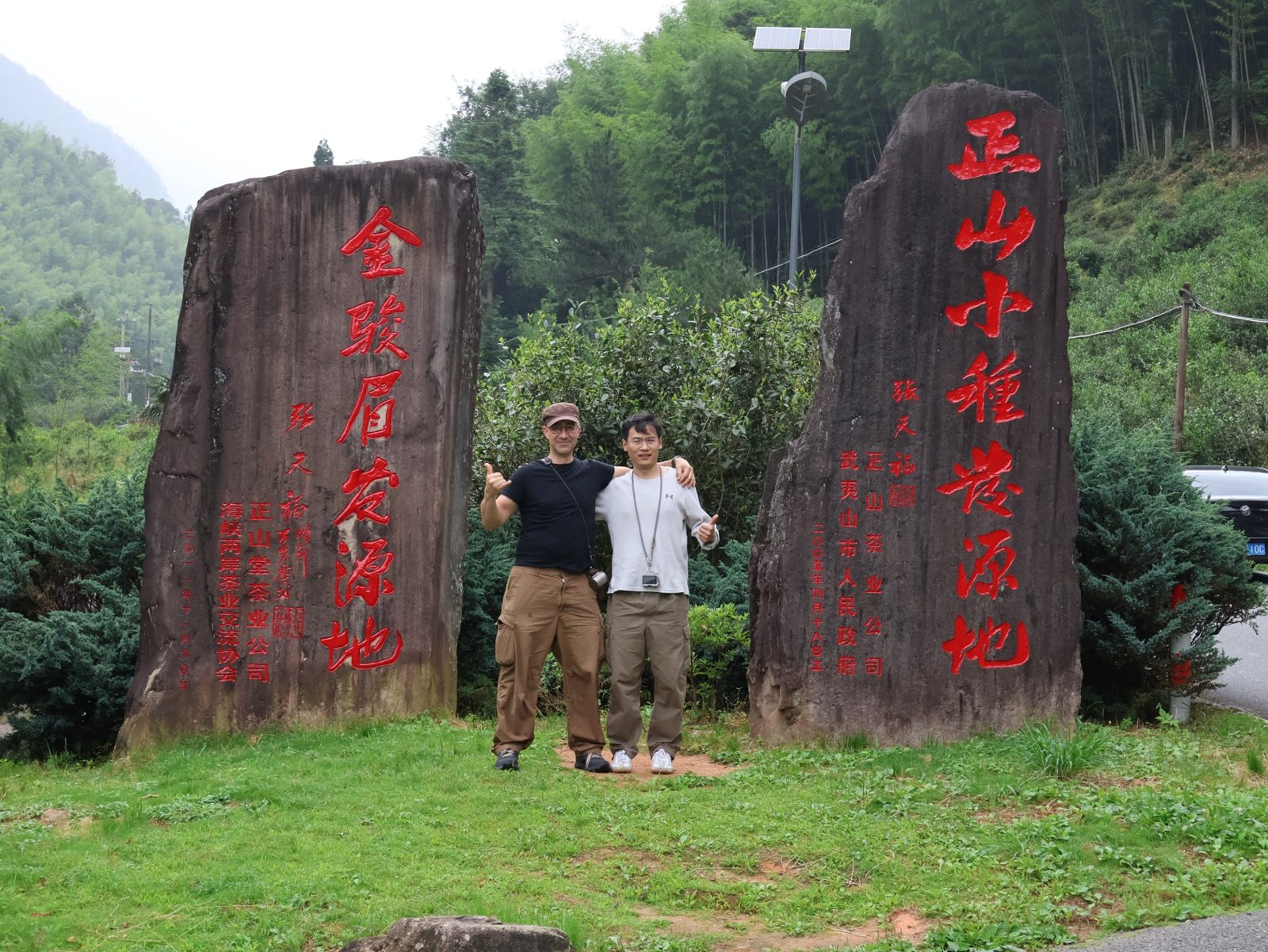
- 2005: Jin Jun Mei 金骏眉 is born in July (see above).21 The same year, on 18 April, the “Birthplace of Zhengshan Xiaozhong” stone 正山小种发源地 is erected in Miaowan by the Wuyishan Municipal People's Government and the Zhengshan Tea Company. Its calligraphy is by the revered tea scientist Zhang Tianfu 张天福 (1910–2017).27
- 2011: A companion stone, “Birthplace of Jin Jun Mei” 金骏眉发源地, also in Zhang Tianfu's hand, is erected by Zheng Shan Tang and the Cross-Strait Tea Industry Exchange Association 海峡两岸茶业交流协会.
- 2005: Jiang Yuanxun co-authors the landmark Journal of Agricultural and Food Chemistry study on the aroma chemistry of pine-smoked Lapsang.12
- 2012: Jiang Yuanxun is among the drafters of China's national standard for souchong black tea, GB/T 13738.3-2012.10
- 2015: Zheng Shan Tang leads the drafting of the Jin Jun Mei industry standard.33
- Today: Zheng Shan Tang has taken its black-tea techniques and supply-chain standards to tea regions across China.26
About the name: 金 (gold) refers to the golden buds and 眉 (eyebrow) to their shape. The middle character is more of a puzzle. Sanlian Lifeweek reports that the group chose 骏 to evoke towering peaks and buds shaped like little seahorses.21 Our own product notes link it to master Liang Junde 梁骏德, one of the makers of the first batch.35 He is now a recognised inheritor of Zhengshan Xiaozhong craft, which is listed as intangible cultural heritage.28 In 2022, UNESCO inscribed Traditional tea processing techniques and associated social practices in China on the Representative List of the Intangible Cultural Heritage of Humanity, covering all six tea categories, black tea included.5,6
7. My own road to Tongmuguan
My first real encounters with Wuyi rock tea 武夷岩茶 happened right here in Vancouver, at the Chinese Tea Shop, run by my very old friend Daniel Lui. If you're in town, go. Seriously: sit down, let Daniel pour, and lose an afternoon. Those cups sent me looking for the mountains they came from.
— From the O5 founder's notebook
That curiosity led me to Wuyi Shan in 2015, travelling with Mao Rende, who gave me a fantastic introduction to the region. He opened the door to great rock tea (the “rock” in yánchá 岩茶 refers to the craggy cliffside terroir where it grows)30 and to great black tea. Thanks to him, I tasted an incredible wild-harvested, unsmoked Lapsang. It was all honey, longan and forest air, with no smoke at all. It completely rewired what I thought “Lapsang” meant.
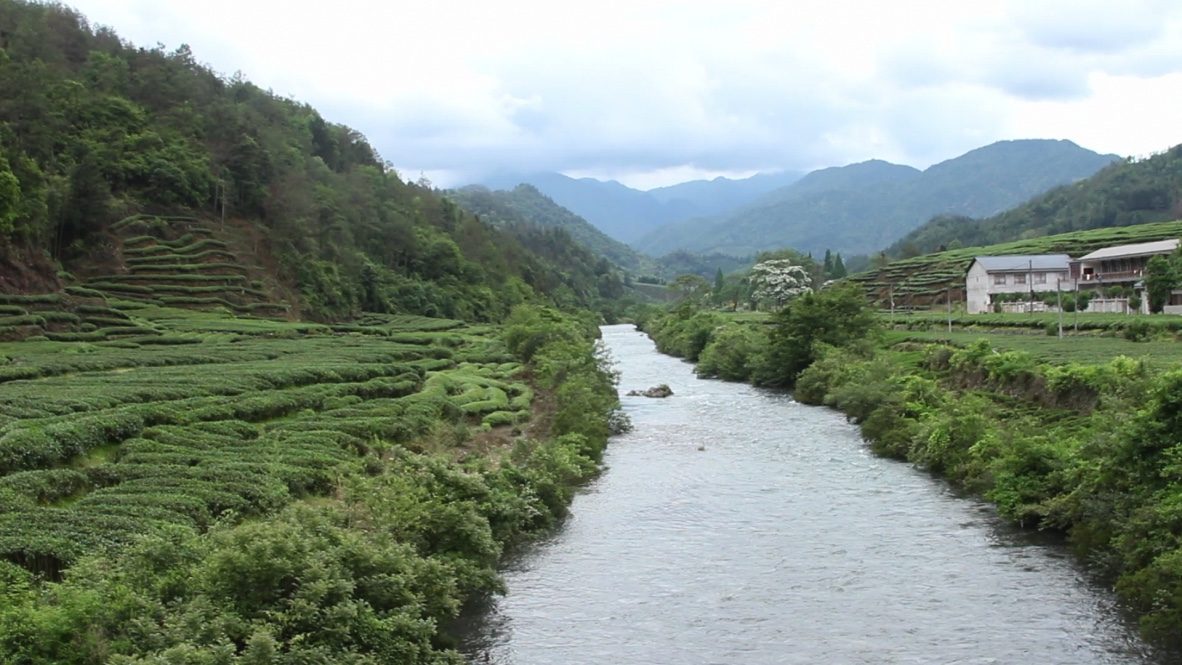
In 2026 I had the honour of going much deeper: a visit to Zheng Shan Tang's factory in Tongmuguan with Mr. San Yuan Heng. We walked the scattered, misty tea gardens, met the macaques, stood next to that mountain of pinewood, and tasted Lapsang where it was born. We're genuinely honoured to partner with Zheng Shan Tang to share some of these cultural treasures with tea lovers in North America.
8. How to brew Lapsang Souchong
Lapsang is forgiving and stands up to lots of steeps. These are our house methods.
| Gaiwan (gongfu style) | Mug or teapot | |
|---|---|---|
| Leaf | 4–5 g | A generous pinch (about 3 g) |
| Water | 120 ml, 90–100 °C | 300–350 ml, just off the boil |
| Steeps | Pour off immediately for the first 3–4 steeps, then add 5–10 s each round. Expect 8–10 steeps. | Steep, sip, and top up when a third to half remains. |
| Tip | Warm the gaiwan, add the leaves, cover and shake gently 3–4 times. Smell the warm dry leaf: that's longan and pine. | Smoked Lapsang takes milk beautifully. Brew it stronger and add a splash. |
Pairing ideas: smoked salmon, aged cheddar, dark chocolate, mushroom dishes, or a bowl of ramen. The tea makes a great cooking ingredient too. Grind a little into a rub for grilled meat or tofu.
9. Taste the story at O5
All three teas below come from Zheng Shan Tang in Tongmuguan.

TONGMUGUAN | UNESCO Reserve Lapsang Souchong
One bud and two leaves from scattered trees in the reserve at about 800 m. Made the full traditional way, including the red-wok pass, and smoked and roasted over Masson pine. Expect pine smoke on the nose and a mellow, sweet, longan-soup cup.
See the tea8310 | Traditional Lapsang Souchong
A tribute to the old export mark for Grade 1 Lapsang. Pine smoke, dried longan and dark honey, with a fresh, mellow finish. This is the “campfire” Lapsang many people grew up with, done properly.
See the teaJIN JUN MEI | Golden-Bud Black Tea
The 2005 game-changer from the house that created it. Tens of thousands of hand-picked buds go into every jin. Wildflower honey, baked sweet potato and golden fruit, silky over many steeps.
See the teaSmoke-curious? Lapsang's pine smoke is the original, but it isn't the only way to put smoke in a cup. Try our whisky-cask-smoked black teas, Smoke-Umidori and Whisky Bonbon, or the bamboo-aged, smoked Assam Singpho Falap.
10. Lapsang Souchong FAQ
What does Lapsang Souchong taste like?
Traditional smoked Lapsang tastes of pine smoke and resin over a sweet, mellow black tea with a dried-longan note. Unsmoked Lapsang is floral, honeyed and fruity. Good smoked Lapsang should smell of sweet wood, not ashtray.
Is Lapsang Souchong really the first black tea?
It is widely regarded as the world's first black tea. Wuyi Mountain is called the birthplace of both black tea and oolong, and Chinese researchers describe Lapsang as historically the world's first black tea.3,14 The exact founding date (often given as around 1568) comes from family and local tradition, not from contemporary records.
What's the difference between Zhengshan Xiaozhong, Waishan Xiaozhong and smoked souchong?
Zhengshan Xiaozhong 正山小种 comes from the core Tongmu and Wuyi nature reserve area. Waishan 外山小种 (“outer mountain”) and smoked souchong 烟小种 are made outside it, often with smoke added to a standard black tea.10,11,34
Is Lapsang Souchong the same as Jin Jun Mei?
No, though they're siblings. Both come from Tongmu and the same family of local tea bushes. Jin Jun Mei 金骏眉, created in 2005, uses only buds and is unsmoked. Lapsang uses a bud plus several leaves and is traditionally pine-smoked.21
Why is authentic Tongmu Lapsang expensive?
There are a few reasons. The growing area is small and protected. Labour costs are high. Demand for unsmoked teas like Jin Jun Mei pulls leaf away from smoked Lapsang. And pinewood is now very hard to get. In 2024, Tongmu-grown Lapsang averaged about ¥1,000 per kilo in China.22
Can I add milk?
Yes. Smoked Lapsang is one of the few Chinese teas that really shines with milk. Brew it a little stronger first.
How should I store it, and does it age?
Keep it sealed, cool, dry, dark and away from strong smells. Lapsang can age gracefully: a Chinese tea group standard recognises “aged Lapsang” after five or more years of proper storage.11
Got a Lapsang story, or a question we didn't answer? Drop by the tea bar or get in touch. We love talking smoke.
Sources
International bodies, government and official records
- UNESCO World Heritage Centre. “Mount Wuyi” (property 911), inscription criteria. whc.unesco.org/en/list/911
- UNESCO World Heritage Committee. Decision 23 COM VIII.B.1, Mount Wuyi (China), 1999. whc.unesco.org
- Chinese Academy of Sciences. “Wuyishan Biosphere Reserve,” 5th World Congress of Biosphere Reserves (2026). english.cas.cn
- IUCN World Heritage Outlook. “Mount Wuyi,” 2025 Conservation Outlook. worldheritageoutlook.iucn.org
- UNESCO Intangible Cultural Heritage. “Traditional tea processing techniques and associated social practices in China,” inscribed 2022 (17.COM). ich.unesco.org
- 中国非物质文化遗产网 (China Intangible Cultural Heritage Network). 《品茶知文化丨“中国传统制茶技艺及其相关习俗”相关国家级非遗代表性项目(上)》, 2023. ihchina.cn
- European Commission. Press release IP/20/1602, “EU and China sign landmark agreement protecting European Geographical Indications,” 14 Sept 2020. ec.europa.eu
- EUR-Lex. Agreement between the EU and the Government of the PRC on cooperation on, and protection of, geographical indications (OJ L 408I, 4.12.2020). eur-lex.europa.eu
- Fujian Provincial Government / Mission of the PRC to the EU. “GI Episode 14: Three Tea Products of Mount Wuyi,” 2022. wb.fujian.gov.cn
- Standardization Administration of China. GB/T 13738.3-2012, Black tea, Part 3: Souchong black tea (drafters incl. Jiang Yuanxun). Summary at chinesestandard.net. Souchong classification also per NY/T 780-2004 as cited in T/XMSSAL 0016-2025 (ttbz.org.cn).
- 海峡两岸茶业交流协会. T/CSTEA 00036-2021《正山小种红茶冲泡与品鉴方法》(definitions of 正山小种红茶 and 陈年正山小种红茶). National Group Standards Platform. ttbz.org.cn
Peer-reviewed and academic research
- Yao, S.-S., Guo, W.-F., Lu, Y., Jiang, Y.-X. [Jiang Yuanxun 江元勋] (2005). Flavor characteristics of lapsang souchong and smoked lapsang souchong, a special Chinese black tea with pine smoking process. Journal of Agricultural and Food Chemistry 53(22): 8688–8693. doi:10.1021/jf058059i
- Tian, W. et al. (2025). Different smoking processes with the special fuel rods: Impart a smoky aroma to Souchong black tea. Food Chemistry: X 25: 102142. doi:10.1016/j.fochx.2024.102142
- Miao, P., Cheng, W., Zhou, Z., Ye, J., Wang, H., Jia, X., Li, Y., Zhang, Q. (2024). Combined Analysis of Grade Differences in Lapsang Souchong Black Tea Using Sensory Evaluation, Electronic Nose, and HS-SPME-GC-MS, Based on Chinese National Standards. Foods 13(21): 3433. doi:10.3390/foods13213433
- 侯冬岩、回瑞华、李铁纯、武晓英、吴寒 (2011).《正山小种红茶骏眉系列的香气成分研究》.《食品科学》32(22). sciengine.com
- Liu, Yong (2006). The Dutch East India Company's Tea Trade with China, 1757–1781. PhD thesis, Leiden University (published by Brill, 2007). hdl.handle.net/1887/5421
- Further reading: Gardella, Robert (1994). Harvesting Mountains: Fujian and the China Tea Trade, 1757–1937. Berkeley: University of California Press.
News, journalism and cultural institutions
- 李麑 (The Paper 澎湃新闻), 《武夷山国家公园︱公园和茶园之间》, 23 Sept 2019. thepaper.cn
- The Paper 澎湃新闻. Article on the origins of the names “Bohea” and “Lapsang Souchong” (cites Liu Yong 2007 and Fortune 1852). thepaper.cn
- The Paper 澎湃新闻. Article on Wuyi black teas: 正山小种 production area, 武夷菜茶, and the rise of 金骏眉. thepaper.cn
- 王鸿谅 (Wang Hongliang), 《中国红茶的“高山韵”》, Sanlian Lifeweek 三联生活周刊, republished by 人民政协网, 3 June 2014. p.1 · p.2 · p.3
- Xiao Kunbing, “What's Causing the Lapsang Souchong Tea Shortage?” Sixth Tone, 22 Feb 2024. sixthtone.com
- 《立关南望桐木村》, People's Daily Overseas Edition 人民日报海外版, 13 July 2024. paper.people.com.cn
- 新华社 (Xinhua), 姜克红 photos: 《武夷山国家公园:藏酋猴的乐园》. news.ifeng.com
- 环球网 / National Forestry and Grassland Administration feature on Wuyishan National Park and Tongmu Village. huanqiu.com
- 人民论坛网, 《武夷红茶出山记——正山堂推进红茶全产业链标准化发展》, 26 Mar 2024. rmlt.com.cn
- 东南网 / The Paper, 《108岁茶界泰斗张天福去世》, 4 June 2017. thepaper.cn
- 央广网 (China National Radio), 罗晓英, 《何以中国|非遗技艺传承人以匠心守护传统制茶之魂》 (on 正山小种红茶制作技艺 inheritor 梁骏德). news.ifeng.com
- Fujian Provincial Government. Feature on Fujian's World Heritage sites, June 2026. fujian.gov.cn
- China Cultural Center in Brussels. “Mount Wuyi.” cccbrussels.be
- IUCN Green List. “Wuyishan National Park (Jiangxi Area) 武夷山国家公园(江西片区).” iucngreenlist.org
- 新京报 (Beijing News). Feature on the pine-smoke aroma of Zhengshan Xiaozhong. bjnews.com.cn
Producer
- Zheng Shan Tang 正山堂 (official overseas store). “About Zheng Shan Tang” and company timeline. lapsangstore.com/pages/about-zheng-shan-tang · lapsangstore.com/blogs/whats-new
- Zheng Shan Tang 正山堂. “The history of Lapsang Souchong” (legend, names, Zhengshan vs. Waishan, process). lapsangstore.com/blogs/tea-origin
O5 Tea
- O5 Tea product notes from Zheng Shan Tang: Tongmuguan Lapsang Souchong (process incl. re-rolling and final firing); 8310 (export mark); Jin Jun Mei. Travel photographs © O5 Tea (Tongmuguan 2026; Wuyi Shan 2015).

Comments