![]()
![]()
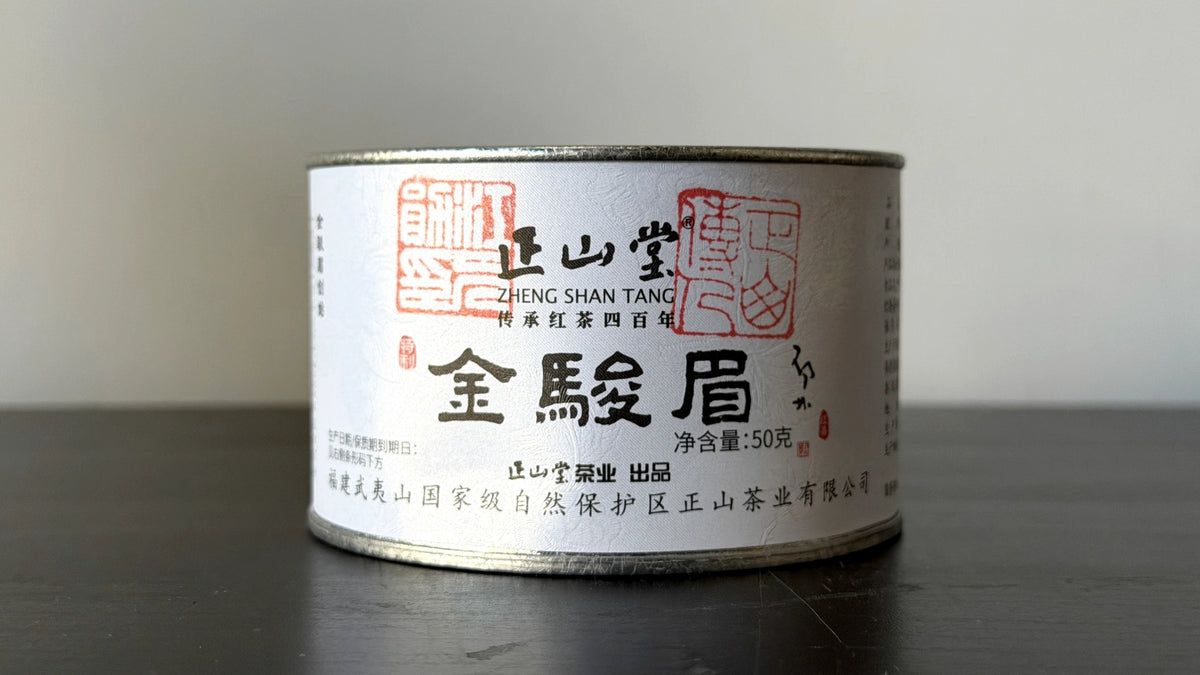
![]() JIN JUN MEI | Golden-Bud Black Tea, Tongmuguan · 50g Tin
The tea that set off China's premium black tea craze, made by the house that created it.
Tasting experience: wildflower honey and baked sweet potato, a soft fruity perfume, and a golden, silky cup that stays sweet steep after steep.
In 2005, in the misty valley of Tongmuguan, Zhengshantang's tea makers tried something nobody had done with Wuyi black tea. They used only the bud: the tiny, downy tip of the tea shoot, picked by hand in early spring before any leaf unfurls. It takes tens of thousands of these buds to make a single jin (500g) of tea.
They crafted the buds with the care of a Lapsang master, but without the smoke, and the result was Jin Jun Mei (金骏眉). The dry leaf is a mix of black and gold, slender and curled like an eyebrow. In the cup it gives a clear golden liquor with a honeyed, floral-fruity aroma. Within a few years Jin Jun Mei had become one of the most sought-after teas in China, and it inspired copies in almost every tea region.
This is the original, from the source. In 2015 Zhengshantang led the drafting of the industry standard that defines what Jin Jun Mei is. Every tea in the Junmei China range is made with this tea's craft.
Tea Info
-
TYPE: Black Tea, single-bud grade
-
ORIGIN: Tongmuguan, Wuyi Mountain National Nature Reserve, Fujian, China
-
GPS: 27.7°N 117.7°E
-
PLUCKING: Single buds, hand-picked in early spring
-
PROCESS: Jin Jun Mei craft (unsmoked)
-
TASTING NOTES: Wildflower Honey | Sweet Potato | Golden Fruit
-
PRODUCER: Zhengshantang 正山堂
Brewing Guide
-
WATER: 100ºC | 120ml
-
TEA: 4g
-
STEEP: pour off immediately for the first 3 steeps, then add 3–5" each round | 8+ steeps
-
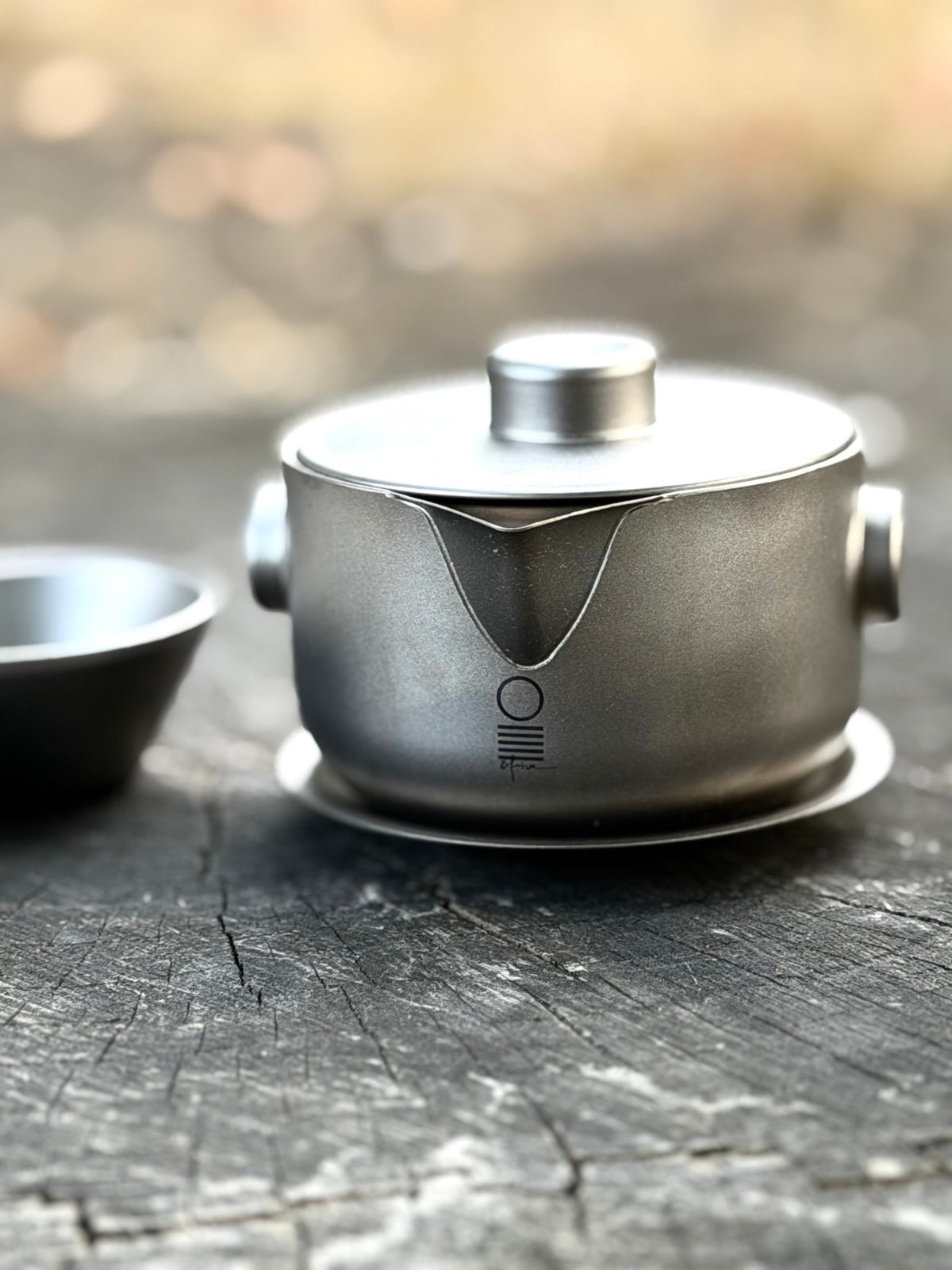
The Zhengshantang way: warm the gaiwan, add the buds, lid on, and give it 3–4 gentle shakes to "wake" the tea. Pour in a slow circle around the edge to about 90% full.
-
Mug style: a pinch of buds in a 300–350ml glass with boiling water. Watch them sink, then top up when a third to half the cup remains.
Fun fact: the name is said to break down as Jīn (金, gold) for the golden buds, Jùn (骏) from the master tea maker who led its creation, and Méi (眉, eyebrow) for the shape of the buds.