Teapot 05 — 龙蛋式 Longdan-style — Dragon egg
We acquired this collection from our old friend Zhang Tao, who personally purchased the teapots in Yixing and brought them to Canada in 2014. Their exact production dates are unknown, but we believe they were likely made in the late 1990s or early 2000s. Every piece is unique, with its own individual character and surface variations.
- Capacity: 240 mL.
- Collection: Yixing Ancient Dragon Kiln Zisha; origin and firing designation supplied with the collection.
- Tall egg-shaped body with rounded shoulders
- Short tapered spout and circular loop handle
- Deeply domed lid continuing the upper contour; spherical finial
The shape
龙蛋式 Longdan-style — Dragon egg
The body and deeply domed cover form a continuous, vertically elongated egg, accompanied by a short tapered spout. This is the strongest match in the group for 龙蛋, also written 龙旦. Baidu Baike describes the elongated egg contour; that morphological description fits the photographs. The name evokes a dragon’s egg. The identification rests on shape, without adopting unsupported origin legends or claims about a specific inventor or dynasty. [CN1]
The story of the dragon kiln
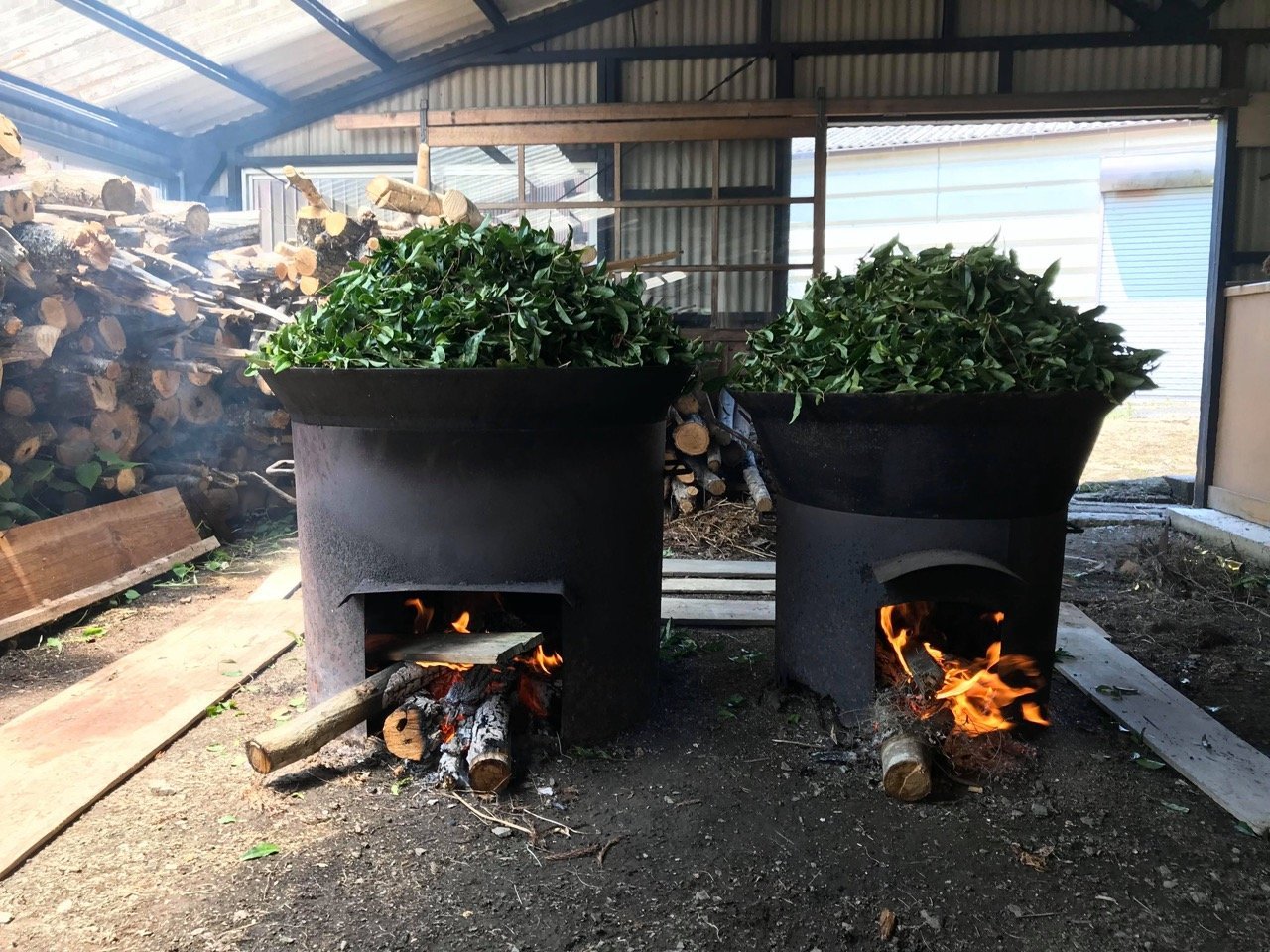
In Dingshu Town (丁蜀镇), Yixing, Jiangsu, the Qianshu Ancient Dragon Kiln (前墅古龙窑) stretches up a hillside like a resting dragon. Dating to the Ming dynasty, its long firing chamber follows the slope: the incline encourages a natural draft, carrying heat upwards as fuel is fed through openings along the sides. It belongs to the landscape that nurtured Yixing’s purple-clay (紫砂) pottery culture.
The kiln is 43.4 metres long and was designated a nationally protected cultural site in 2006. Its history includes everyday pottery—basins, jars and other useful vessels—not only teapots. The local ceramic association calls it 活着的文物
, a “living cultural relic.” Continued traditional firing preserves both the structure and the skills of the people who tend it. [K1] [K2]
In wood firing, the path of the flame, the atmosphere and deposits from the fuel can contribute to differences in colour and surface. These variations are part of the story supplied for this collection. A photograph alone cannot establish the exact firing conditions of an individual pot.
Sources
-
CN1. 百度百科:龙蛋壶 — Baidu Baike, Longdan; secondary reference used for morphology only.
-
S1. National Palace Museum, Taipei, “Red clay teapot with Si-ting style, 19th–20th centuries,” 南普贈000010N000000000; CC BY 4.0.
-
K1. Yixing Ceramic Industry Association, “前墅龙窑”.
-
K2. Yixing Municipal Government / Yixing Daily, “宜兴前墅龙窑获评‘国家工业遗产’,” 31 October 2025.