Teapot 10 — 高身圆壶 Gaoshen yuanhu — Tall rounded form
We acquired this collection from our old friend Zhang Tao, who personally purchased the teapots in Yixing and brought them to Canada in 2014. Their exact production dates are unknown, but we believe they were most likely made in the late 1990s or early 2000s. Every piece is unique, with its own individual character and surface variations.
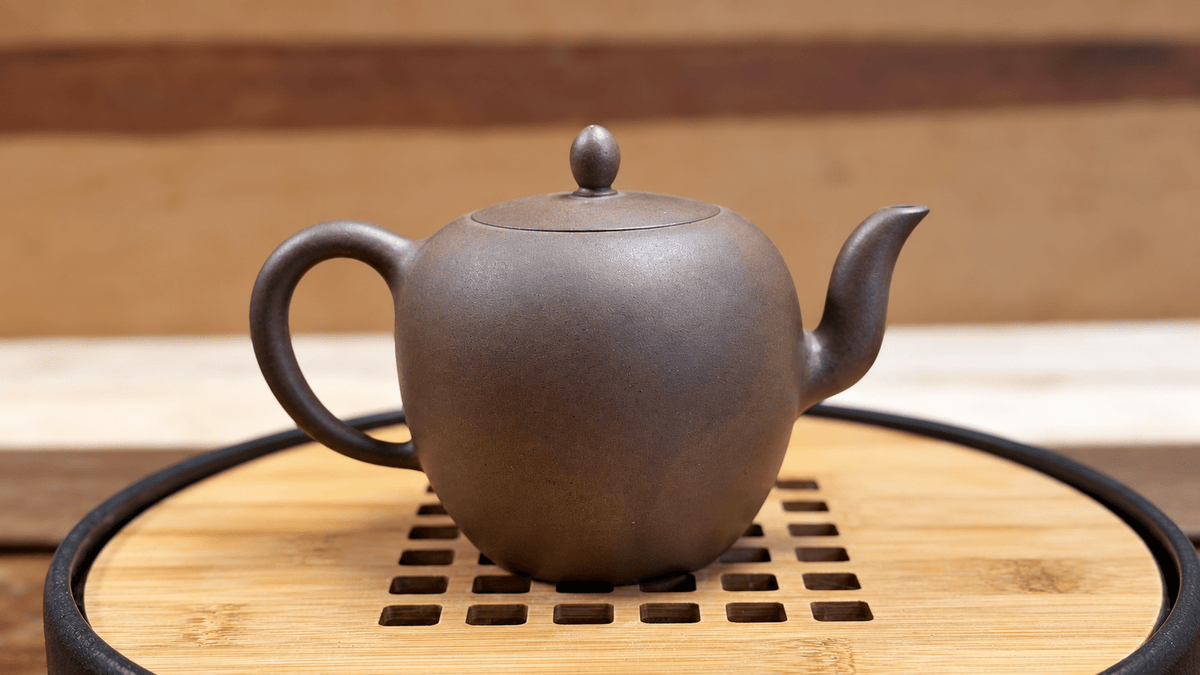
- Capacity: 260 mL
- Collection: Yixing Ancient Dragon Kiln Zisha; origin and firing designation supplied with the collection.
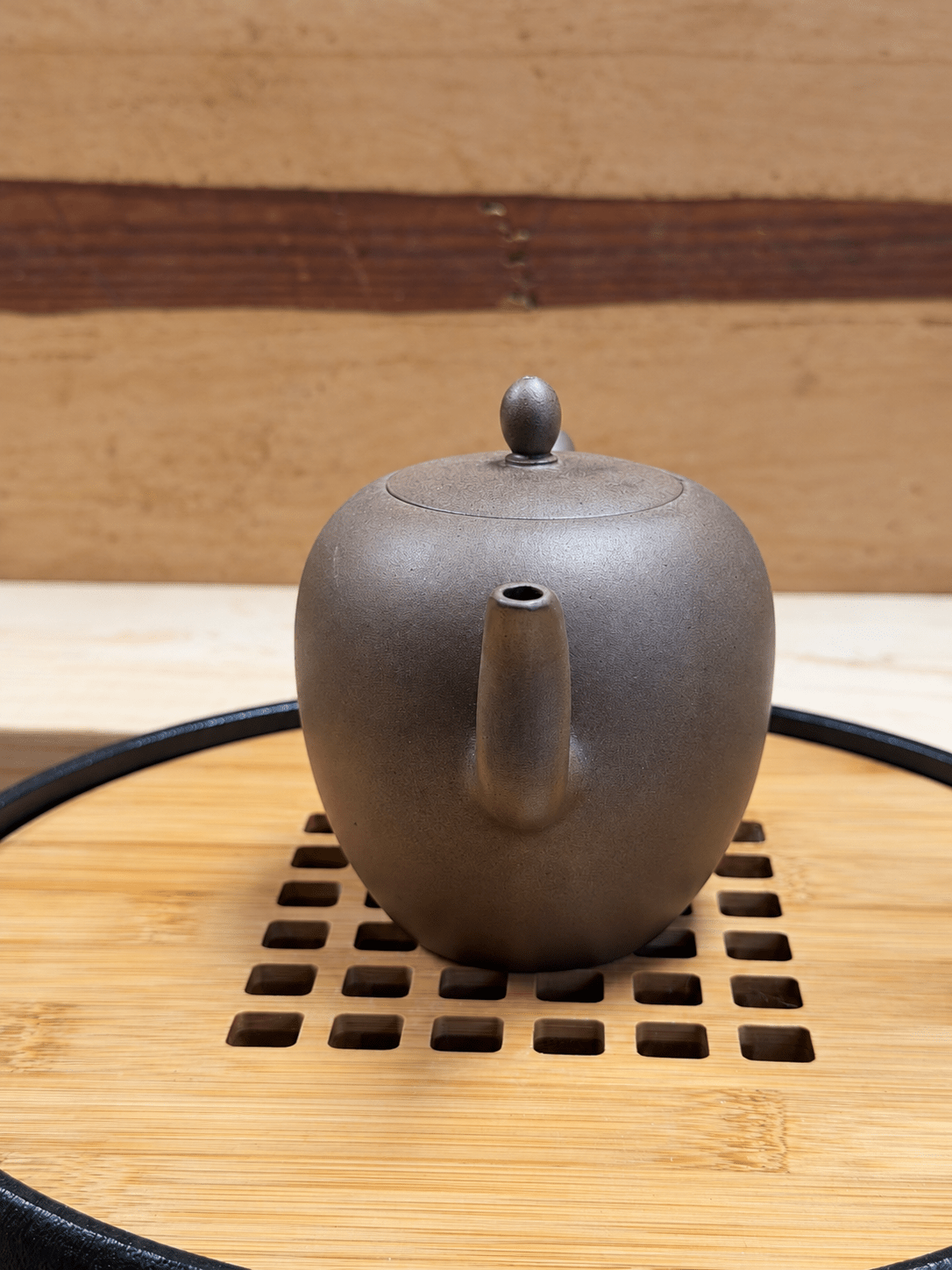
- Tall rounded body with a pear-like taper towards the top
- Gracefully elevated, upward-curving spout
- Large circular loop handle
- Recessed circular base with an impressed seal
The shape
高身圆壶 Gaoshen yuanhu — Tall rounded form
The tall body draws inward at the top and carries a rising curved spout, inviting a 梨形 (pear-form) comparison. However, the nearly flat recessed lid and elongated upright finial differ substantially from the domed Siting-style pot documented by the National Palace Museum. Nor does the silhouette establish the weight-shaped Qinquan pattern. 高身圆壶 preserves what is visible; pear-like remains a secondary comparison, and 思亭 is not assigned as the primary name. [CN1] [CN2]
The story of the dragon kiln
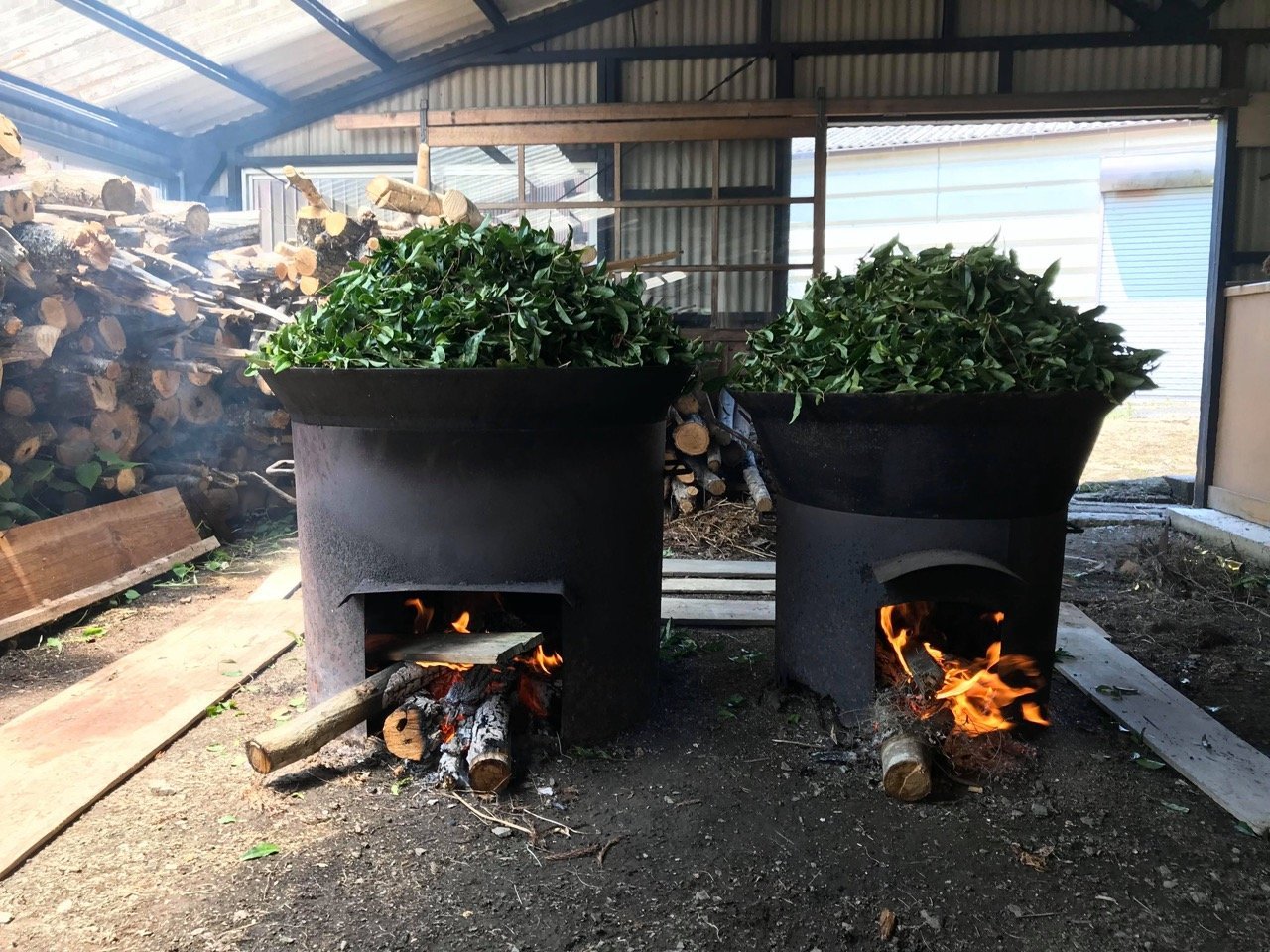
In Dingshu Town (丁蜀镇), Yixing, Jiangsu, the Qianshu Ancient Dragon Kiln (前墅古龙窑) stretches up a hillside like a resting dragon. Dating to the Ming dynasty, its long firing chamber follows the slope: the incline encourages a natural draft, carrying heat upwards as fuel is fed through openings along the sides. It belongs to the landscape that nurtured Yixing’s purple-clay (紫砂) pottery culture.
The kiln is 43.4 metres long and was designated a nationally protected cultural site in 2006. Its history includes everyday pottery—basins, jars and other useful vessels—not only teapots. The local ceramic association calls it 活着的文物
, a “living cultural relic.” Continued traditional firing preserves both the structure and the skills of the people who tend it. [K1] [K2]
In wood firing, the path of the flame, the atmosphere and deposits from the fuel can contribute to differences in colour and surface.
Sources and attribution
-
CN1. 国立故宫博物院:工夫茶器组 宜兴窑朱泥壶 — National Palace Museum, Siting-style reference.
-
CN2. 浙江省工艺美术行业协会:谈旭君作品《秦权壶》 — crafts association, national master database.
-
S1. National Palace Museum, Taipei, “Red clay teapot with Si-ting style, 19th–20th centuries,” 南普贈000010N000000000; CC BY 4.0.
-
K1. Yixing Ceramic Industry Association, “前墅龙窑”.
-
K2. Yixing Municipal Government / Yixing Daily, “宜兴前墅龙窑获评‘国家工业遗产’,” 31 October 2025.