Competition-level matcha from Tsuji Kiyoharu, a fifth-generation tencha farmer in Shirakawa, Uji, and one of the most decorated growers in Japan. Hand-picked once a year, deeply shaded, stone-milled and packed at the farm. Four matchas, four very different bowls.
Grower
Tsuji Kiyoharu 辻喜代治 , Tsujiki 辻喜 , 5th generation
Origin
Shirakawa 白川 , Uji, Kyoto Prefecture, Japan
Field
Shizen shitate 自然仕立て : free-growing bushes, not machine-cut rows
Shading
Up to 95%, under nets and traditional honzu 本簀 reed-and-straw screens
Harvest
First flush only, hand-picked once a year in May
Cultivars
Asahi · Samidori · Uji Hikari · S29 (Samidori + Yabukita)
Milling
Stone-milled and packed at origin
Size
20 g refill pack
Best as
Koicha, or a generously loaded usucha
Why this matcha
Most matcha, even very good matcha, is blended: tencha from different farms and harvests, mixed to hit a consistent taste. Tsuji san’s competition-grade matcha is never blended. Asahi, Samidori and Uji Hikari are each a single cultivar from his own fields in Shirakawa: one place, one spring, one grower’s decisions. He also crafts a few outstanding blends to share his tea with a wider audience, and S29 is one of them.
And his decisions are extreme. Bushes are left to grow freely and picked by hand, one shoot at a time. Shade goes far beyond the usual. Tea plants are replanted once they pass their best years for amino acids, even though older bushes would keep yielding. The result is matcha with startling umami, very little bitterness and a texture that feels more like cream than tea.
Intense umami Almost no bitterness Creamy texture Single origin Hand-picked Koicha-worthy
Meet Tsuji Kiyoharu
Tsuji san was born in 1969 into a tea-farming family in Shirakawa. He didn’t plan to take over the farm. After high school he spent two years working for a tea wholesaler, where he learned how tencha becomes matcha and how blends are built, and tasted teas from all over Japan. That’s where the ambition started: to make the best tea in Japan. He came home and took over the fields at 20.
He is entirely self-taught as a grower. When he asked a respected tea expert for advice, the answer was simple: build a competition garden and learn from it. His father gave him the family’s best plot, about 1,000 m², and that small garden became his school. Working it, he found that the old Uji rules, handed down for some 800 years, hold up scientifically.
It has paid off. Since 2004 he has collected award after award at Japan’s tea competitions, including the National Tea Competition’s Minister of Agriculture, Forestry and Fisheries Award for tencha, the top prize in its category; by the time Japan’s agriculture ministry profiled him, he had won it eight times. At the 2024 National Tea Competition, his Asahi tencha scored 197 out of 200 and his Uji Hikari 195.
Tsuji san and O5
Tsuji san has been incredibly generous with his tea and his knowledge since 2018. In 2019 we featured his tea at our pop-up in Shibuya, Tokyo, and his competition-grade matchas have been a consistent favourite at our tea bar ever since. We have visited him in Shirakawa many times; the photos below were taken by Tamura Kei and Pedro Villalon on one of those visits.
Tsuji san (right), on one of our visits to Shirakawa.
Tsuji san’s tea field, Uji Shirakawa.
The four matchas
The crown jewel
Asahi
Asahi 朝日 means “morning sun.” It was selected from native Uji tea plants by a local farmer in the 1950s and never officially registered, yet it is the cultivar Uji’s competition growers prize most. It is tricky to grow and gives little, which makes it rare.
In the bowl: monster umami, natural sweetness, almost no bitterness, a creamy, velvety texture and a long, lingering finish. Dense and layered.
Best as: koicha, or an extra-loaded usucha.
The gateway
Samidori
A cornerstone of top Uji matcha, and the friendliest way into Tsuji san’s style. If you are new to matcha at this level, start here.
In the bowl: smooth, buttery and effortless, with gentle umami warmth and a distinctive chlorophyll finish. Almost matcha in dessert form.
Best as: a loaded usucha, or koicha.
Clarity in a bowl
Uji Hikari
“Uji light.” A local cultivar little known outside the Kansai region, usually used as a component in kabuse, gyokuro and matcha blends. Here you taste it alone.
In the bowl: bright, grassy freshness, clean vegetal clarity and just enough umami warmth. Precise and vivid. Lovely if you enjoy gyokuro or kabusecha.
Best as: a loaded usucha, or koicha.
The daily treat
S29
One of the blends Tsuji san makes to share his tea more widely: Samidori for structure, body and richness, with a touch of Yabukita, Japan’s most widely grown cultivar, for aromatic brightness. The most affordable way into his fields.
In the bowl: a walk in the forest: pine needles, pine nuts and steamed fiddleheads.
Best as: a generously loaded usucha. Try it as koicha at least once.
How it’s grown
Free-growing bushes. Most tencha fields are trimmed into flat, rounded rows so machines can harvest them. Tsuji san’s are grown shizen shitate , in their natural shape, which only works if you pick by hand.
Deep shade. Two layers of netting plus traditional honzu reed and straw screens cut out up to 95% of the sunlight. Shade holds back catechins (bitterness) and boosts theanine (umami), and it’s why the powder is such a deep green.
Read daily. He walks the fields morning and evening, judging each plot by the colour and gloss of the leaves, and adjusts water and organic fertilizer plot by plot, because each one’s soil is different.
One harvest. Only the first spring shoots are picked, in May, by hand, with about 30 pickers. The rest of the year the fields are tended by the family.
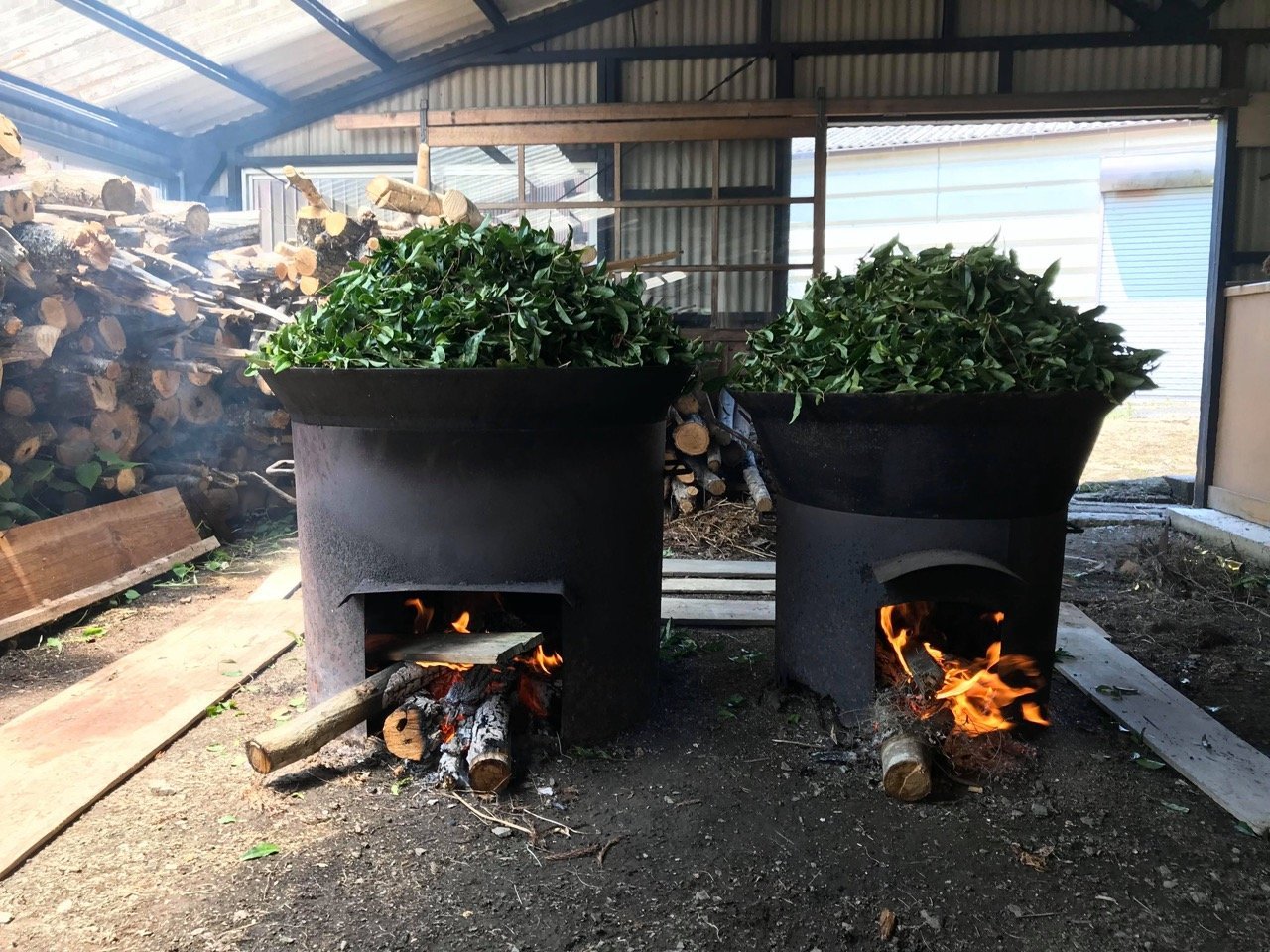
Into tencha, then matcha. The leaves are steamed, dried flat without rolling, stripped of stems and veins, and the resulting tencha is ground slowly between granite stones.
Curious about shading and natural-growth fields? Read Musings on Matcha: Tencha, Shizen Shitate and Honzu .
How we prepare it
Koicha (thick tea)
4 g matcha, sifted
30–40 ml water at 70–80°C
Knead slowly with the chasen, no foam, until glossy like melted chocolate
Loaded usucha (thin tea)
2.5–3 g matcha, sifted
60–70 ml water at 70–80°C
Whisk briskly in an M or W shape until a fine, even foam forms
Tip: matcha this good deserves no milk and no sugar, at least the first time. Taste it plain, and let it cool a little in the bowl: the sweetness opens up. New to whisking? Here’s how to make usucha .
Keep it fresh. Matcha fades fast once opened: air, light, heat and humidity all dull the colour and umami. Each 20 g refill pack is just enough to enjoy at its best. Pour it into a refillable airtight matcha tin , keep it in the fridge, and let the tin reach room temperature before opening. Need the tools? See our chasen and the full matcha collection .