The less famous (and extremely interesting) sibling of Silver Needle and Bai Mudan: a sixteen-year-old Gong Mei from Bailiu Village in Fuding, made by Mei Xiangjing. Mellow, sweet, delightful.
Harvest
Spring 2010
Type
White tea, Gong Mei 贡眉 (“tribute eyebrow”)
Maker
Mei Xiangjing 梅相靖 , national-level inheritor of Fuding white tea craft
Origin
Bailiu Village 柏柳村 , Diantou, Fuding, Fujian
GPS
27.2°N, 120.1°E
Leaf
Tender shoots, mostly leaf with some silvery bud
Craft
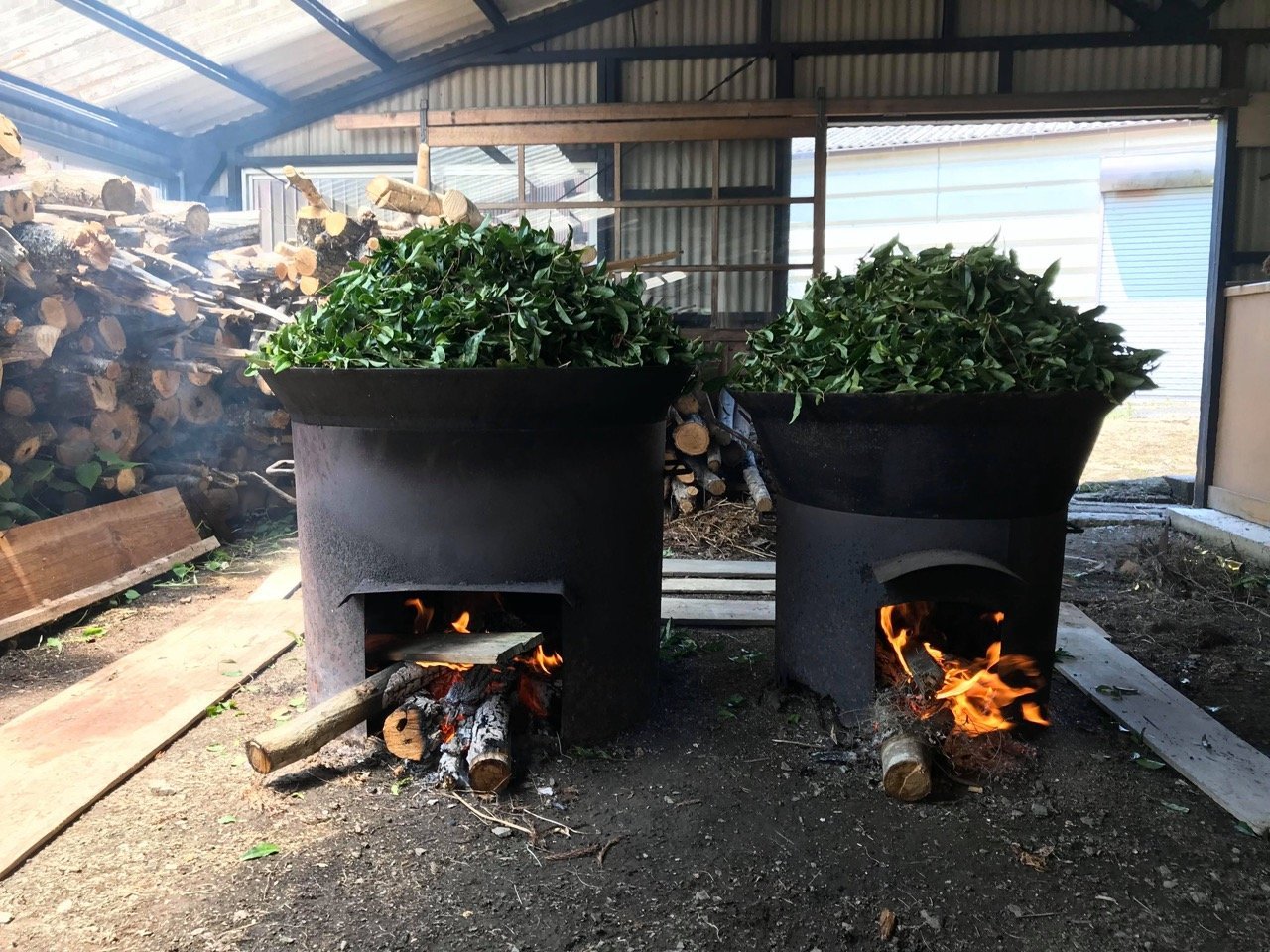
Withered and dried. No pan-firing, no rolling
In the cup
Turkish dates, dried apricot, toasted grain, a hint of medicinal herbs; golden to deep apricot liquor
Why this tea
Gong Mei gets far less attention than Silver Needle and Bai Mudan, and it’s priced that way. With more leaf and fewer buds, it trades the florals for body: a rounder, fuller cup and a deeper colour. Made with care and given time, it can be a truly wonderful tea. This one is.
Sixteen years have taken it somewhere warm. Expect Turkish dates and dried apricot, a toasted-grain note underneath and a faint medicinal-herb edge, with a sweetness that lingers. The liquor runs from golden to deep apricot. It offers warmth rather than flash.
It also likes hotter water than Bai Mudan (we brew it at 95°C), and it’s happy to be simmered once the session winds down.
Turkish dates Dried apricot Toasted grain Medicinal herbs Lingering sweetness 16 years of age
About the style: Gong Mei
Gong Mei (贡眉 ) is usually translated as “tribute eyebrow.” Its wiry leaves, darker and more varied in colour than Silver Needle’s buds, curl gently like the arch of an eyebrow.
By today’s national standard (GB/T 22291), what makes a white tea Gong Mei is the bush. It’s defined as white tea made from the tender shoots of seed-grown local tea plants (群体种 , often called cai cha ), rather than from the cloned big-white cultivars used for Silver Needle and Bai Mudan. Seed-grown bushes are genetically mixed: every plant is a little different from its neighbour.
Gong Mei and Shou Mei often get mixed up, and for good reason: even the national heritage record for Fuding white tea writes “Gong Mei (Shou Mei).” The modern standard separates them. Gong Mei comes from seed-grown bushes, while Shou Mei can come from any of the white-tea bushes and is usually made with later, larger leaves.
The style is most closely tied to Jianyang, in northern Fujian, where it was traditionally made from local cai cha . Its big years were export years: in the 1980s Jianyang supplied China’s Gong Mei, and by the early 1990s Gong Mei and Bai Mudan were the white teas China sold abroad most, mainly to Hong Kong and Southeast Asia. Fuding makes it too, and this one shows why it deserves more attention.
Aged white tea, decoded. China’s tea trade has a standard for “old white tea” (老白茶 ): five years or more of slow aging somewhere cool, dry, dark and free of odours. It sorts aged white teas into three aroma families: honey, mellow and medicinal. Date and grain aromas are textbook markers of the mellow family, and an herbal edge leans medicinal, so this Gong Mei sits right between the two. Or, as they say in Fuding: one year tea, three years medicine, seven years treasure (一年茶、三年药、七年宝 ). At sixteen, it’s well into treasure.
Who made it: the Mei family of Bailiu
Fuding has many white tea makers, but few lineages are as clearly documented as the Mei family of Bailiu. It starts with Mei Bozhen (梅伯珍 , 1875–1947), who built the family name as a grower, maker and merchant. In the 1930s he ran the Hengchunxiang (恒春祥 ) trading house in Fuzhou and shipped Fuding Silver Needle and Bailin Gongfu black tea to Hong Kong and Southeast Asia. Fuzhou’s tea merchants called him “Mei Bo,” Uncle Mei.
His grandson, Mei Xiangjing (梅相靖 ), was born in Bailiu in 1945 and learned the craft as a child, starting with raising white tea seedlings alongside his elders. In December 2012, China’s Ministry of Culture recognized him as a National-Level Representative Inheritor of the Fuding white tea production technique. He works with the two steps that define white tea, withering and drying, and most of his leaf now comes from bushes he grows himself.
He has trained the next generations, too. The Meishan school (梅山派 ), the Mei family’s line of Fuding white tea, now counts many fourth-generation successors.
A mutual friend, Zhang Tao, a student of tea for decades, introduced us to Mr. Mei. He turned out to be the most generous of hosts, as happy to share what he knows as to keep the cups full.
With the Mei family. The sign over the door reads 福鼎白茶 非遗展示室 : Fuding White Tea, Intangible Heritage Exhibition Room. Where it grows: Bailiu, Fuding
Bailiu (柏柳 ) sits in Diantou township, in the hills of Fuding in north-east Fujian. The national heritage record traces Fuding’s modern white tea to this village: in 1857, two villagers, Chen Huan and Zhang Xiaqin, transplanted tea bushes to their homes and began propagating them.
Today the Fuding white tea craft is on China’s national Intangible Cultural Heritage list (2011), part of UNESCO’s 2022 listing of China’s traditional tea processing techniques, and, since 2025, recognized by the FAO as a Globally Important Agricultural Heritage System.
Old tea trees in Fujian: tall, thin, and leaning into each other. How we brew it
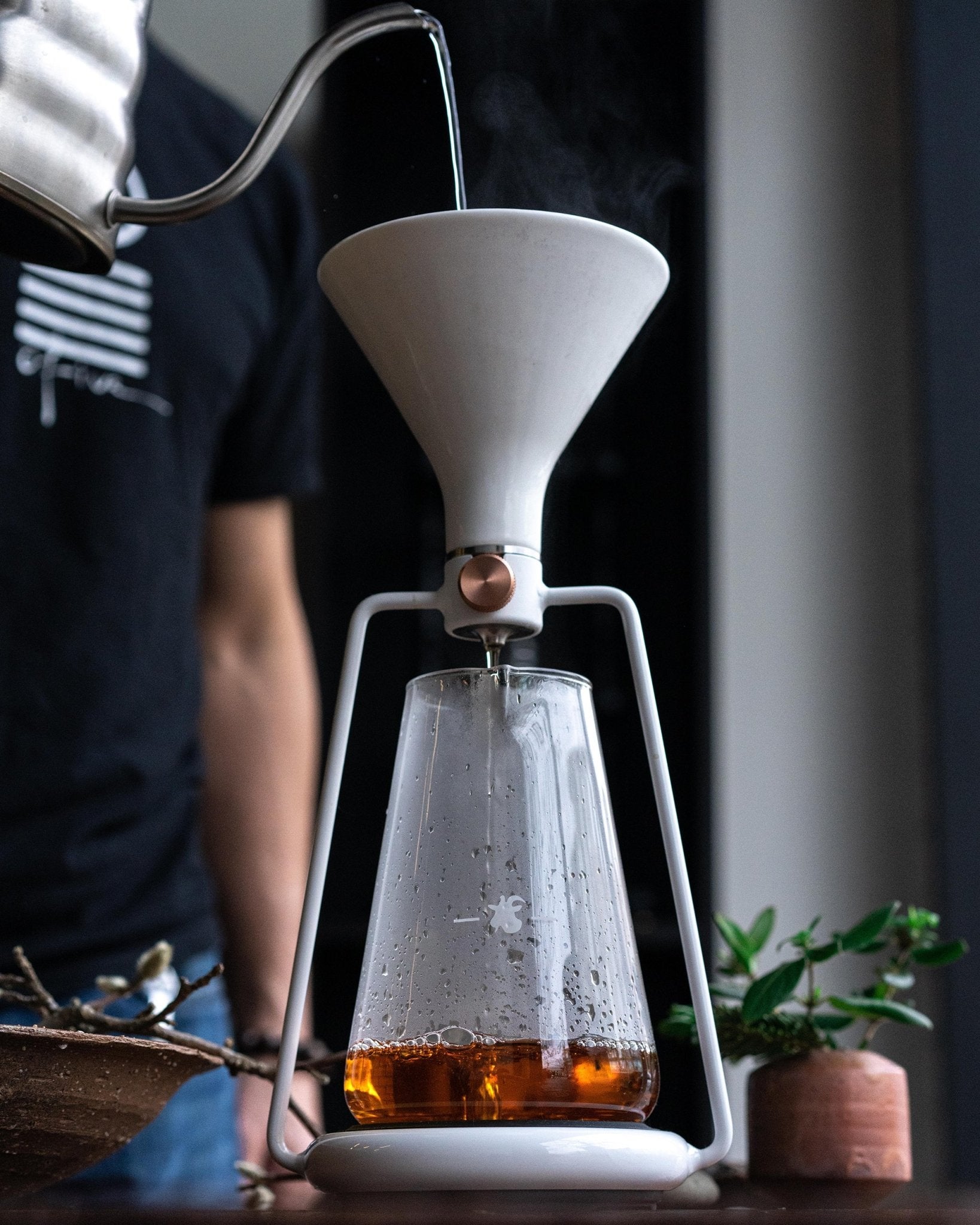
Gong fu
5 g per 100 ml
Water at 95°C
About 30-second steeps
Add a few seconds each round
Mug or teapot
3 g per 250 ml
Water just off the boil
3–5 minutes
Tip: when the leaves start to fade, put them in a small pot with fresh water and simmer for a few minutes. Simmering old white tea is a winter habit in Fuding, and a cozy way to get the last of the sweetness out of the leaf.
Sources and further reading
China Intangible Cultural Heritage Network: Mei Xiangjing (梅相靖), national-level inheritor entry Ministry of Culture: announcement of the fourth group of national-level inheritors, 20 December 2012 (文非遗发〔2012〕51号) China Intangible Cultural Heritage Network: Fuding white tea production technique, national list 2011 (Ⅷ-203) China Intangible Cultural Heritage Network: on white tea and the Mei family of Bailiu, including Mei Bozhen FAO: Fuding White Tea Culture System among new Globally Important Agricultural Heritage Systems, May 2025 GB/T 22291-2017, White Tea (白茶), China’s national standard defining Silver Needle, Bai Mudan, Gong Mei and Shou Mei
T/CSTEA 00021-2021, Old White Tea (老白茶), China Tea Marketing Association group standard