What Is Dark Tea? A Deep Dive Into Fermented Tea Traditions
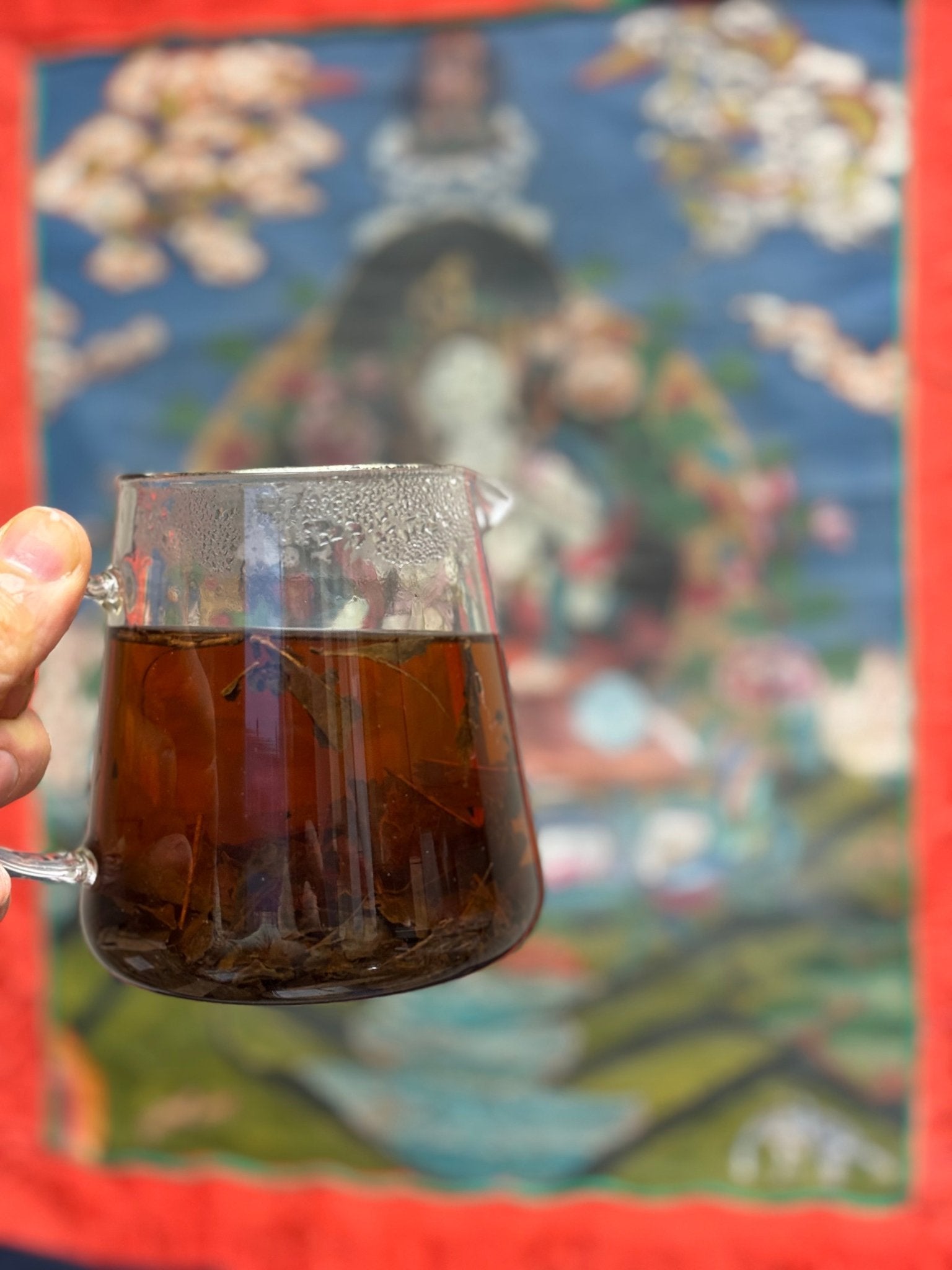
What Does “Dark Tea” Mean?
Dark tea refers to a category of fermented teas in which microbial activity plays a central role in developing flavour, aroma, and colour. In Chinese, dark tea is called 黑茶 (hēichá)—literally “black tea”—and in Japanese, it is known as 黒茶 (kurocha). Neither should be confused with Western black tea, which is actually called 红茶 (hóngchá) or “red tea,” in China and much of Asia.
Some dark teas are also referred to as 後發酵茶 (hòu fājiào chá), meaning post-fermented tea, because fermentation happens during a very slow and long ageing process.

A Brief History of Dark Tea
Dark tea has an ancient lineage, with roots stretching back thousands of years in China. Historical research suggests that dark tea traditions date back roughly 3,300 years, making it one of the oldest categories of processed tea still enjoyed today.
Dark tea became especially important in border regions such as Tibet, Mongolia, and parts of southwestern China. Its durable, often compressed forms—bricks, cakes, and logs—made it ideal for long trade routes like the ancient Tea Horse Road, where tea was exchanged for horses and other essential goods.

We’ve encountered extremely interesting dark tea traditions in Bhutan, a few corners of Japan (Tokushima, Toyama), Vietnam, and of course, China. These are a few examples:
-
Divine Madman’s Oak-Ash Fermented Dark Tea for Bhutanese Tea with Butter:https://www.o5tea.com/collections/dark-tea-fermented-tea/products/divine-madmans-oak-ash-fermented-dark-tea-for-bhutanese-tea-with-butter
-
Tibetan Tea: https://www.o5tea.com/collections/dark-tea-fermented-tea/products/tibetan-tea
-
2021 Workhorse Small Organic Hunan Brick: https://www.o5tea.com/collections/dark-tea-fermented-tea/products/2021-workhorse-small-organic-hunan-brick
-
Cloudline Dark Tea: https://www.o5tea.com/collections/dark-tea-fermented-tea/products/cloudline-dark-tea-from

In places like Tibet, dark tea developed a unique cultural role—brewed strong with butter, salt, and even barley—becoming not just a beverage but a life-sustaining tradition.

How is Dark Tea Processed?
Unlike green or oolong teas, which are mostly valued for their fresh or partially oxidized profiles, dark tea’s defining feature is fermentation—a process driven by microbes rather than oxidation alone.
Fermentation vs. Oxidation: What’s the Difference?
Oxidation is a chemical change that occurs when tea leaves react with oxygen after being picked. This is the key process behind black tea’s rich red colour and broad flavour profile (despite being called “black tea” in English).
Fermentation, however, involves microorganisms—bacteria, yeasts, and beneficial fungi—that interact with the tea leaves over time, dramatically altering aroma, taste, and chemistry.
Aerobic vs. Anaerobic Fermentation
Within the dark tea category, fermentation isn’t always the same. There are two main types:
Aerobic Fermentation
This occurs when the tea is exposed to oxygen during aging. Microbes that require oxygen help develop earthy, mellow, and often complex flavours. An example of aerobically fermented dark tea includes some Anhua Fuzhuan teas from Hunan province. Micro-organisms that participate in this type of fermentation often belong to the Aspergillus genus.

Anaerobic Fermentation
This happens in conditions where oxygen is limited—for instance, when tea is stored in sealed containers. The microbial activity here differs, producing unique, sometimes sour or funky notes. Examples of this style are Awa Bancha and Goishi Cha, from Japan. Burmese tea drinkers (in Myanmar and China’s Yunnan Province) also enjoy this style of tea.

Dark tea is a testament to time, place, and microbial life—an evolving expression of tradition that continues to surprise, nourish, and inspire those willing to explore beyond the familiar.

Comments