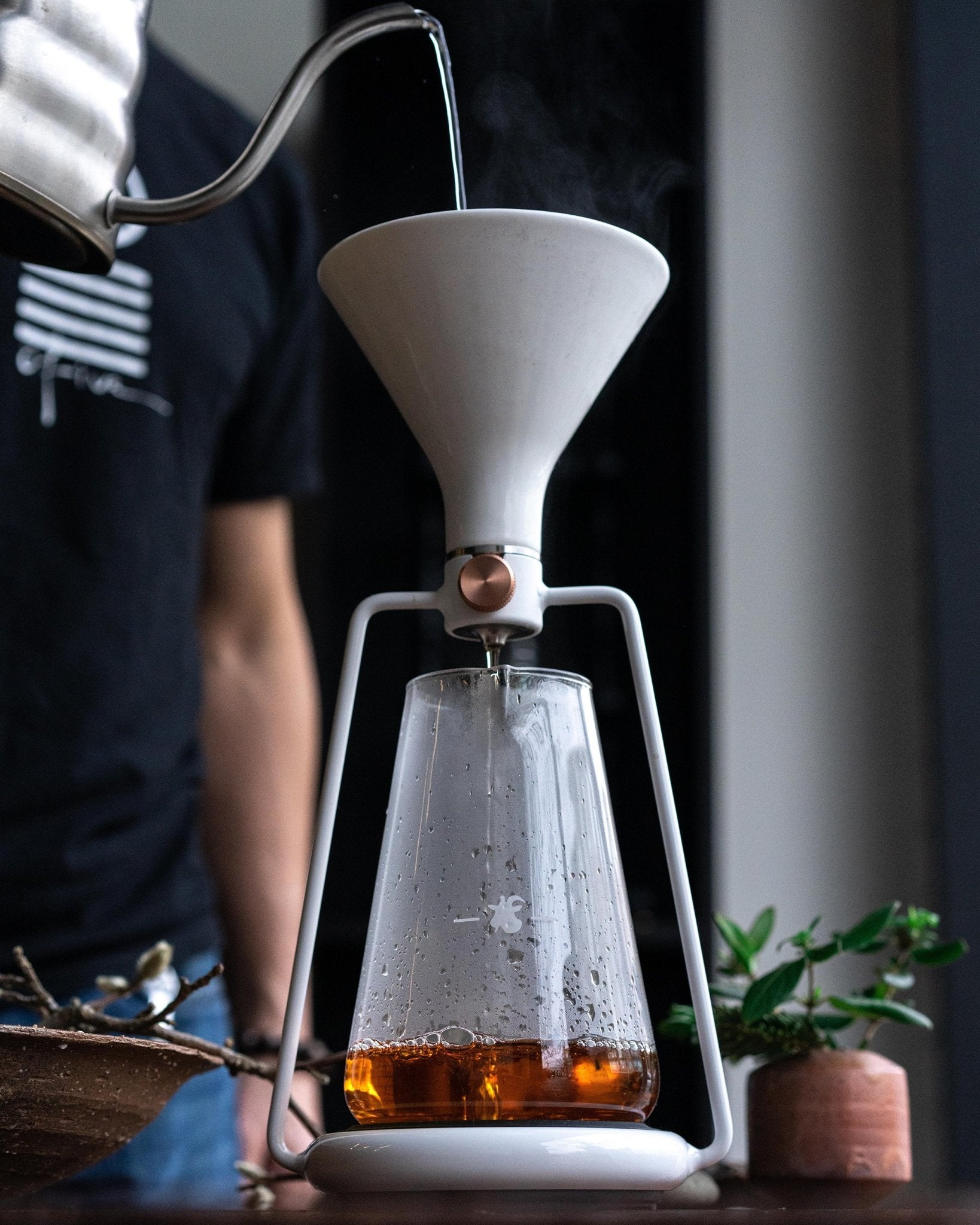
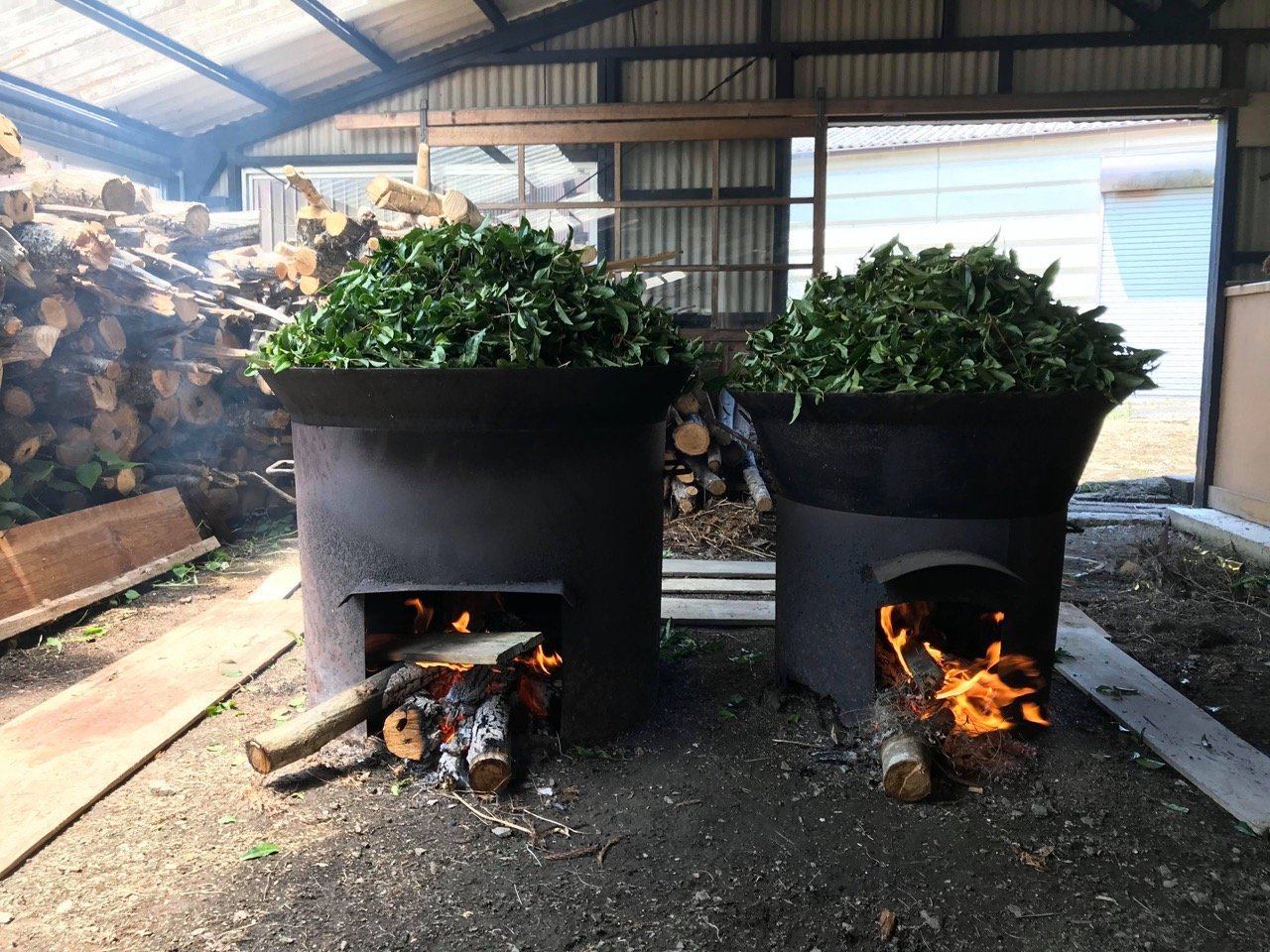
Gong Mei White Tea is the less famous (yet extremely interesting) sibling of Bai Mudan and Yin Zhen. Mellow, sweet, delightful.
Origin: Bailiu Village, Fuding, Fujian
Harvest: spring 2011
GPS: 27.2°N, 120.1°E
Tasting Experience: notes of Turkish dates, dried apricot, toasted grain, and hints of medicinal herbs; lingering sweetness.
We met Mr. Mei Xiangjing thanks to the generous introduction of a mutual friend, Mr. Zhang Tao, who has been a student of tea for decades.
Mr. 梅相靖 (Mei Xiangjing) is one of the most important figures in Fujian's tea scene, formally recognized in 2013 as a National-Level Representative Inheritor of the Fuding white tea traditional production technique under China’s Intangible Cultural Heritage System. Born in Bailiu Village, Fuding, Mei has spent more than half a century refining his art.
The Mei family’s contribution traces further back to his grandfather, Mei Bozhen (梅伯珍), a pioneering tea merchant in the late Qing and Republic periods. He was instrumental to bring Fuding white tea into domestic and international markets.
Even more importantly, Mr. Mei is a most generous host who loves sharing both knowledge and tea.
Mei Family. Intangilble Cultural Heritage.
Tea Style: 贡眉 (Gòngméi)
Meet the less famous (yet equally interesting) sibling of Bai Mudan, Yin Zhen and Shou Mei. Gong Mei (贡眉, Gòngméi), often translated as “Tribute Eyebrow,” is a traditional white tea from Fujian Province, most closely associated with Fuding and Zhenghe. Its wiry leaves, darker and more varied in hue than the silvery buds of Baihao Yinzhen, curl gently like the arch of an eyebrow—a visual poetry reflected in its name. Shou Mei is one of the more humble styles of white tea; it includes late harvest leaves and just a few buds, given the brew a fuller body and a darker (amber) hue. While this tea commands lower price points vs. its Yin Zhen and Bai Mudan counterparts, it can provide a truly wonderful drinking experience when produced with care.
The history of Gong Mei is intertwined with the broader story of Fuding white tea, whose production techniques matured during the late Qing dynasty in the nineteenth century. White tea processing—minimal withering and natural drying—developed in Fujian as a refinement of earlier tribute tea traditions. Some scholars argue that Gong Mei emerged as an export-oriented adaptation in the late 1800s, when overseas markets demanded greater volume beyond scarce Silver Needle. Others contend that it evolved locally as a practical grade made from later pluckings of the same prized cultivars used for Bai Mudan. Archival references from Fujian gazetteers and early twentieth-century trade records confirm white tea’s growing commercial importance, though terminology and grading systems were not always standardized, contributing to minor historical ambiguities.
Gong Mei is most commonly produced from the Fuding Dabai cultivar (福鼎大白茶, Fúdǐng Dàbái Chá) and sometimes from Fuding Dahao (福鼎大毫茶, Fúdǐng Dàháo Chá), both originally selected in Fuding, Fujian. In Gong Mei production, slightly more mature leaves from these cultivars are plucked, contributing deeper sugars and polyphenols that yield richer color and rounder texture compared to bud-heavy styles.
In the cup, Gong Mei offers warmth rather than flash. The liquor ranges from golden to deep apricot, especially with age, as white tea is known to mellow and darken over time.
References
-
Chen, Chuan. Fuding White Tea (福鼎白茶). Fuzhou: Fujian Science and Technology Press, 2012. (Chinese source)
-
Fujian Agriculture and Rural Affairs Department. “Introduction to Fuding Dabai and Dahao Cultivars.” 福建省农业农村厅. http://nynct.fujian.gov.cn (Chinese government source)
-
Zhang, Tianfu. Chinese Tea Science (中国茶叶科学). Beijing: China Agriculture Press, 2002. (Chinese academic source)
-
He, Y. & Lin, S. “Cultivar Characteristics of Fuding Dabai (Camellia sinensis var. sinensis).” Journal of Tea Science, Fujian Agriculture and Forestry University, 2015. (Chinese academic journal)
-
Pettigrew, Jane & Richardson, Bruce. The New Tea Companion. London: National Trust Books, 2014.
-
Fujian Provincial Gazetteer Committee. Fujian Tea Annals (福建茶叶志). Fuzhou: Fujian People’s Publishing House, 2001. (Chinese historical source)
Old tea trees in Fujian. They are tall and thin.
Brewing Guide
Tea: 5g
Water: 100g @ 95°C
Time: 30"

![O5 | TITANIUM GAIWAN [160ml] - O5 RARE TEA BAR](http://www.o5tea.com/cdn/shop/files/o5-titanium-gaiwan-160ml-7683949.jpg?v=1783556531&width=2048)
![O5 | TITANIUM GAIWAN [160ml] - O5 RARE TEA BAR](http://www.o5tea.com/cdn/shop/files/o5-titanium-gaiwan-160ml-448397.jpg?v=1750466831&width=2048)
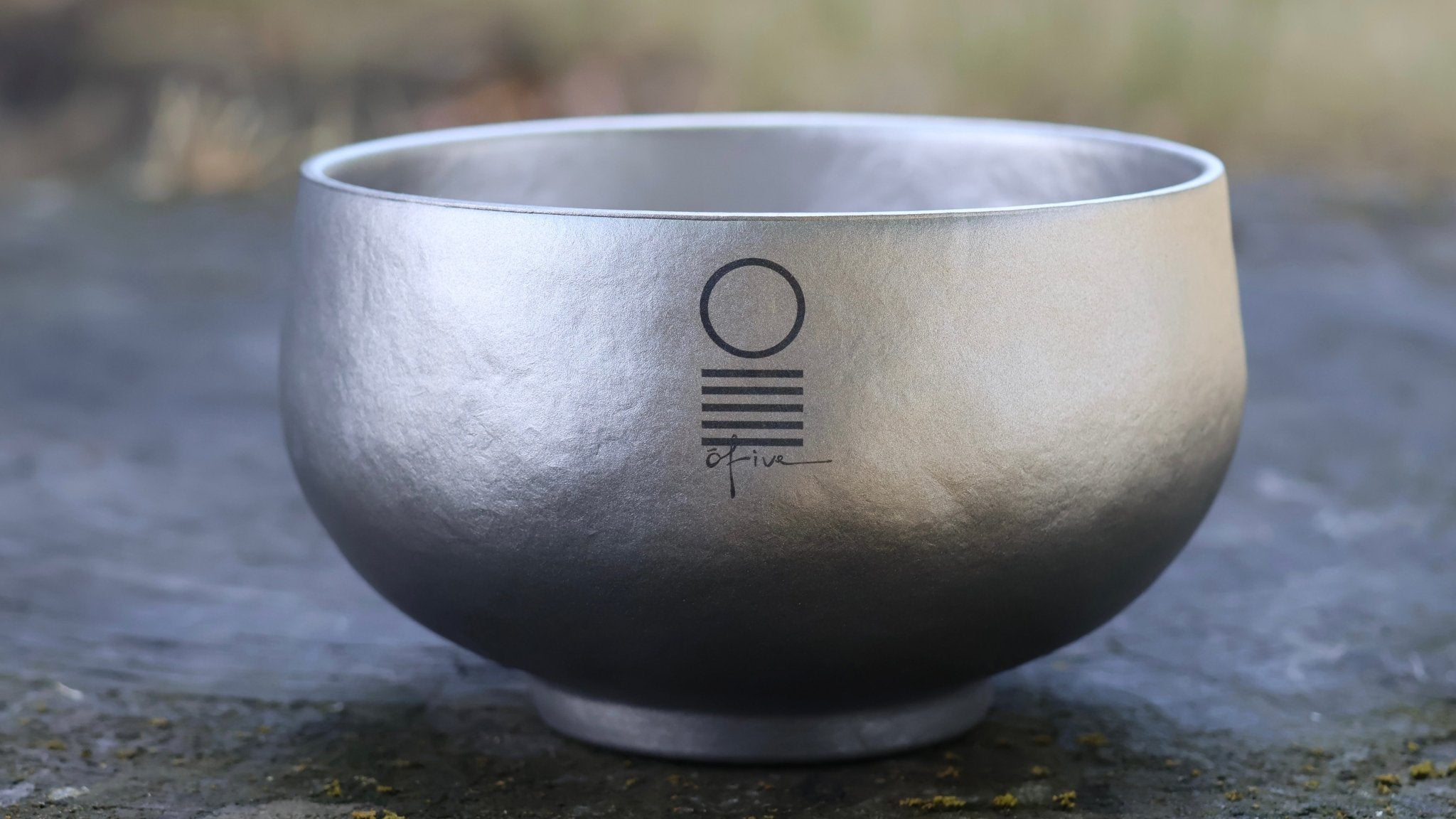
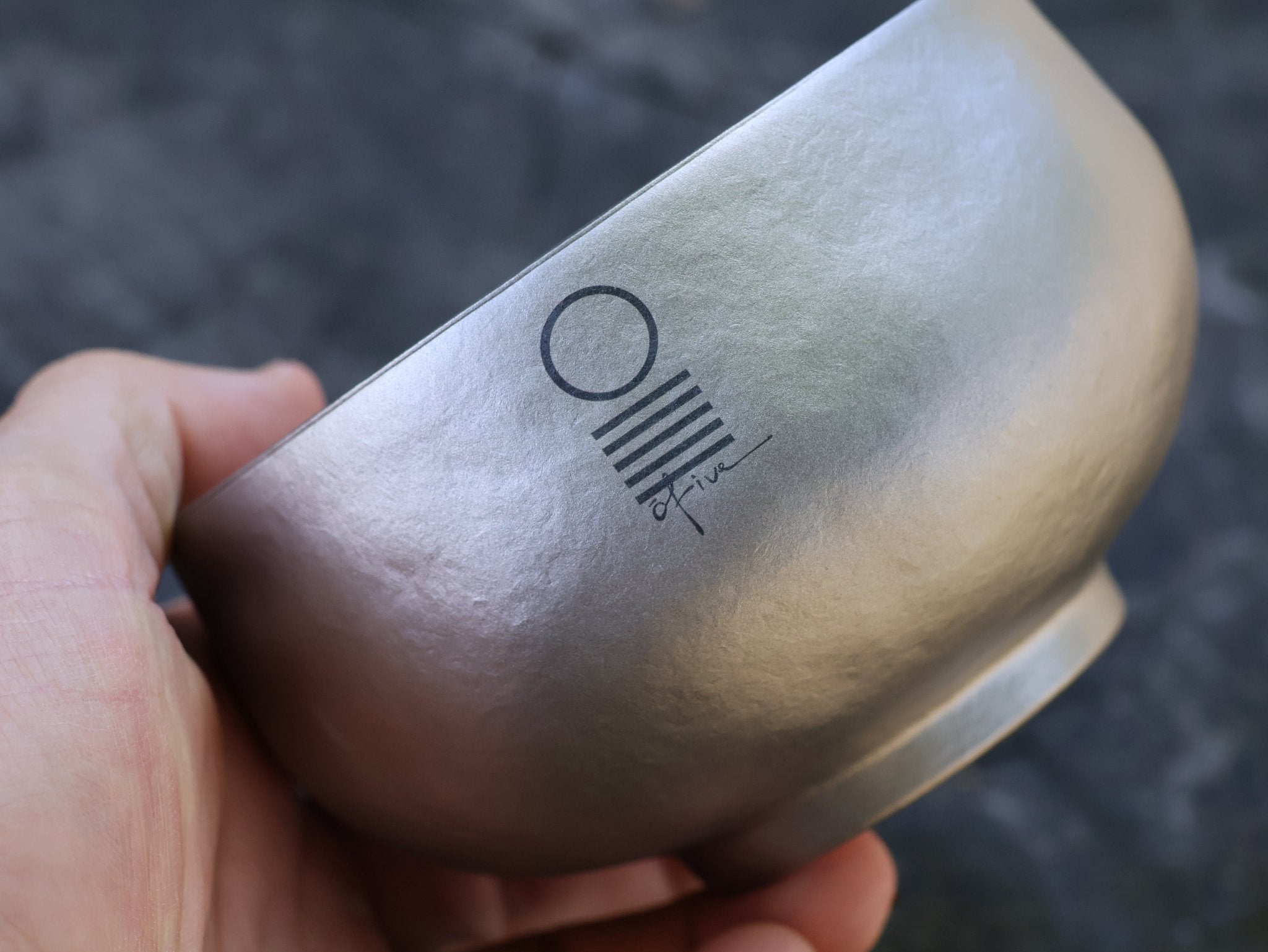
![O5 |TITANIUM CUPS [180ml & 300ml] - O5 RARE TEA BAR](http://www.o5tea.com/cdn/shop/files/o5-titanium-cups-180ml-300ml-188904.jpg?v=1750466831&width=2048)
![O5 |TITANIUM CUPS [180ml & 300ml] - O-FIVE RARE TEA BAR](http://www.o5tea.com/cdn/shop/products/o5-titanium-cups-180ml-300ml-735558.jpg?v=1750451758&width=1280)
![O5 |TITANIUM CUP + INFUSER [200ml] - O5 RARE TEA BAR](http://www.o5tea.com/cdn/shop/files/o5-titanium-cup-infuser-200ml-5324885.jpg?v=1783142231&width=2048)
![O5 |TITANIUM CUP + INFUSER [200ml] - O5 RARE TEA BAR](http://www.o5tea.com/cdn/shop/files/o5-titanium-cup-infuser-200ml-4111703.jpg?v=1783142232&width=1538)
![O5 | TITANIUM KETTLE + TEA STRAINER [750ml] - O5 RARE TEA BAR](http://www.o5tea.com/cdn/shop/files/o5-titanium-kettle-tea-strainer-750ml-3635656.jpg?v=1779247987&width=2048)
![O5 | TITANIUM KETTLE + TEA STRAINER [750ml] - O5 RARE TEA BAR](http://www.o5tea.com/cdn/shop/files/o5-titanium-kettle-tea-strainer-750ml-641576.jpg?v=1750466592&width=2048)