Hagi Ware Chawan 萩燒茶碗
Soft clay, quiet textures, and a beauty that deepens with time.
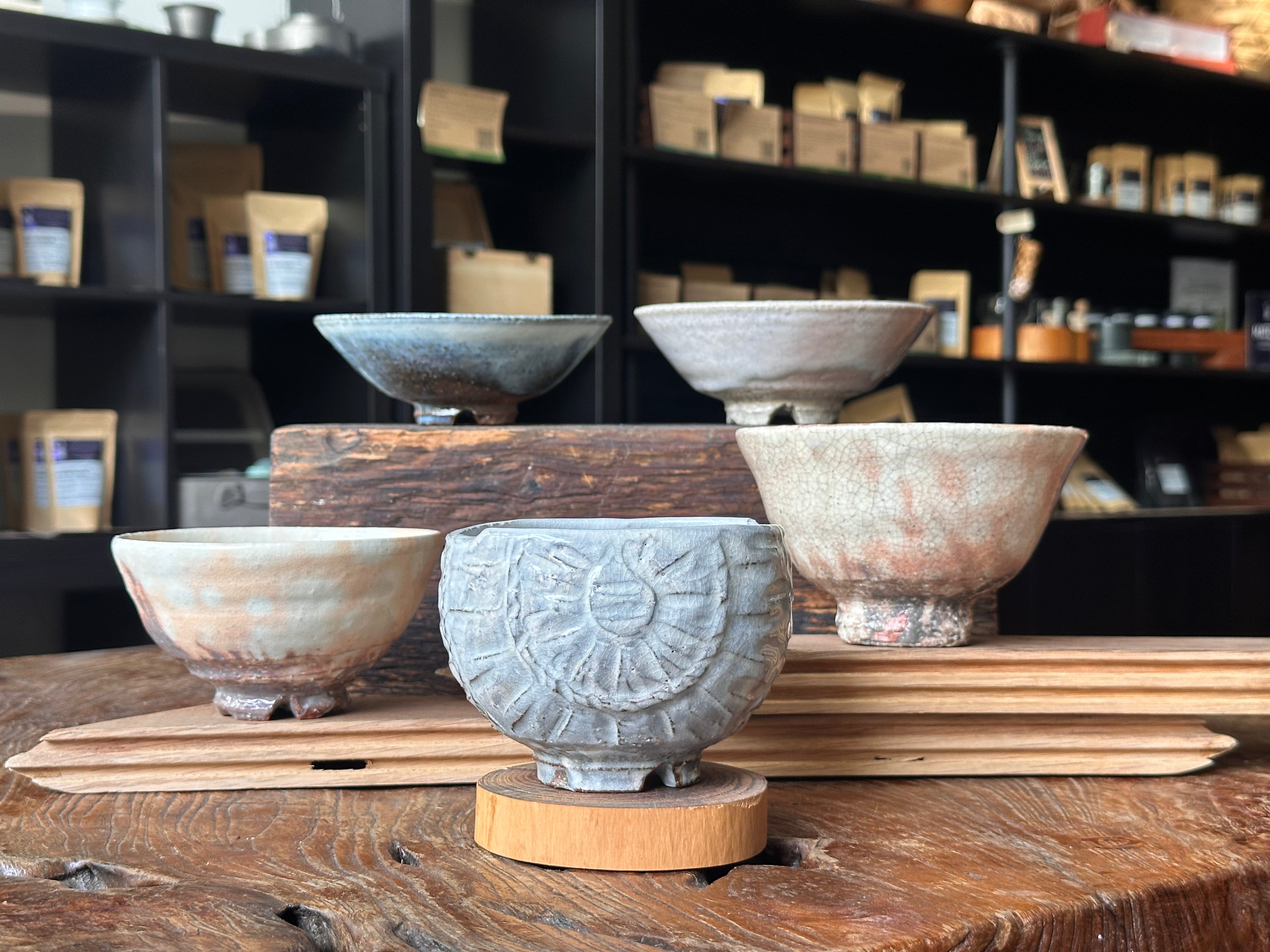
For more than four centuries, Hagi ware has been treasured by tea practitioners for its understated elegance and remarkable ability to evolve through use. Formed from local clay and finished with a soft, crackled glaze, each chawan carries subtle variations that can never be replicated.
What makes Hagi ware unique is its relationship with time. As tea is prepared and shared, fine crackles in the glaze gradually absorb traces of each infusion, creating gentle shifts in colour and character. Known in Japan as nanabake — the seven transformations — this process allows every bowl to develop a story entirely its own.
At O5 Tea, we are drawn to objects that invite a slower way of seeing. Hagi ware embodies many of the qualities we seek in tea itself: humility, depth, and a quiet connection to the natural world.
The Tradition of Hagi Ware
Originating in Yamaguchi Prefecture during the early Edo period, Hagi ware emerged through the meeting of Korean ceramic traditions and Japanese tea culture. Over generations, it became one of the most revered ceramics used in chanoyu, the Japanese tea ceremony.
A famous tea adage states:
"Raku first, Hagi second, Karatsu third."
This saying reflects the high regard tea practitioners have long held for Hagi ware and its uniquely warm, earthy presence.
Unlike highly decorative ceramics, Hagi ware celebrates simplicity. The natural qualities of the clay remain visible beneath layers of translucent glaze, allowing texture, form, and touch to become part of the experience.Early works were copies of tea bowls from the Joseon Dynasty and were so similar to "Goryeo" ware that they were indistinguishable. However, after the discovery of Hagi ware by a master in the Kyoho era (1716), the texture softened, and as it was used, the colour and luster gradually changed, resulting in the unique characteristics of Hagi ware known as the "seven transformations of Hagi." This has made it a favourite among many tea masters since ancient times.
Nanabake — The Seven Transformations
One of the most celebrated characteristics of Hagi ware is its gradual transformation through use.
The delicate network of crackles within the glaze allows tea to gently permeate the surface over time. As years pass, colours deepen, patterns become more pronounced, and the vessel develops a patina unique to its owner.
No two Hagi bowls age in exactly the same way.
Each chawan becomes a living record of countless tea sessions, carrying the traces of every cup shared and every moment of stillness it has witnessed.
About the Artist — Susumu Notomi
Born into a distinguished Hagi ware family lineage, Susumu Notomi has dedicated his life to exploring the possibilities of contemporary Hagi ceramics while preserving the traditions of the craft.
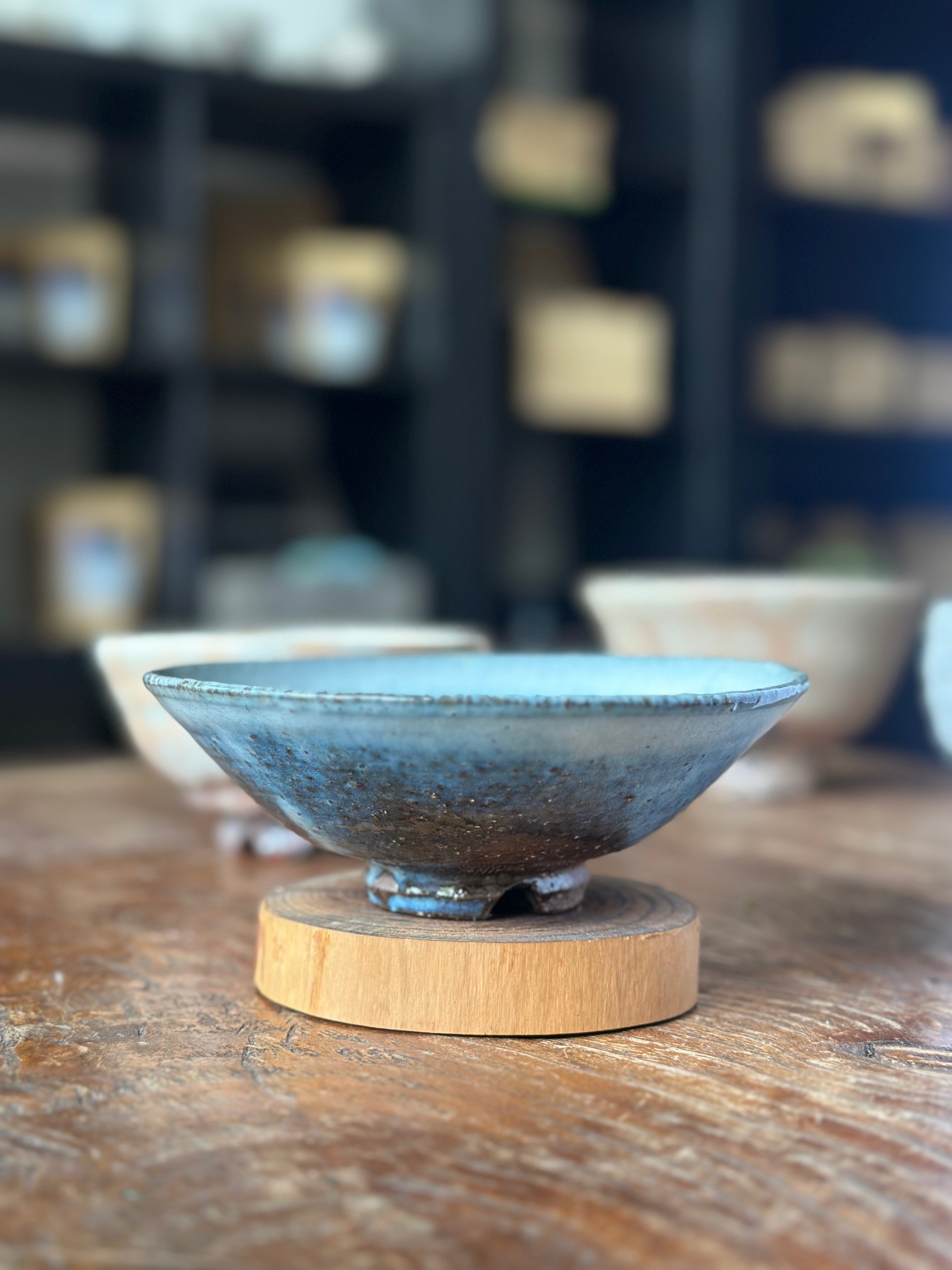
A full member of the Japan Crafts Association and recipient of numerous awards throughout Japan, Notomi is particularly known for his exploration of Ao-Hagi (Blue Hagi), a rare expression of Hagi ware that combines traditional forms with luminous blue glazes. His work has been exhibited throughout Japan and internationally, including exhibitions in New York and collaborations with leading artists and designers.
Each bowl reflects decades of study, technical mastery, and a deep respect for the relationship between clay, fire, and tea.



![O5 | TITANIUM GAIWAN [160ml] - O5 RARE TEA BAR](http://www.o5tea.com/cdn/shop/files/o5-titanium-gaiwan-160ml-7683949.jpg?v=1783556531&width=2048)
![O5 | TITANIUM GAIWAN [160ml] - O5 RARE TEA BAR](http://www.o5tea.com/cdn/shop/files/o5-titanium-gaiwan-160ml-448397.jpg?v=1750466831&width=2048)
![O5 |TITANIUM CUPS [180ml & 300ml] - O5 RARE TEA BAR](http://www.o5tea.com/cdn/shop/files/o5-titanium-cups-180ml-300ml-188904.jpg?v=1750466831&width=2048)
![O5 |TITANIUM CUPS [180ml & 300ml] - O-FIVE RARE TEA BAR](http://www.o5tea.com/cdn/shop/products/o5-titanium-cups-180ml-300ml-735558.jpg?v=1750451758&width=1280)
![O5 |TITANIUM CUP + INFUSER [200ml] - O5 RARE TEA BAR](http://www.o5tea.com/cdn/shop/files/o5-titanium-cup-infuser-200ml-5324885.jpg?v=1783142231&width=2048)
![O5 |TITANIUM CUP + INFUSER [200ml] - O5 RARE TEA BAR](http://www.o5tea.com/cdn/shop/files/o5-titanium-cup-infuser-200ml-4111703.jpg?v=1783142232&width=1538)
![O5 | TITANIUM KETTLE + TEA STRAINER [750ml] - O5 RARE TEA BAR](http://www.o5tea.com/cdn/shop/files/o5-titanium-kettle-tea-strainer-750ml-3635656.jpg?v=1779247987&width=2048)
![O5 | TITANIUM KETTLE + TEA STRAINER [750ml] - O5 RARE TEA BAR](http://www.o5tea.com/cdn/shop/files/o5-titanium-kettle-tea-strainer-750ml-641576.jpg?v=1750466592&width=2048)