Ali Shan (阿里山) is arguably the most celebrated origin for high mountain oolongs in Taiwan.
For over a decade we've treasured every single cup of tea from 簡嘉文 (JJW). This year, we received a fantastic 4kg micro-lot that is (as usual) unlike anything else.
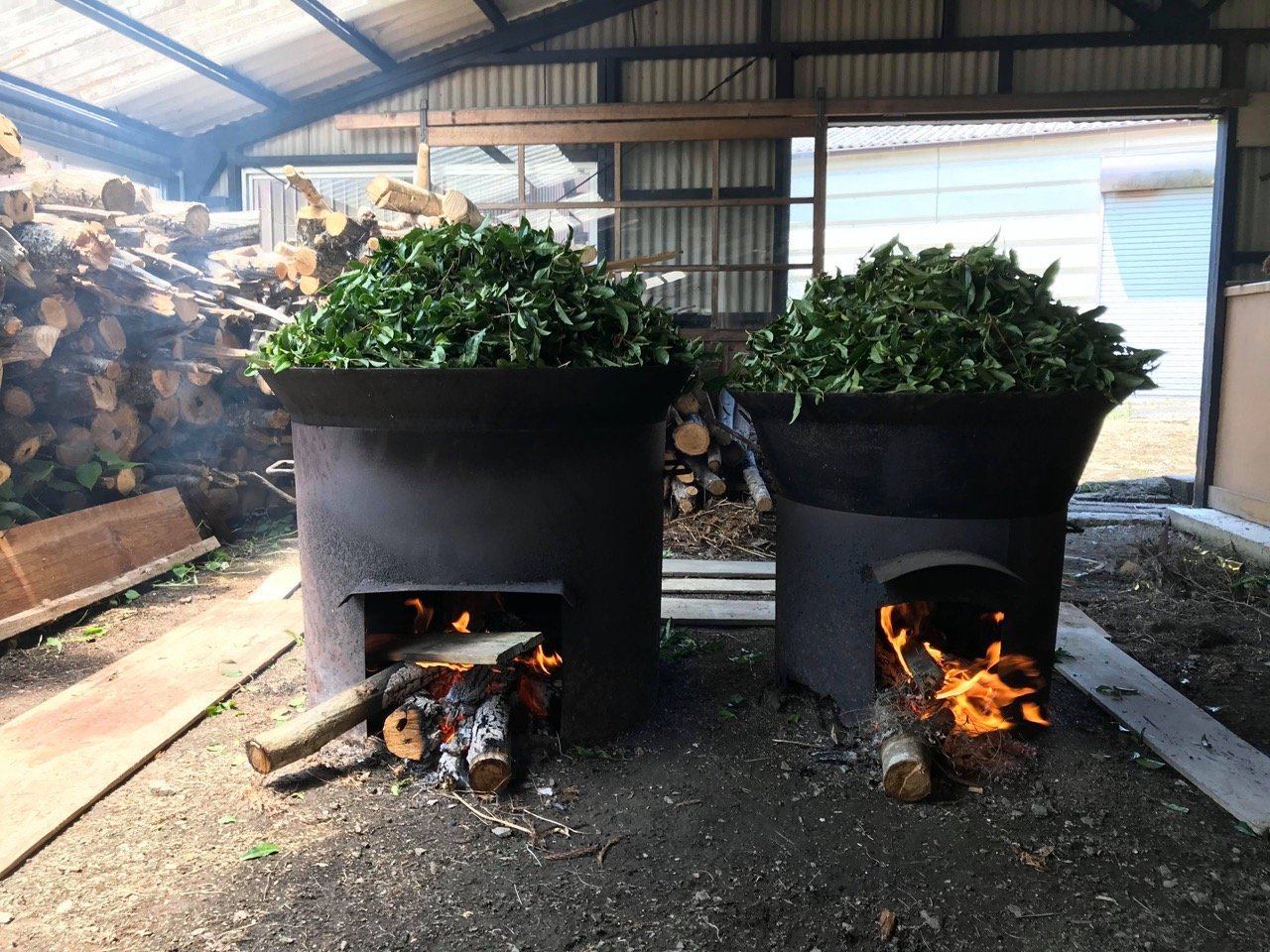
This tea is crafted in old school, pre-1980's style. Instead of the highly rolled pearls that are common in modern Taiwanese and Fujian oolongs, JJW offers elegant, beautifully crafted, chunky leaves.

The tea gardens of Alishan (阿里山) unfold along the high ridges of Chiayi County, barely above the Tropic of Cancer. The Alishan Range forms a 90-kilometre spine of rugged terrain rising west of Taiwan’s towering Yushan massif, with peaks such as Datashan reaching 2,663 metres.
Tea cultivation occurs primarily along terraced slopes between 1,000 and 1,600 metres, in villages such as Shizhuo, Ruili, and Taihe where mountain ridges catch the Pacific monsoon winds. Here clouds sweep through the forested highlands, veiling ancient cypress stands and steep valleys carved by tributaries of the Qishan River. The resulting landscape—cool, fog-bound, and dramatically elevated—creates one of the most celebrated high-mountain tea terroirs in the world.
The ecology of Alishan’s tea gardens reflects a delicate alpine–subtropical balance. Temperatures are moderate for the latitude, often averaging around 10 °C annually at higher elevations, with heavy rainfall delivered by the East Asian monsoon and occasional typhoons that saturate the mountains with moisture. Persistent mists limit direct sunlight and slow the growth of tea plants, allowing leaves to thicken and accumulate aromatic compounds. Soils in many cultivation zones are well-drained gravelly or reddish mountain soils rich in organic minerals, derived from weathered sandstone and shale uplifted by Taiwan’s active tectonics. These porous, nutrient-rich soils combined with cool diurnal temperature shifts create conditions in which tea bushes grow slowly but intensely, producing leaves known for their remarkable concentration of flavour and fragrance.
Tea cultivation in Alishan is relatively recent compared with the island’s older tea districts. Although tea plants were first introduced to Taiwan by migrants from China’s Fujian province in the nineteenth century, large-scale high-mountain cultivation in the Alishan region developed mainly in the late twentieth century, when new roads opened previously remote slopes to agriculture. Today the region is renowned for lightly oxidized Alishan High Mountain Oolong, typically crafted from cultivars such as Qingxin (青心) and Jinxuan or “Golden Lily” (金萱).
The mountain also has a few wild native tea plants.
Brewing Guide:
| TYPE |
Oolong |
| ORIGIN |
Zhangshu Lake, Ali Shan, Taiwan |
| GPS |
23ºN 121ºE ALT 1450M |
|
| WATER |
110ml @ 90º C |
| TEA |
5g
|
| TIME |
20"
|


Grower on the map


![O5 | TITANIUM GAIWAN [160ml] - O5 RARE TEA BAR](http://www.o5tea.com/cdn/shop/files/o5-titanium-gaiwan-160ml-7683949.jpg?v=1783556531&width=2048)
![O5 | TITANIUM GAIWAN [160ml] - O5 RARE TEA BAR](http://www.o5tea.com/cdn/shop/files/o5-titanium-gaiwan-160ml-448397.jpg?v=1750466831&width=2048)
![O5 |TITANIUM CUPS [180ml & 300ml] - O5 RARE TEA BAR](http://www.o5tea.com/cdn/shop/files/o5-titanium-cups-180ml-300ml-188904.jpg?v=1750466831&width=2048)
![O5 |TITANIUM CUPS [180ml & 300ml] - O-FIVE RARE TEA BAR](http://www.o5tea.com/cdn/shop/products/o5-titanium-cups-180ml-300ml-735558.jpg?v=1750451758&width=1280)
![O5 |TITANIUM CUP + INFUSER [200ml] - O5 RARE TEA BAR](http://www.o5tea.com/cdn/shop/files/o5-titanium-cup-infuser-200ml-5324885.jpg?v=1783142231&width=2048)
![O5 |TITANIUM CUP + INFUSER [200ml] - O5 RARE TEA BAR](http://www.o5tea.com/cdn/shop/files/o5-titanium-cup-infuser-200ml-4111703.jpg?v=1783142232&width=1538)
![O5 | TITANIUM KETTLE + TEA STRAINER [750ml] - O5 RARE TEA BAR](http://www.o5tea.com/cdn/shop/files/o5-titanium-kettle-tea-strainer-750ml-3635656.jpg?v=1779247987&width=2048)
![O5 | TITANIUM KETTLE + TEA STRAINER [750ml] - O5 RARE TEA BAR](http://www.o5tea.com/cdn/shop/files/o5-titanium-kettle-tea-strainer-750ml-641576.jpg?v=1750466592&width=2048)