Native name(s): 太平猴魁 (Tàipíng Hóukuí) Cultivar(s): 柿大茶 (Shì Dà Chá, “Persimmon Big Leaf”)
Taiping Houkui is a a fairly modern yet very intriguing style of Chinese green tea distinguished. At the tea bar, we sometimes describe it as the "schnitzel" of tea.
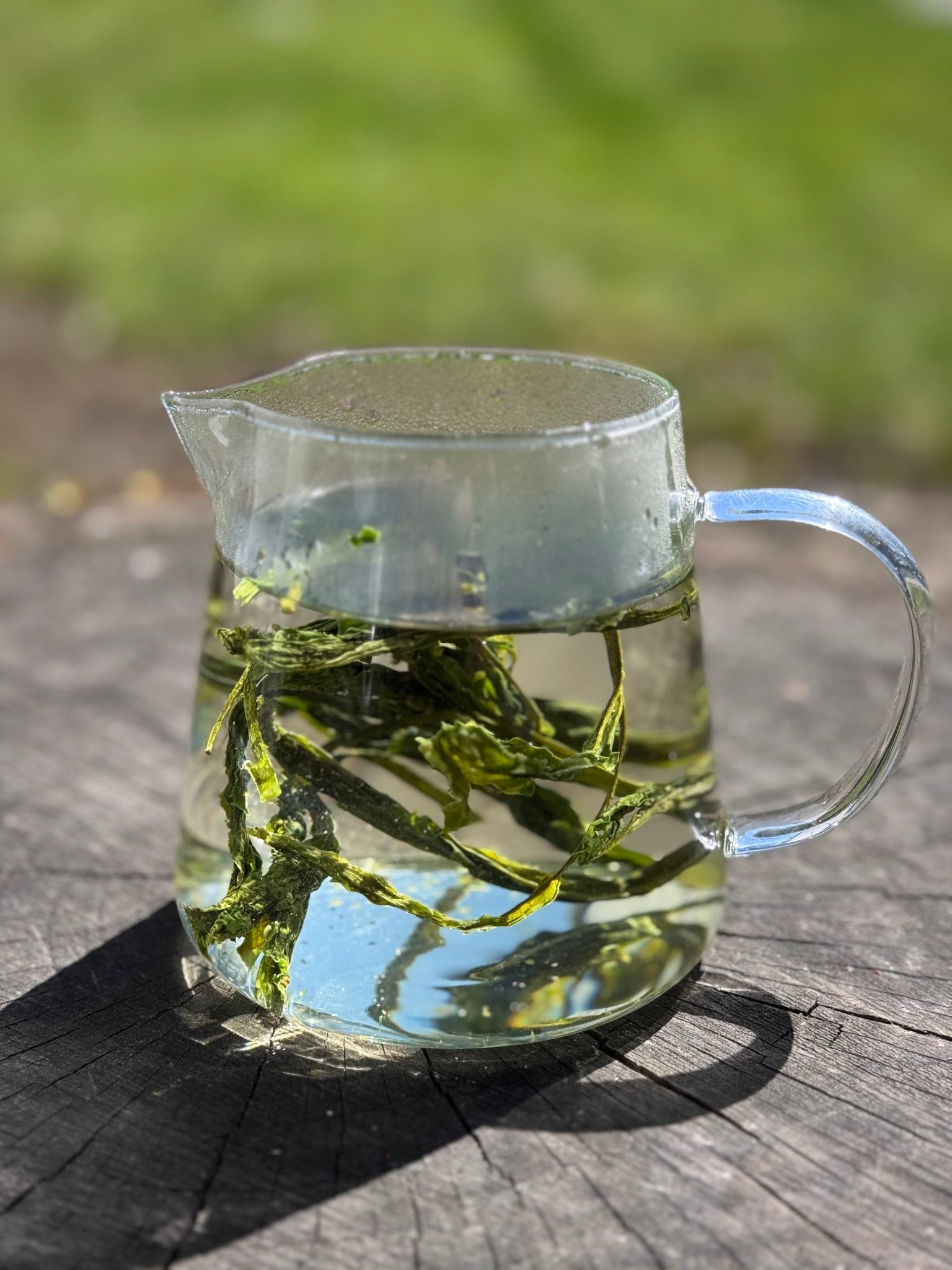
The first thing that strikes you about Taiping Houkui is the most unusual appearance: long, flat leaves that can reach remarkable lengths, formed by two leaves embracing a single bud. The finished leaves are deep green, and they are slightly transluscent when you look through them into the light.
<Important recommendation> Eat one of these leaves! They are crunchy, packed with flavour and very satisfying.
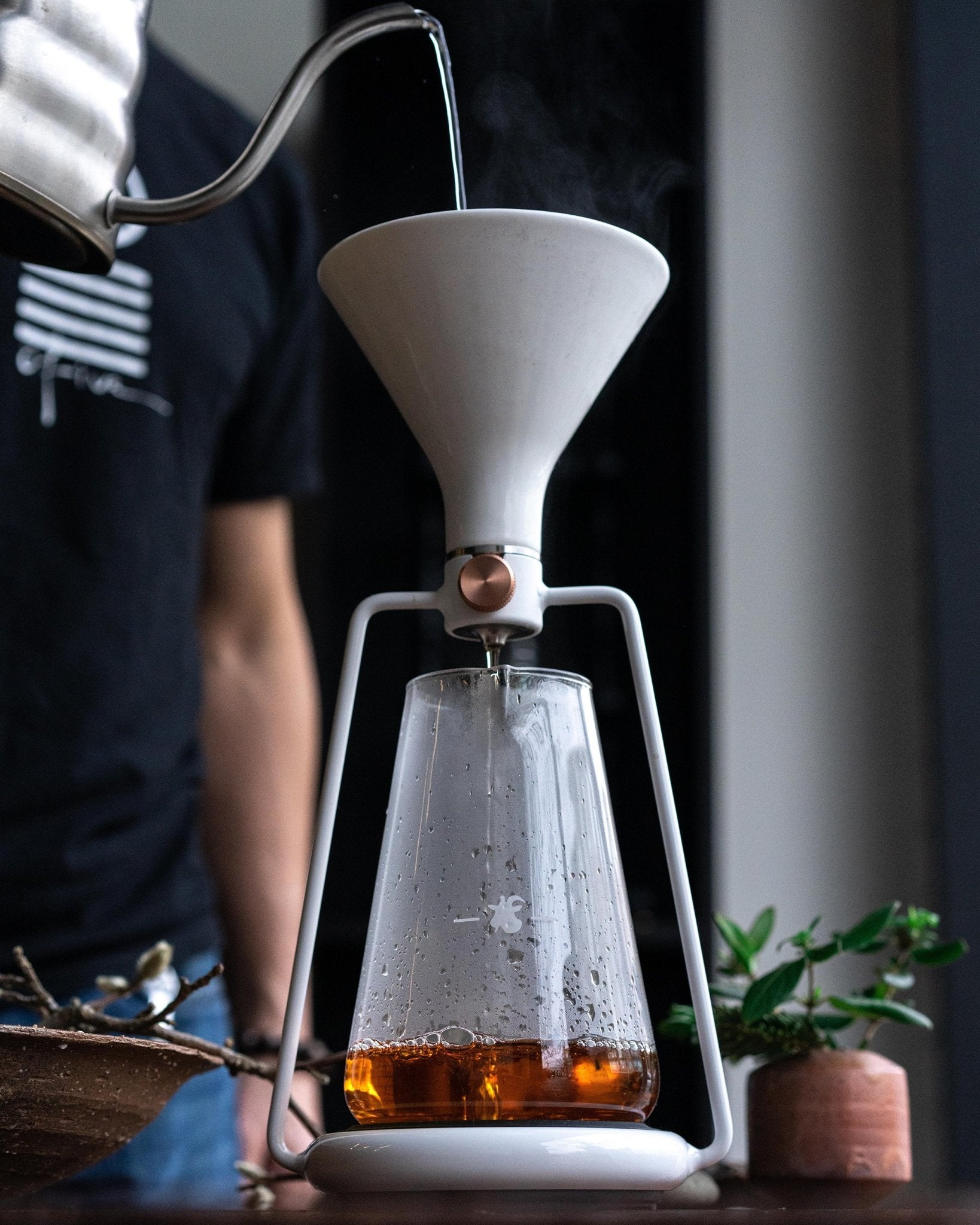
The brew is clear and pale green, releasing floral and herbal notes and a lingering sweet mouthfeel.
Brief History of Taiping Houkui Taiping Houkui is actually a relative newcomer by Chinese tea standards. Tea has been grown around Huangshan since the Ming dynasty, but the Houkui style we know today only really took shape in the mid-1800s, with growers and producers refining it into something distinct by the early 1900s. A lot of that credit goes to people like Wang Kuicheng, who tightened up how leaves were picked and processed — essentially elevating what had been a loose regional style into something with real identity and consistency.
From there, its reputation grew quickly. It earned a place among China's most celebrated teas and picked up recognition at various exhibitions along the way. But what's interesting is that this isn't a tea with ancient imperial roots or centuries of court patronage behind it. It's something that grew out of local experimentation — farmers and craftspeople figuring out what worked, then passing it on. That origin gives it a different kind of character: less mythologized, more grounded.
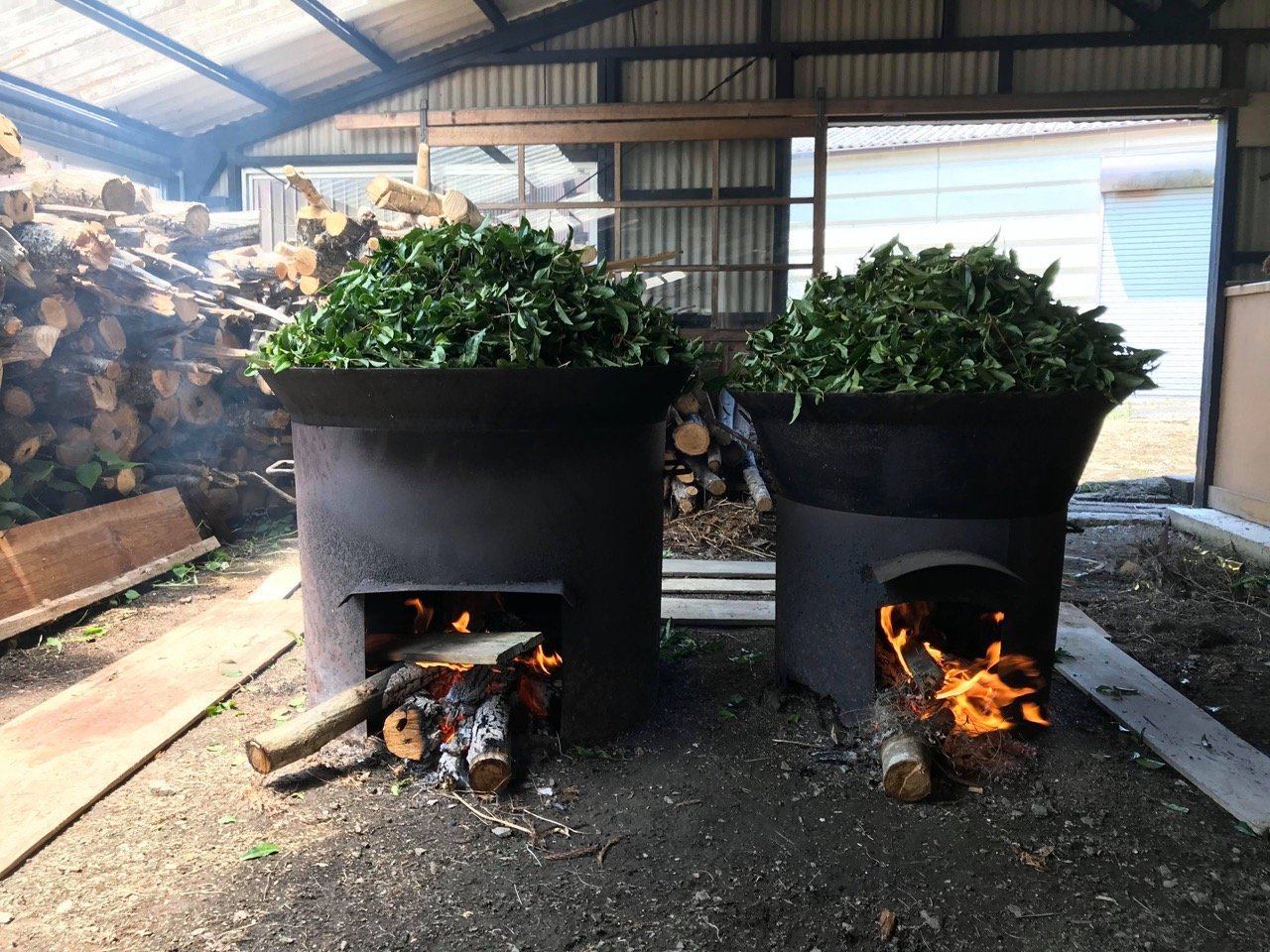
Handcrafting of Taiping Houkui Making Houkui is genuinely demanding work, which is part of why it holds national intangible cultural heritage status in China. It starts with careful picking — one bud, two leaves, selected for consistent size and shape. The leaves are then withered, pan-fired to stop oxidation, and pressed by hand into that flat, elongated form. The pressing has to be done with real attention: the leaves need to be aligned properly and pressed repeatedly to hold their shape without breaking. After that, a final drying locks everything in — the structure, the aroma, the clarity in the cup.
There are machine-made versions out there, and they can look the part. But the handmade process does something to the flavour that machines haven't been able to replicate. With Houkui, how it's made is part of what it is.
References:
Taiping houkui; Wikipedia; n.d.; https://en.wikipedia.org/wiki/Taiping_houkui
Taiping Houkui Tea – Origin, History; Chinese Tea Pedia; 2023; https://chineseteapedia.com/taiping-houkui-tea-origin-history-brewing-method-and-health-benefits/
Discrepancy on the flavor compound affect the quality of Taiping Houkui tea; Elsevier (Food Chemistry X); 2024; https://www.sciencedirect.com/science/article/pii/S2590157524004358
National Intangible Cultural Heritage — Making Technique of Taiping Houkui; Anhui Government/Xinhua; 2025; https://english.ah.gov.cn/AboutAnhui/Culture/HuiCulture/565435741.html
National Intangible Cultural Heritage — Making Technique of Taiping Houkui; All China Women’s Federation; 2025; https://www.womenofchina.cn/womenofchina/culture/heritage/2506/0646-1.htm
Taiping Houkui – ChinaTeaGuru; China Tea Guru; 2025; https://www.chinateaguru.com/tea-benefits/taiping-houkui.html
Taiping Houkui; Taste All China; 2026; https://www.tasteallchina.com/chinese-tea/taiping-houkui.html
Taiping Houkui: Taste China’s Legendary Monkey King Tea; Orientaleaf; 2025; https://orientaleaf.com/blogs/tea-101/taiping-houkui-monkey-king-green-tea-guide
Research on the Development of Tea Culture Tourism Products—A Case Study of Taiping Houkui; ResearchGate; 2022; https://www.researchgate.net/publication/366852366
In pics: National intangible cultural heritage — making technique of Taiping Houkui; People’s Daily; 2025; https://en.people.cn/n3/2025/0620/c90000-20330380.html


![O5 | TITANIUM GAIWAN [160ml] - O5 RARE TEA BAR](http://www.o5tea.com/cdn/shop/files/o5-titanium-gaiwan-160ml-7683949.jpg?v=1783556531&width=2048)
![O5 | TITANIUM GAIWAN [160ml] - O5 RARE TEA BAR](http://www.o5tea.com/cdn/shop/files/o5-titanium-gaiwan-160ml-448397.jpg?v=1750466831&width=2048)
![O5 |TITANIUM CUPS [180ml & 300ml] - O5 RARE TEA BAR](http://www.o5tea.com/cdn/shop/files/o5-titanium-cups-180ml-300ml-188904.jpg?v=1750466831&width=2048)
![O5 |TITANIUM CUPS [180ml & 300ml] - O-FIVE RARE TEA BAR](http://www.o5tea.com/cdn/shop/products/o5-titanium-cups-180ml-300ml-735558.jpg?v=1750451758&width=1280)
![O5 |TITANIUM CUP + INFUSER [200ml] - O5 RARE TEA BAR](http://www.o5tea.com/cdn/shop/files/o5-titanium-cup-infuser-200ml-5324885.jpg?v=1783142231&width=2048)
![O5 |TITANIUM CUP + INFUSER [200ml] - O5 RARE TEA BAR](http://www.o5tea.com/cdn/shop/files/o5-titanium-cup-infuser-200ml-4111703.jpg?v=1783142232&width=1538)
![O5 | TITANIUM KETTLE + TEA STRAINER [750ml] - O5 RARE TEA BAR](http://www.o5tea.com/cdn/shop/files/o5-titanium-kettle-tea-strainer-750ml-3635656.jpg?v=1779247987&width=2048)
![O5 | TITANIUM KETTLE + TEA STRAINER [750ml] - O5 RARE TEA BAR](http://www.o5tea.com/cdn/shop/files/o5-titanium-kettle-tea-strainer-750ml-641576.jpg?v=1750466592&width=2048)