Signature Bulang: dark leaf, assertive bitterness, thick liquor, resinous forest depth, and hui gan (returning sweetness) that feels less like sugar than mountain air clearing after the rain.
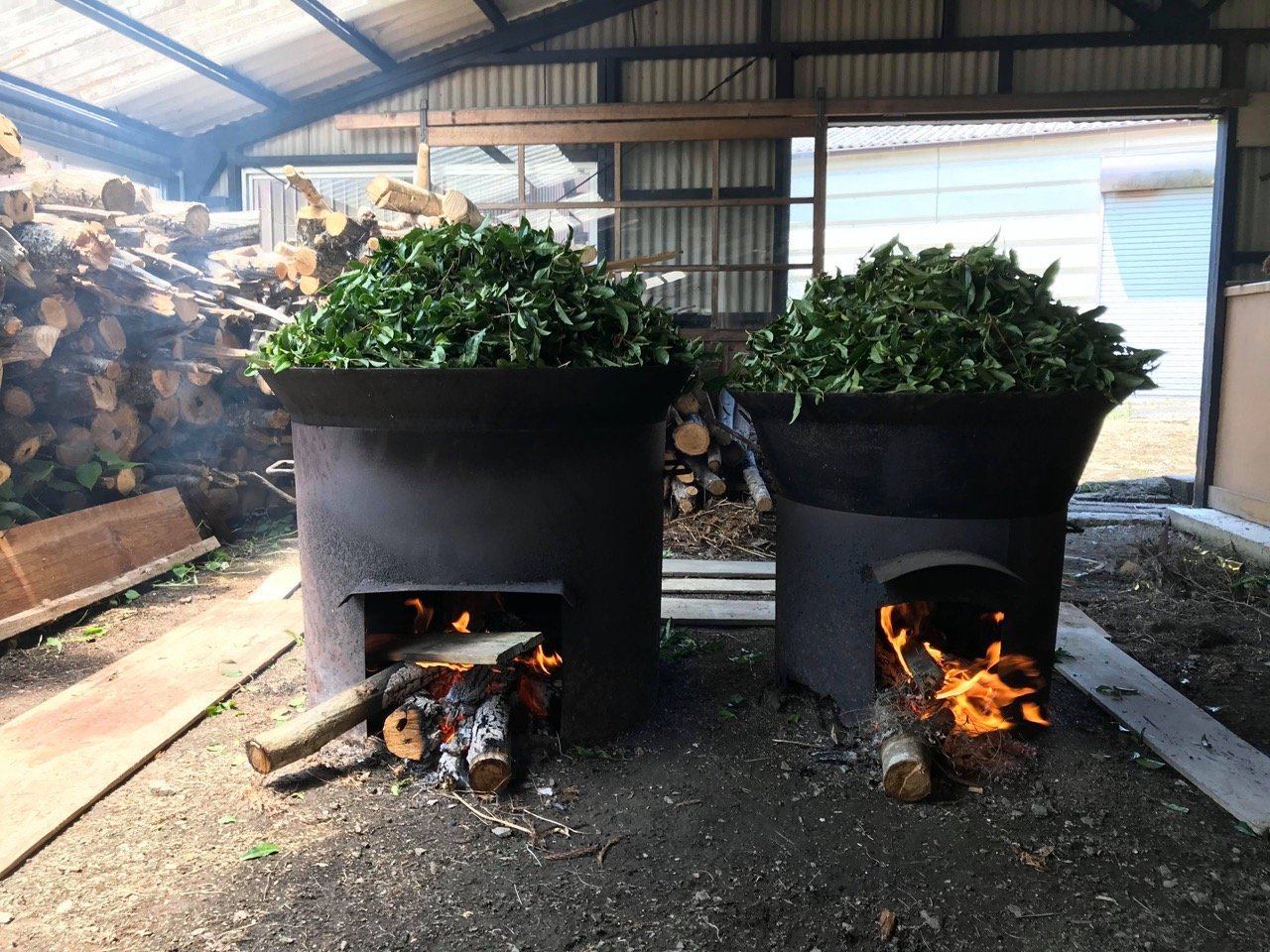
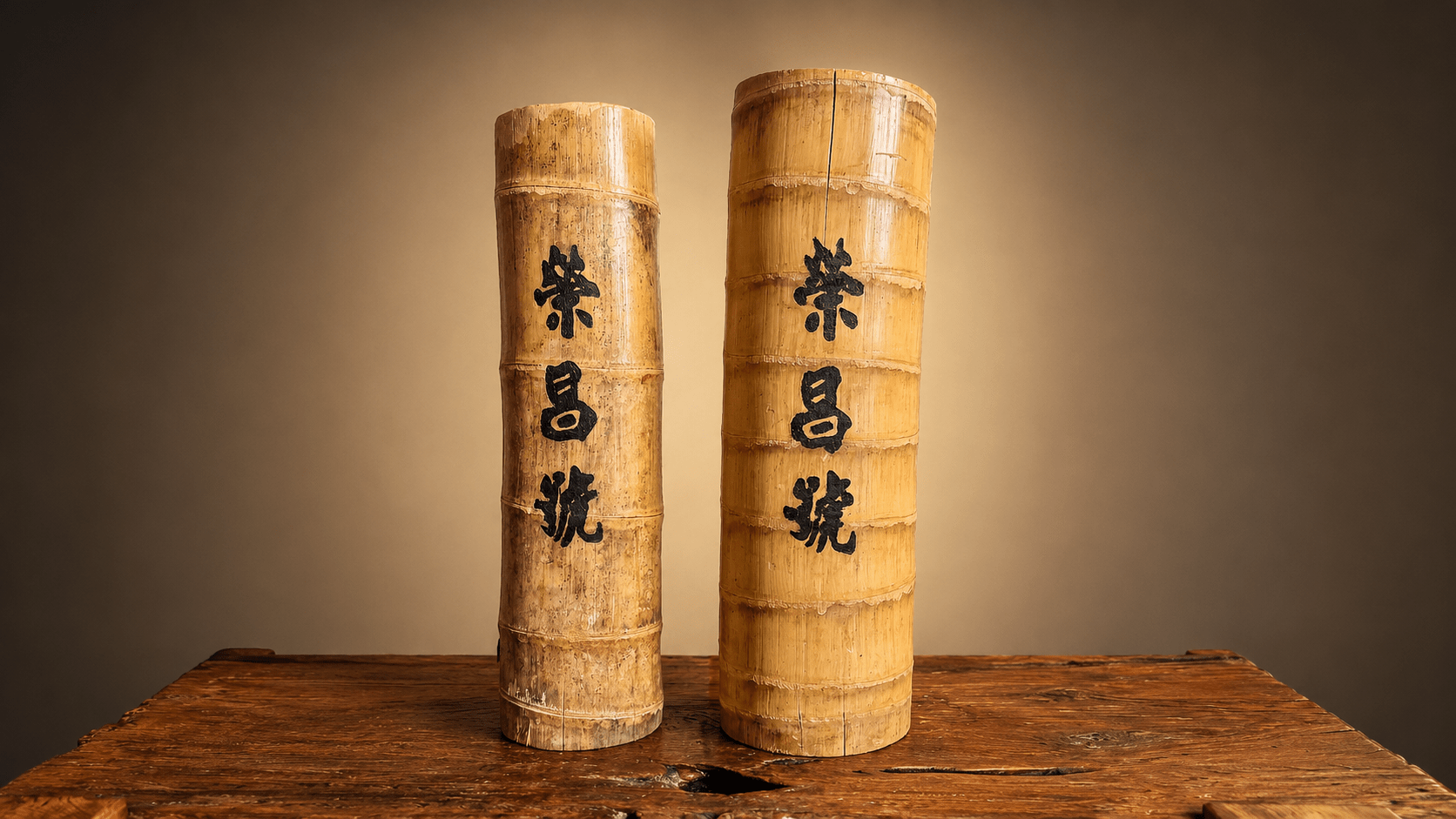
Our old friend Zhang Tao supervised and participated in the production of these two massive tea containers — approximately 13 kg and 15 kg respectively — in 2006. The tea was initially stored in Guangdong before being transferred to Vancouver in 2014, where it has remained in dry storage.
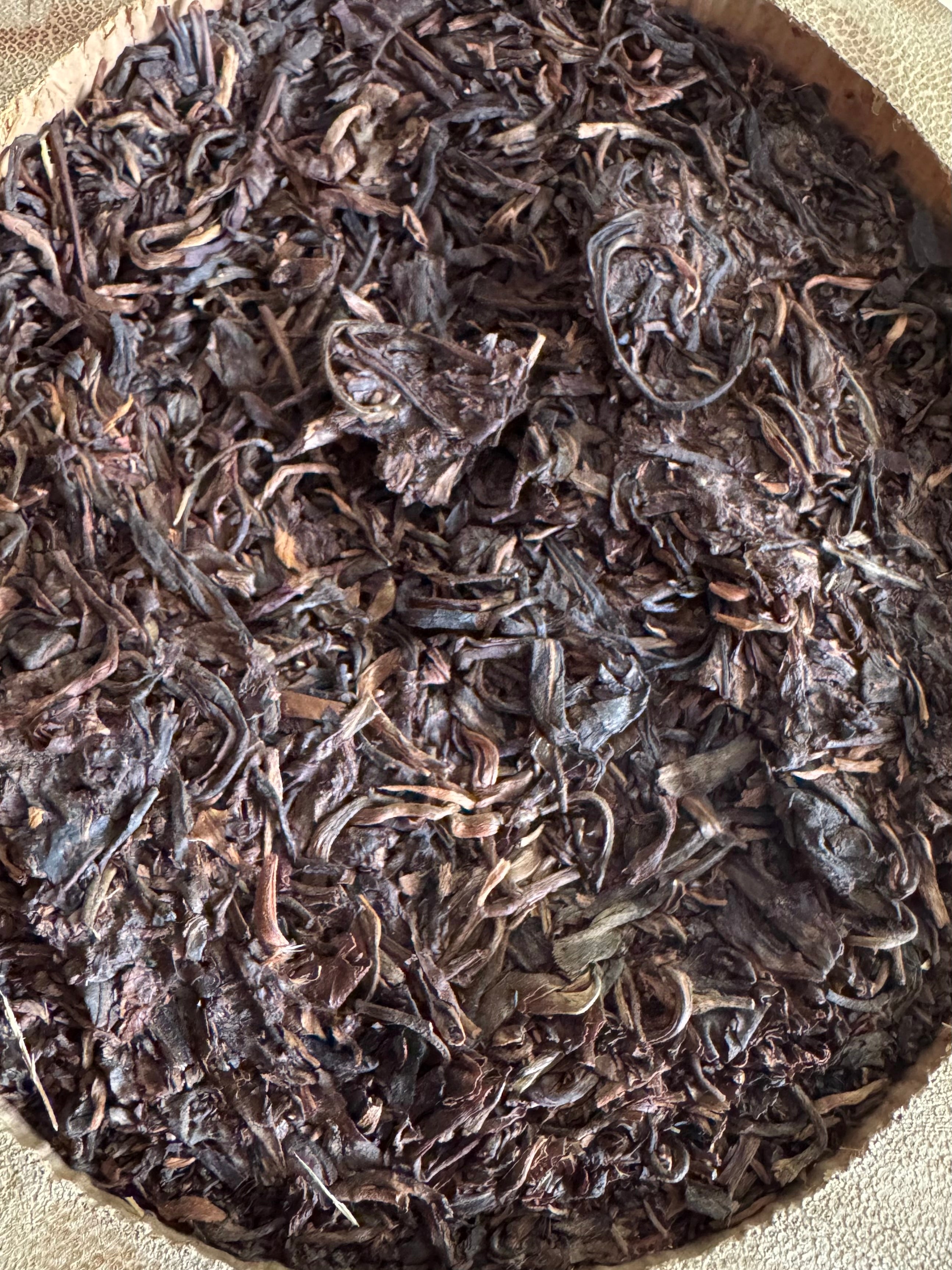
The brew is still very powerful — it probably needs a few more years to become truly mellow — but the leaves have noticeably transformed from dark green to golden brown. This is clearly no longer a young tea.
When drinking this tea, give yourself some time for the sweetness and mouthfeel to develop. We also suggest drinking it earlier in the day, as the uplifting energy of these ancient-tree leaves is still quite powerful.
Origin: Bulang Shan, Yunnan
Production: March 2006
Brewing recommendation: 6 g tea / 110 g water at 95°C; approximately 15 seconds; 15+ steeps
Rinse once or twice before drinking; bamboo is not an airtight — or dust-proof — container.
Origin: Bulang Mountain
Bulang Shan, in Menghai County, Xishuangbanna, Yunnan, near the China–Myanmar border, is a dramatic Pu Er tea landscape centred around approximately 21.58° N, 100.41° E.
A subtropical monsoon climate, extensive forest cover, frequent mist, and elevations ranging from roughly 535 to 2,082 metres shape some of China's most powerful large-leaf teas. Tea gardens are woven among rivers of the Lancang–Mekong system, evergreen and seasonal tropical forests, and acidic, well-drained mountain soils enriched by organic matter from shaded old-growth and semi-forested gardens.
Long associated with the Bulang people — one of the region's early tea-cultivating communities — the mountain is renowned for its ancient tea-tree populations and celebrated villages including Lao Banzhang, Xin Banzhang, Lao Man'e, and Manxinlong.
Its teas are generally produced from Yunnan large-leaf material and processed into sun-dried maocha for raw or ripe Pu Er. Classic Bulang character often means dense liquor, assertive bitterness, deep forest aromatics, and a persistent returning sweetness: a profile that reflects this humid, mineral-rich, forested borderland terroir.

![O5 | TITANIUM GAIWAN [160ml] - O5 RARE TEA BAR](http://www.o5tea.com/cdn/shop/files/o5-titanium-gaiwan-160ml-7683949.jpg?v=1783556531&width=2048)
![O5 | TITANIUM GAIWAN [160ml] - O5 RARE TEA BAR](http://www.o5tea.com/cdn/shop/files/o5-titanium-gaiwan-160ml-448397.jpg?v=1750466831&width=2048)
![O5 |TITANIUM CUPS [180ml & 300ml] - O5 RARE TEA BAR](http://www.o5tea.com/cdn/shop/files/o5-titanium-cups-180ml-300ml-188904.jpg?v=1750466831&width=2048)
![O5 |TITANIUM CUPS [180ml & 300ml] - O-FIVE RARE TEA BAR](http://www.o5tea.com/cdn/shop/products/o5-titanium-cups-180ml-300ml-735558.jpg?v=1750451758&width=1280)
![O5 |TITANIUM CUP + INFUSER [200ml] - O5 RARE TEA BAR](http://www.o5tea.com/cdn/shop/files/o5-titanium-cup-infuser-200ml-5324885.jpg?v=1783142231&width=2048)
![O5 |TITANIUM CUP + INFUSER [200ml] - O5 RARE TEA BAR](http://www.o5tea.com/cdn/shop/files/o5-titanium-cup-infuser-200ml-4111703.jpg?v=1783142232&width=1538)
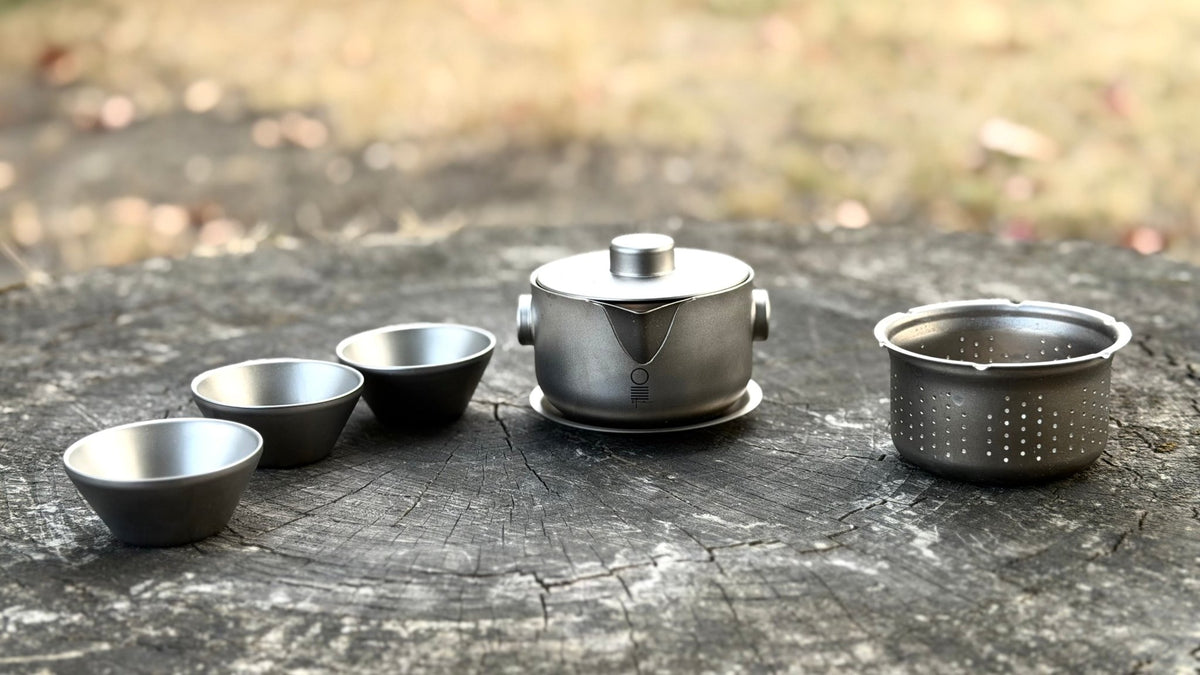
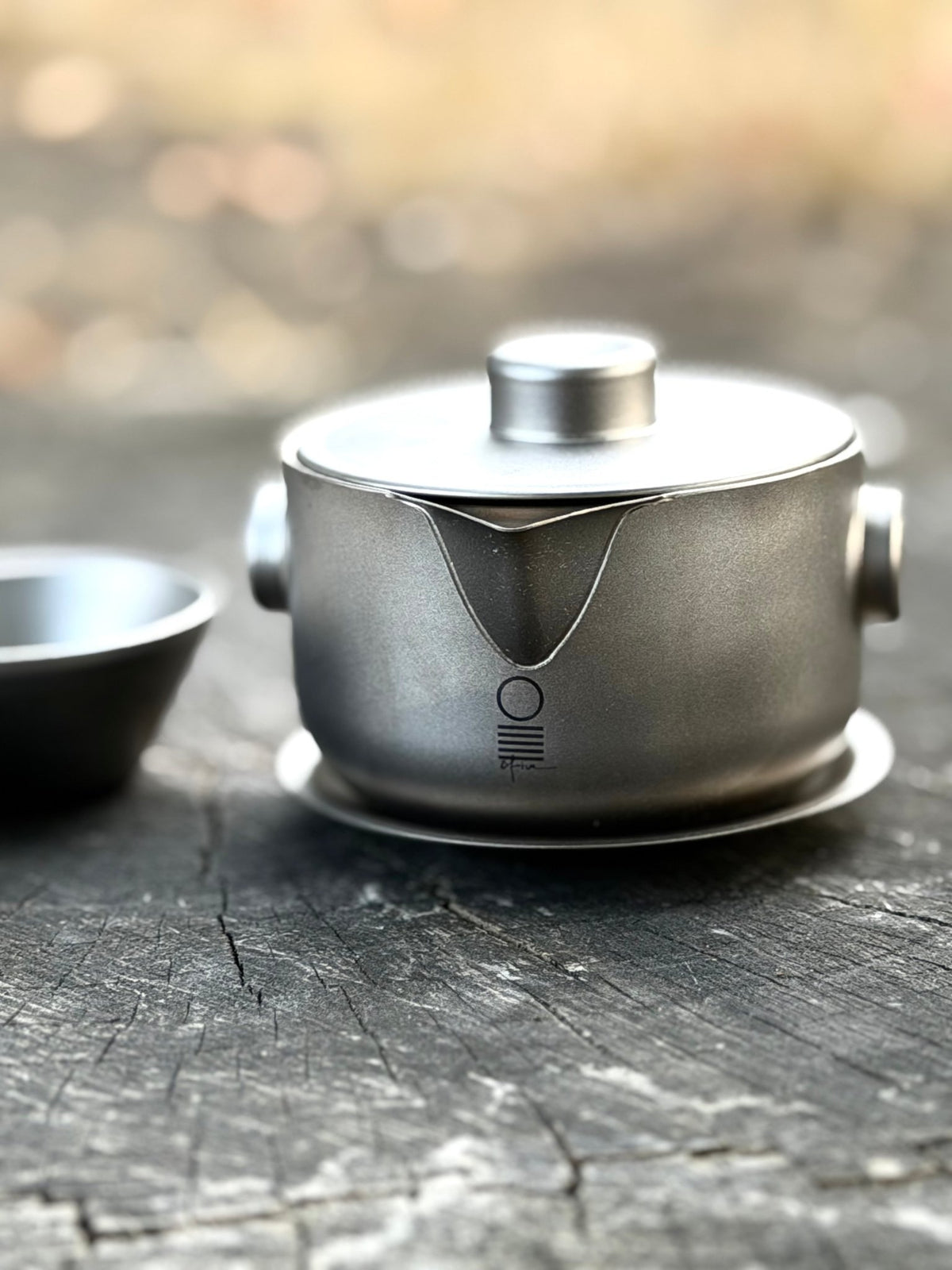
![O5 | TITANIUM KETTLE + TEA STRAINER [750ml] - O5 RARE TEA BAR](http://www.o5tea.com/cdn/shop/files/o5-titanium-kettle-tea-strainer-750ml-3635656.jpg?v=1779247987&width=2048)
![O5 | TITANIUM KETTLE + TEA STRAINER [750ml] - O5 RARE TEA BAR](http://www.o5tea.com/cdn/shop/files/o5-titanium-kettle-tea-strainer-750ml-641576.jpg?v=1750466592&width=2048)