A beautifully aged Bai Mudan (white peony) crafted by one of the most celebrated white tea artisans in Fuding.
Origin: Bailiu Village, Fuding, Fujian
Tasting Experience:
Harvest: spring 2011
GPS: 27.2°N, 120.1°E
Tasting Experience: floral top notes followed by dandelion honey water; lingering sweet sensation in the palate.
We met Mr. Mei Xiangjing thanks to the generous introduction of a mutual friend, Mr. Zhang Tao, who has been a student of tea for decades.
Mr. 梅相靖 (Mei Xiangjing) is one of the most important figures in Fujian's tea scene, formally recognized in 2013 as a National-Level Representative Inheritor of the Fuding white tea traditional production technique under China’s Intangible Cultural Heritage System. Born in Bailiu Village, Fuding, Mei has spent more than half a century refining his art.
The Mei family’s contribution traces further back to his grandfather, Mei Bozhen (梅伯珍), a pioneering tea merchant in the late Qing and Republic periods. He was instrumental to bring Fuding white tea into domestic and international markets.
Even more importantly, Mr. Mei is a most generous host who loves sharing both knowledge and tea.
Mei Family. Intangilble Cultural Heritage.
Tea Style: 白牡丹 (Bái Mǔdān)
Bai Mudan (白牡丹), commonly known in English as White Peony, is one of the classic white tea styles from China. The picking standard required one young bud flanked by one or two young leaves, giving it the distinctive “peony-like” appearance that inspires its name. This This results in a very complex brew, with delicate floral notes deriving from the buds and sweet, fruitier aromas from the leaves.
Whereas similar white tea was most likely produced in Fujian much earlier, the oldest records that we have found of systematized Bai Mudan production trace back to the early 20th century. According to Chinese tea chronicles, tea farmers in the Nanping region — particularly around Shuiji (水吉), Jianyang (建阳), and later Zhenghe (政和) and Fuding (福鼎) — developed the style now known as Bai Mudan. Mei Xianjing’s family plaid a very important role at this time.
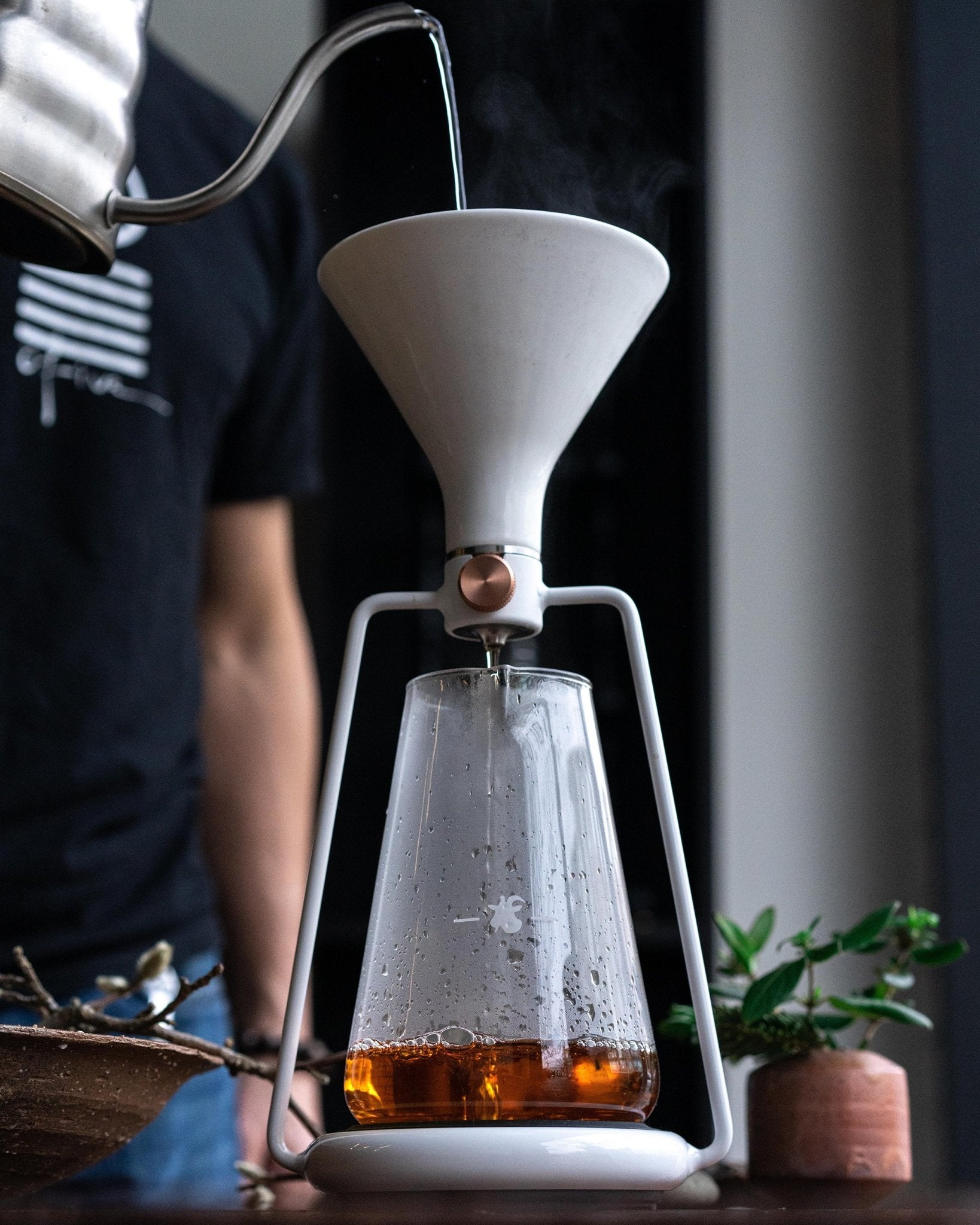
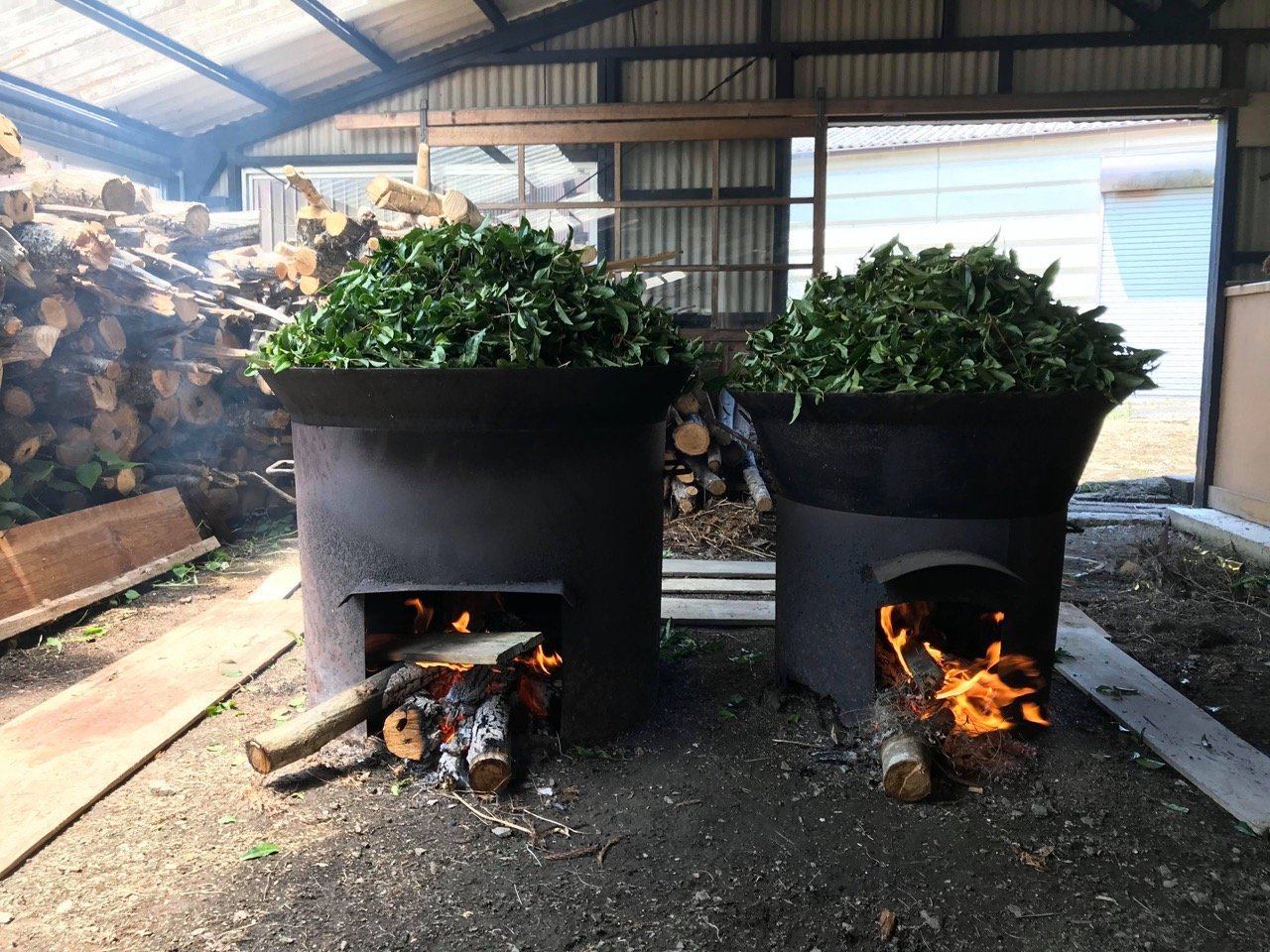
The handcrafting technique of Bai Mudan emphasises ‘gentleness’. After careful hand-plucking under the “一芽二叶 (one bud and two leaves)” criterion, the fresh leaves undergo natural withering in the sun or indoors until they lose a significant portion of moisture. No rolling or heavy processing is applied, preserves the integrity of the leaf structure and allowing a controlled oxidation process to occur slowly. The leaves are then slowly dried at ambient temperature. This minimal-intervention approach accentuates the tea’s sweet, floral character and ensures clarity in the brewed liquor.
Old tea trees in Fujian. They are tall and thin
Brewing Guide
Tea: 5g
Water: 100g @ 85°C
Time: 35"
References:
5.(家族/品牌叙事来源,用于理解“梅伯珍”事迹的传播文本)meibozhency.com:《梅伯珍,不只是梅伯珍》(含生平与贡献概述、提及《筱溪陈情书》)。 (Meibozhency)
梅相靖个人简介及传承信息(福鼎梅相靖白茶有限公司) (meixiangjing.com)
梅相靖为白茶非遗传承人及其家族背景(本地茶文化报道) (ChinaICH)
家族历史与传承名单(饮茶人网关于福鼎白茶十大传承人) (yinchar.com)
福鼎白茶制作技艺为国家级非遗项目(福建省政府英文文化报道) (fujian.gov.cn)

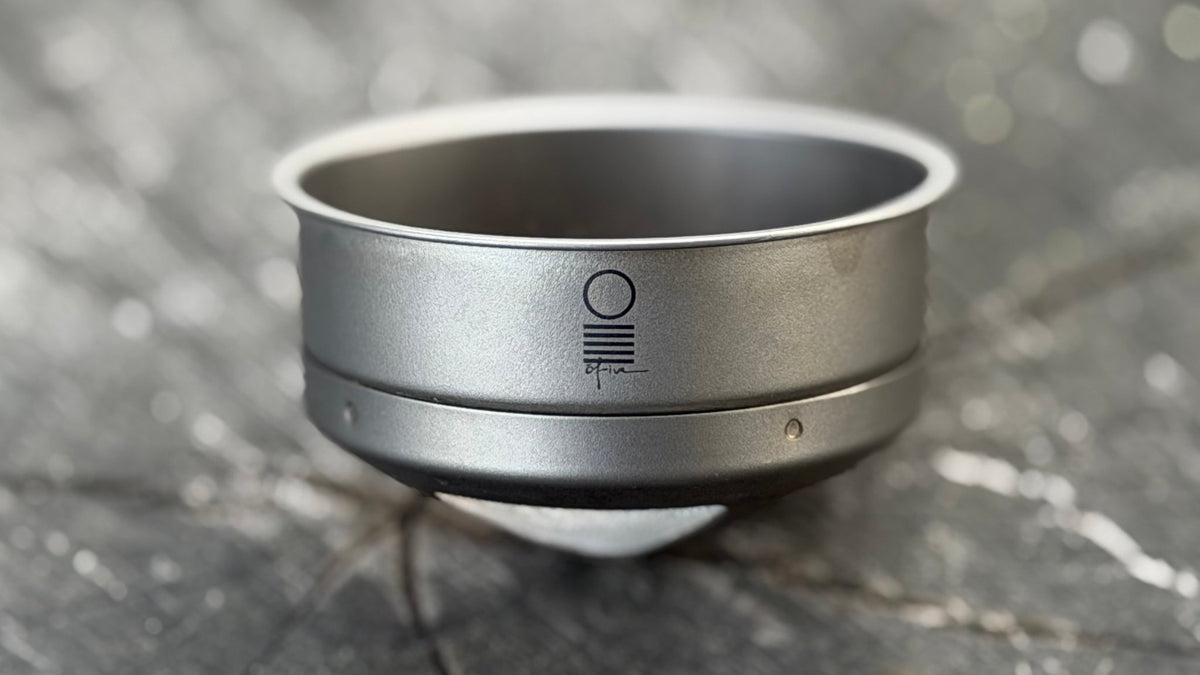
![O5 | TITANIUM GAIWAN [160ml] - O5 RARE TEA BAR](http://www.o5tea.com/cdn/shop/files/o5-titanium-gaiwan-160ml-7683949.jpg?v=1783556531&width=2048)
![O5 | TITANIUM GAIWAN [160ml] - O5 RARE TEA BAR](http://www.o5tea.com/cdn/shop/files/o5-titanium-gaiwan-160ml-448397.jpg?v=1750466831&width=2048)
![O5 |TITANIUM CUPS [180ml & 300ml] - O5 RARE TEA BAR](http://www.o5tea.com/cdn/shop/files/o5-titanium-cups-180ml-300ml-188904.jpg?v=1750466831&width=2048)
![O5 |TITANIUM CUPS [180ml & 300ml] - O-FIVE RARE TEA BAR](http://www.o5tea.com/cdn/shop/products/o5-titanium-cups-180ml-300ml-735558.jpg?v=1750451758&width=1280)
![O5 |TITANIUM CUP + INFUSER [200ml] - O5 RARE TEA BAR](http://www.o5tea.com/cdn/shop/files/o5-titanium-cup-infuser-200ml-5324885.jpg?v=1783142231&width=2048)
![O5 |TITANIUM CUP + INFUSER [200ml] - O5 RARE TEA BAR](http://www.o5tea.com/cdn/shop/files/o5-titanium-cup-infuser-200ml-4111703.jpg?v=1783142232&width=1538)
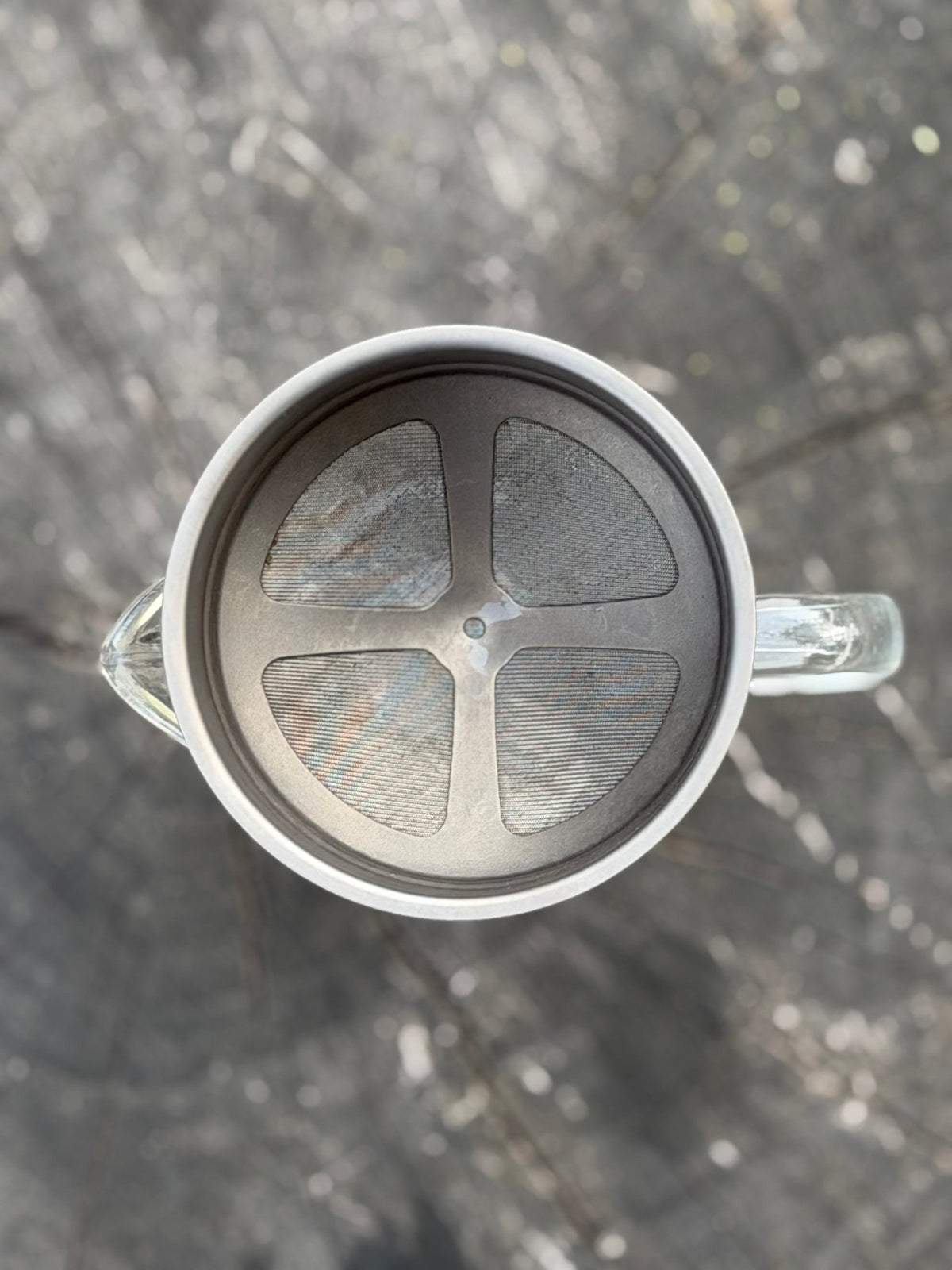
![O5 | TITANIUM KETTLE + TEA STRAINER [750ml] - O5 RARE TEA BAR](http://www.o5tea.com/cdn/shop/files/o5-titanium-kettle-tea-strainer-750ml-3635656.jpg?v=1779247987&width=2048)
![O5 | TITANIUM KETTLE + TEA STRAINER [750ml] - O5 RARE TEA BAR](http://www.o5tea.com/cdn/shop/files/o5-titanium-kettle-tea-strainer-750ml-641576.jpg?v=1750466592&width=2048)